
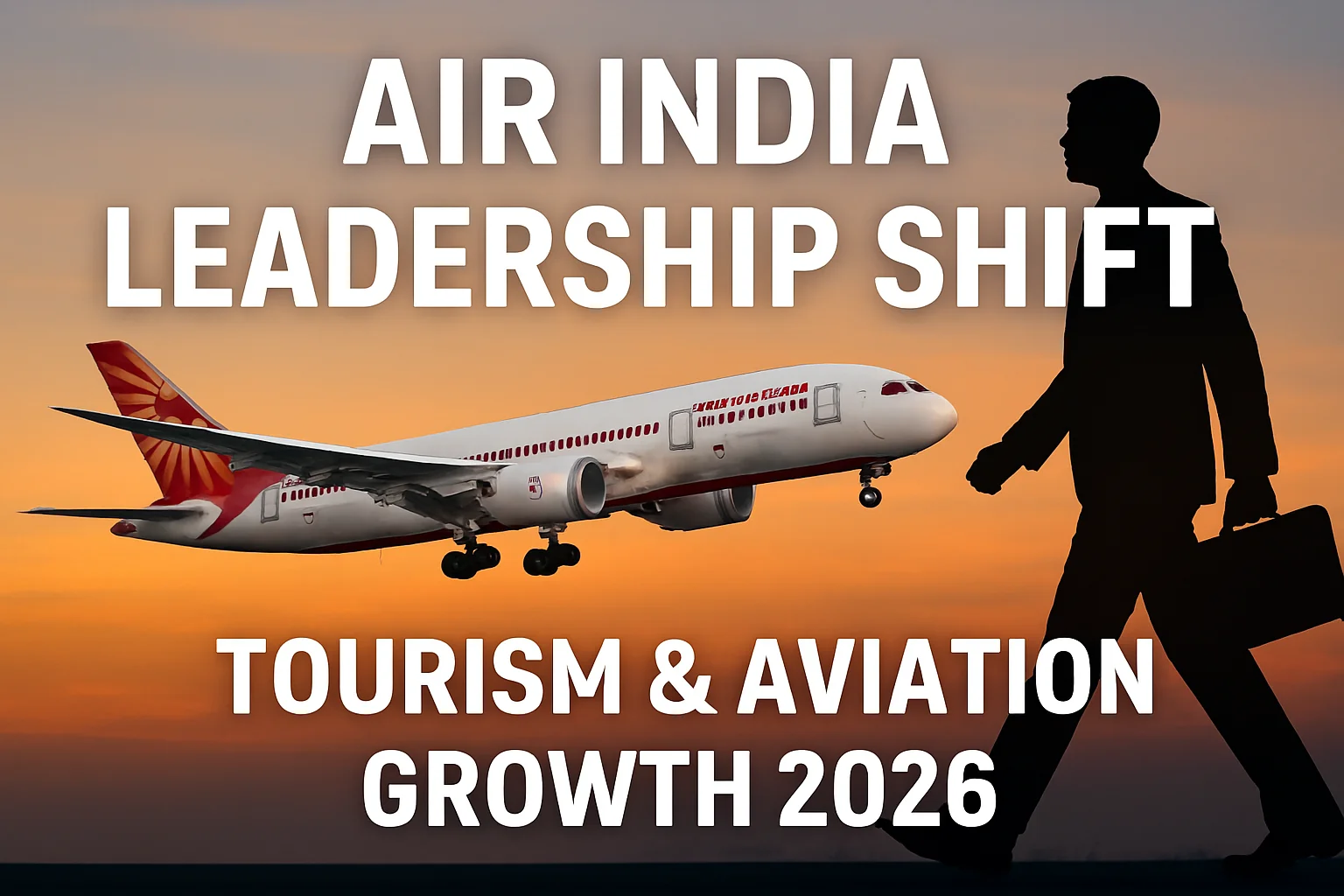
Aviation & Tourism Update – Jan 7, 2026 Air India is entering a transformative phase as new leadership is set to take the helm. With expanded global connectivity, fleet upgrades, and a renewed focus on operational efficiency, the transition is expected to boost inbound tourism and strengthen India’s global aviation footprint. Analysts see this as a shift from stabilization to long-term optimization—impacting both premium and budget airline segments.
Air India Leadership Transition: A Watershed Moment for Indian Aviation and Tourism

In a move that could reshape India's aviation landscape and turbocharge tourism growth, Air India's parent company Tata Sons has initiated a global search for new leadership at the national carrier, marking a pivotal transition from stabilization to long-term optimization.
According to multiple industry sources and verified reports from Reuters, Bloomberg, and Skift, Air India is actively seeking a replacement for current CEO Campbell Wilson, whose tenure is nearing its conclusion. This leadership transition comes at a critical juncture for the airline, which has been undergoing a comprehensive transformation since its acquisition by the Tata Group in 2022.
The search isn't limited to the flagship carrier alone. Aviation analysts confirm that Air India Express, the group's low-cost subsidiary, is also preparing for leadership changes later this decade, signaling a coordinated strategic shift across both premium and budget segments of Tata's aviation portfolio.
Industry experts view this transition as a natural evolution in Air India's journey. "This marks the move from stabilization to long-term optimization," explains aviation analyst Rohan Sharma. "The initial years under Tata ownership focused on restructuring, fleet modernization, and network consolidation. Now, with those foundations in place, the focus shifts to sustainable growth and profitability."
The transformation has been substantial. Air India has expanded its route network significantly, adding new international destinations while modernizing its fleet with state-of-the-art aircraft. These efforts have been crucial in reshaping the airline's competitive position in both domestic and international markets.
The leadership change comes with significant implications for India's tourism sector and broader economic goals. With a renewed focus on expanding global connectivity, the new leadership is expected to:
The new leadership will inherit both challenges and opportunities. Air India continues to face persistent financial losses, regulatory scrutiny following a June 2025 crash, and intense competition from both domestic and international carriers.
However, the opportunities are substantial. India's rapidly growing middle class, increasing international travel demand, and government initiatives to boost tourism create a favorable environment for growth. The new CEO will also benefit from the substantial investments already made in fleet modernization and operational improvements.
Sources indicate that Tata Sons has engaged executive search firms to identify candidates with international aviation experience. The ideal candidate is expected to have a proven track record in turning around major airlines, strong operational expertise, and the strategic vision to position Air India as a global aviation leader.
As Air India prepares for this leadership transition, the aviation industry watches closely. The success of this change could determine not only the airline's future but also India's position in the global aviation landscape. With tourism poised for significant growth and urban connectivity becoming increasingly important, the new leadership's decisions will have far-reaching implications for India's economic development and global standing.
The coming months will reveal whether this leadership transition becomes the catalyst that propels Air India—and by extension, Indian aviation—to new heights on the global stage.
