

Explore the Gems: Your Perfect Day Trip from Khajuraho to Orchha
Plan an unforgettable day trip from Khajuraho to Orchha! Discover ancient temples, majestic palaces, and historical gems with our guide.
Embark on an unforgettable journey as we explore some of India's most enchanting sites in our day trip from Khajuraho to Orchha. Nestled in the heart of Madhya Pradesh, these historic towns are treasures of art, architecture, and rich culture. Khajuraho, famed for its stunning temples adorned with intricate erotic sculptures, captivates visitors with its vivid storytelling etched in stone. Just a few hours away, Orchha beckons with its majestic palaces, serene rivers, and the timeless charm of its historical landmarks. As you transition from the artistic marvels of Khajuraho to the regal echoes of Orchha, each stop offers a captivating glimpse into India's glorious past. Whether you're a history enthusiast, a lover of architecture, or simply seeking a picturesque escape, this day trip promises to be a feast for the senses. Join us as we delve into the must-visit gems that make this journey truly unforgettable.
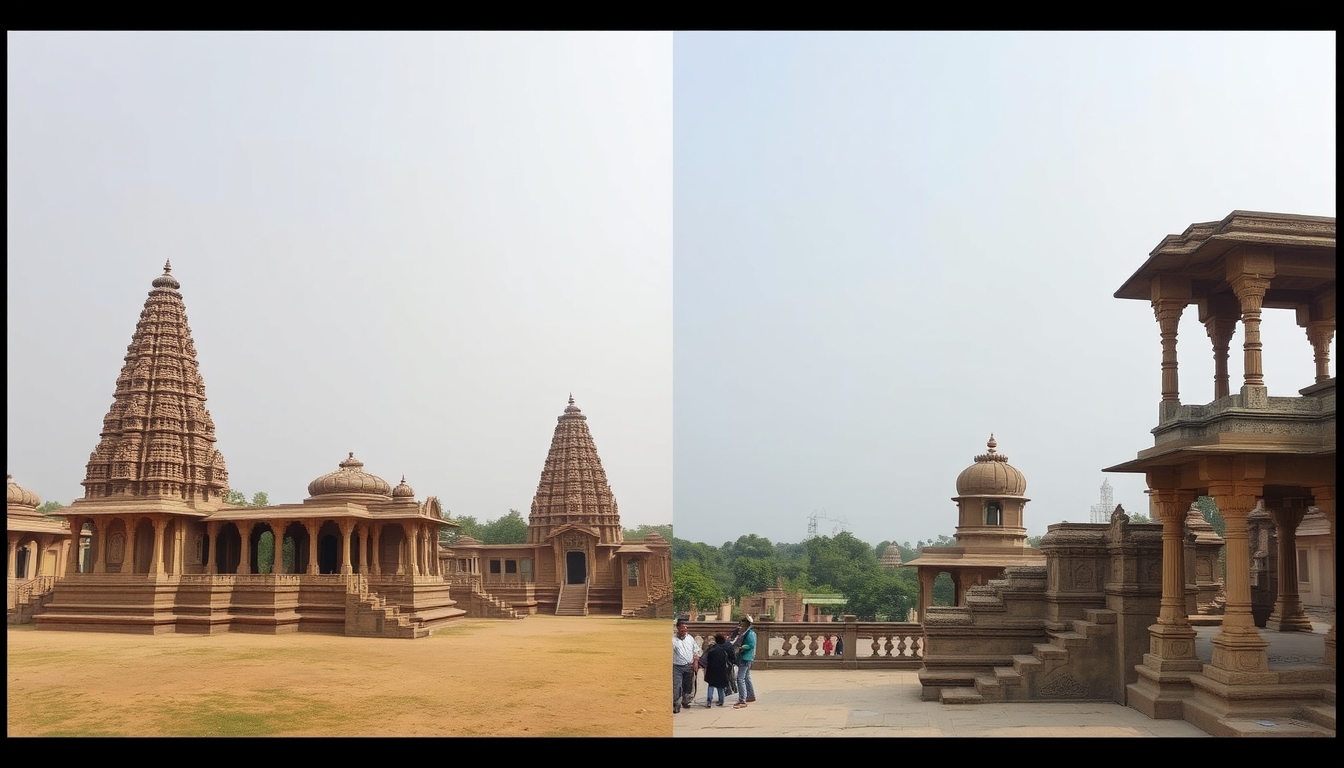
We begin our adventure in Khajuraho, a town renowned globally for its magnificent cluster of temples. Designated a UNESCO World Heritage Site, Khajuraho stands as a testament to the artistic and architectural brilliance of the Chandela dynasty, who ruled this region between the 9th and 11th centuries. The temples here are celebrated for their Nagara-style architecture and, most notably, for the explicit and intricate sculptures that adorn their exteriors. These sculptures, depicting various aspects of life, including religious figures, celestial beings, and scenes of everyday life and love, have fascinated and intrigued visitors for centuries. The sheer scale and detail of the artwork speak volumes about the cultural and artistic ethos of the era. As we explore Khajuraho, we will understand why it holds such a significant place in India's cultural heritage.
Our exploration of Khajuraho will focus on some of its most iconic temples. Here's a table summarizing the must-visit temples:
| Temple Name/Group | Deity/Affiliation | Key Features/Significance |
|---|---|---|
| Kandariya Mahadeva Temple | Lord Shiva | The largest and most spectacular temple, built by King Vidyadhara (1017-1029 CE). It stands on a granite foundation, rises 30m high, and features around 900 sculptures. Its towering shikhara resembles Mount Kailash, and the entrance boasts the intricately carved "Makar Toran." |
| Lakshmana Temple | Lord Vishnu | A 10th-century Sandhara-style temple built by Yashovarman, dedicated to Vaikuntha Vishnu. It's part of the Western Group and features a Pancharatha plan, two rows of outer wall sculptures (including divine figures, couples, and erotic scenes), and a sanctum doorway with depictions of Vishnu's incarnations. |
| Western Group of Temples | Various (includes Chaunsath Yogini, Vishwanath) | The main cluster of temples, showcasing Nagara-style architecture and intricate carvings. This group represents the pinnacle of Chandela art and includes temples dedicated to Shiva, Vishnu, and Surya. Declared a UNESCO World Heritage Site for its exceptional universal value. |
| Eastern Group of Temples | Jain and Hindu (includes Parsvanath, Adinath, Brahma, Vamana, Hanuman) | Features both Jain temples like the Parsvanath Temple (largest Jain temple with Yakshi figures) and Adinath Temple, as well as Hindu temples like the Brahma Temple (with a four-faced idol of Brahma) and the Vamana Temple (known for celestial beauty sculptures). |
| Southern Group of Temples | Various (includes Duladeo, Chaturbhuj) | Includes the Duladeo Temple (dedicated to Lord Shiva in his Nataraja form, known for its apsara sculptures) and the Chaturbhuj Temple (features a large four-armed idol of Vishnu). These temples offer a quieter exploration of the Chandela artistry. |
After immersing ourselves in the artistic wonders of Khajuraho, we will embark on a scenic journey to Orchha. The distance between Khajuraho and Orchha is approximately 172 kilometers, and the drive typically takes around 2 hours and 40 minutes. As we drive, we will witness the changing landscapes of Madhya Pradesh, from the agricultural fields to the more rugged terrain closer to Orchha. The journey itself offers glimpses of rural Indian life, with small villages and local markets dotting the route. Keep an eye out for interesting rock formations and patches of greenery that add to the charm of the drive. You can see the detailed route on this map: Khajuraho to Orchha Driving Route. This transition from the historical grandeur of Khajuraho to the rustic appeal of the countryside sets the stage for the regal experience that awaits us in Orchha.
Upon reaching Orchha, we step back in time to a town steeped in history and legend. Founded in the 16th century by the Bundela Rajput chief, Rudra Pratap Singh, Orchha served as the capital of the Bundela kingdom. The name "Orchha" literally means 'hidden', which aptly describes its location nestled away from major trade routes, allowing it to retain much of its historical character. The Bundela rulers were great patrons of art and architecture, and their legacy is evident in the magnificent palaces and temples that dominate the town's skyline. As we explore Orchha, we will delve into the stories of its brave rulers, their alliances and conflicts, and the cultural flourishing that marked their reign. The town's serene atmosphere, with the Betwa River flowing gently beside its monuments, adds to the timeless charm of this historical gem.
Our exploration of Orchha will center around its key attractions. Here's a table summarizing the must-visit palaces and temples:
| Attraction Name | Type | Key Features/Significance |
|---|---|---|
| Raja Mahal | Palace | Initiated by Raja Rudra Pratap Singh in 1531 and completed by Bharti Chandra in 1539, with later modifications by Madhukar Shah. Features two courtyards for men (mardana bhag) and women (zenana bhag) and showcases vibrant murals depicting mythological and secular themes. |
| Jahangir Mahal | Palace | Built by Raja Bir Singh Deo in the 17th century to commemorate the visit of Mughal Emperor Jahangir. It's an impressive three-storied structure with a symmetrical design, featuring hanging balconies, intricate carvings, and a blend of Bundela and Mughal architectural styles. |
| Sheesh Mahal | Palace (now hotel) | Originally a royal guesthouse, now converted into a heritage hotel. Offers a glimpse into the royal past and provides stunning views of the Betwa River and the surrounding monuments. Its name translates to 'Mirror Palace'. |
| Ram Raja Temple | Temple | Unique as Lord Rama is worshipped here as a king. Legend says the idol was meant for the Chaturbhuj Temple but remained rooted where Queen Ganesh Kunwari placed it in her kitchen. It's the only temple in India where a police guard of honor is given to Lord Rama. |
| Laxmi Narayan Temple | Temple | Built in 1662 by Bir Singh Deo and later restored in 1793 by Prithvi Singh. This temple dedicated to Goddess Laxmi showcases a unique blend of temple and fort architecture. Its walls are adorned with well-preserved murals depicting secular and religious scenes, including events from the Ramayana and Krishna's life, in Bundeli and Mughal styles. |
Beyond its historical monuments, Orchha also offers opportunities to connect with nature. The Betwa River, flowing alongside the town, provides a serene backdrop and offers options for boating. A leisurely boat ride on the river allows us to admire the palaces and temples from a different perspective. The surrounding area of Orchha is also relatively green, with some patches of forest and opportunities for birdwatching. We can take a stroll along the riverbanks or explore some of the quieter corners of the town to enjoy the natural beauty. While our day trip might be packed with sightseeing, taking a moment to appreciate the peaceful natural surroundings of Orchha will add another dimension to our experience.
Throughout our day trip from Khajuraho to Orchha, we will have opportunities to savor some local culinary delights. Both Khajuraho and Orchha offer a range of dining options, from local eateries serving traditional Madhya Pradesh cuisine to more tourist-oriented restaurants. Along the route, we can find dhabas (roadside restaurants) offering simple yet delicious meals. In Khajuraho, after our temple visits, we can explore restaurants near the Western Group of Temples. In Orchha, options are available near the fort complex and the main temples. Some local specialties to try include Dal Bafla (a regional variation of Dal Bati), Poha, and various vegetable curries. Don't forget to enjoy a cup of masala chai at a local stall for a refreshing break during our journey.
To make the most of your day trip from Khajuraho to Orchha, here are some helpful tips for planning:
Our day trip from the artistic marvels of Khajuraho to the regal splendor of Orchha has been an enriching journey through India's vibrant past. We have witnessed the intricate storytelling in stone at the temples of Khajuraho and explored the majestic palaces and serene landscapes of Orchha. This day trip offers a perfect blend of art, architecture, history, and nature, leaving us with unforgettable memories. Whether you are a seasoned traveler or a first-time visitor to Madhya Pradesh, the journey from Khajuraho to Orchha is an experience that will captivate your senses and deepen your appreciation for India's rich cultural heritage. So, embrace the journey and discover the timeless gems that await you!
The distance between Orchha and Khajuraho is approximately 172 kilometers by road. The journey usually takes around 2 hours and 40 minutes, depending on the mode of transport and road conditions. Hiring a private car or taxi is a convenient option for a day trip, allowing you to explore at your own pace.
The most recommended way to travel from Khajuraho to Orchha for a day trip is by hiring a private car or taxi. This offers flexibility in terms of timings and allows you to comfortably visit all the attractions in both locations. Alternatively, you might find tour operators offering day trip packages that include transportation.
On a day trip to Khajuraho, prioritize visiting the Kandariya Mahadeva Temple, known for its impressive size and intricate sculptures, and the Lakshmana Temple, one of the best-preserved temples. The entire Western Group of Temples, a UNESCO World Heritage Site, is a must-see. If time permits, also try to visit some of the Eastern Group of Temples known for their Jain art.
In Orchha, make sure to visit the Orchha Fort complex, which includes the Raja Mahal, Jahangir Mahal, and Sheesh Mahal. The unique Ram Raja Temple, housed in a former palace, and the Laxmi Narayan Temple with its beautiful murals are also essential stops. A boat ride on the Betwa River can offer a different perspective of the town's grandeur.
While a day trip might feel a bit rushed, it is possible to cover the main highlights of both Khajuraho and Orchha. To make the most of your time, start early, prioritize the key attractions you want to see, and consider hiring local guides to expedite your exploration. Spending more time in each location would certainly be ideal for a more relaxed experience.
Yes, you can find several dhabas (roadside eateries) along the route from Khajuraho to Orchha that offer simple and affordable meals. Both Khajuraho and Orchha also have restaurants catering to tourists, where you can find a wider variety of options for lunch and snacks.
The best time of year to plan this day trip is during the winter months, from October to March. The weather during this period is pleasant, with comfortable temperatures ideal for sightseeing and exploring historical sites. Summers can be very hot, and the monsoon season might bring disruptions due to rain.
Yes, there are entry fees for visiting some of the temples in Khajuraho, particularly the Western Group of Temples. Similarly, there are entry fees for the Orchha Fort complex and some other monuments in Orchha. It's advisable to check the current fee structure before your visit and keep some cash handy for purchasing tickets.
When visiting the historical sites in Khajuraho and Orchha, it's recommended to wear comfortable and modest clothing. As these are culturally significant and sometimes religious sites, dressing respectfully is appreciated. Opt for breathable fabrics, especially if you are visiting during the warmer months. Comfortable walking shoes are essential as you will be doing a lot of exploring on foot.
Yes, you can easily find local guides available at the main temple complexes in Khajuraho and near the fort in Orchha. Hiring a knowledgeable guide can significantly enhance your experience by providing valuable insights into the history, architecture, and significance of these sites. It's advisable to negotiate the guide fees beforehand.
