

Explore the Great Wall of China: A Timeless Journey Through History and Landscape
The Great Wall of China, a UNESCO World Heritage site and one of the most iconic architectural feats in human history, stretches over 21,000 kilometers across northern China. Built over centuries by various dynasties, this ancient fortification served as a military defense system and now stands as a symbol of China's enduring legacy.
Whether you're planning a day trip from Beijing, a multi-day Great Wall of China itinerary, or seeking guided tour packages, this monumental structure offers diverse experiences for every traveler. Popular sections like Mutianyu, Badaling, and Jinshanling cater to different interests—from family-friendly cable car rides to challenging hikes with panoramic views.
Located near Beijing, the Mutianyu Great Wall is ideal for families and seniors, offering wheelchair accessibility, cable cars, and stunning photography spots. For history buffs, Badaling showcases restored battlements and is the most visited section. Adventurers can explore the wild beauty of Jinshanling, known for its rugged terrain and scenic hiking routes.
An Epic Journey Through History and Landscape
PLAN YOUR GREAT WALL ADVENTURE
The Great Wall of China (长城), a spectacular ribbon of stone and earth snaking over mountains and across plains, is a timeless symbol of human ingenuity and perseverance. As a UNESCO World Heritage site, it represents not just an ancient defense system, but a profound testament to Chinese history, architecture, and cultural heritage. This guide is your ultimate Great Wall of China travel guide, designed to help you explore its epic scale, delve into its rich past, and plan an unforgettable visit Great Wall of China experience. From practical Great Wall of China travel tips to detailed insights into its best sections and hiking routes, prepare to embark on an adventure along one of the world's most iconic wonders.

The Great Wall of China's history is a sprawling narrative spanning over two millennia. It's not a single continuous wall, but rather a series of fortifications built, rebuilt, and extended by various dynasties. Here are some key Great Wall of China facts:
The Great Wall of China is more than a military defense; it's a symbol of Chinese civilization's endurance and engineering prowess. It served as a cultural boundary, defining the agricultural heartland from the nomadic steppes. In 1987, it was designated a Great Wall of China UNESCO site, recognizing its outstanding universal value.
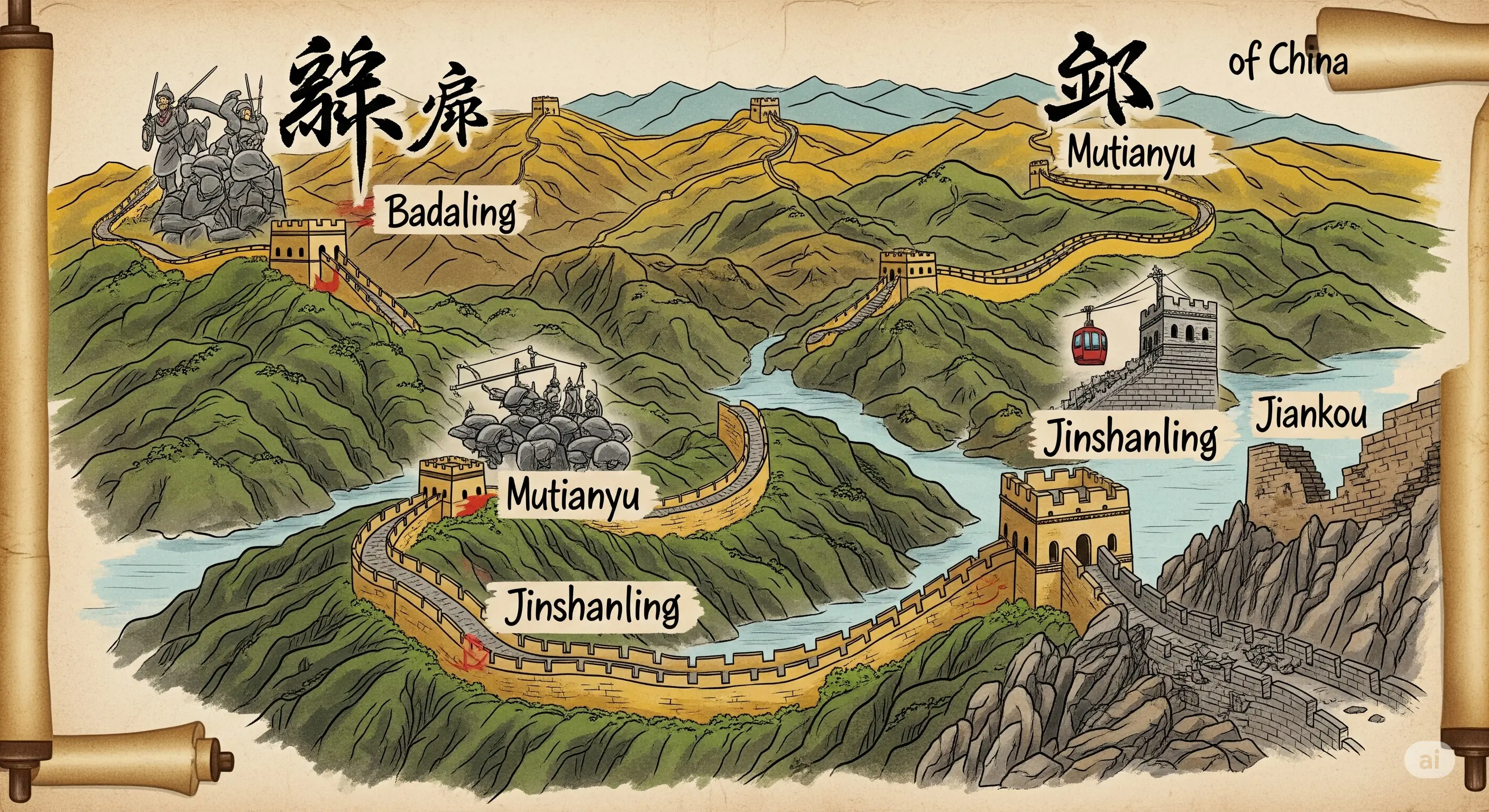
Choosing which section of the Great Wall of China to visit is crucial for your experience. Several well-preserved sections are easily accessible from Beijing, each offering distinct features and levels of restoration. This section will help you decide which is best for your Great Wall of China itinerary.
Location: Approximately 70 km northeast of Beijing (1.5-hour drive).
Highlights: Highly recommended for its stunning scenery, lush greenery, and 23 original-style watchtowers. It's fully restored, offering wide, well-maintained paths, and is generally less crowded than Badaling. Ideal for Great Wall of China with kids and those seeking a relaxed experience.
Accessibility & Facilities: Features a convenient Great Wall of China cable car and chairlift for ascent/descent, plus a thrilling toboggan ride. Modern visitor facilities, restrooms, and restaurants are at the base.
Great Wall of China Entrance Fee: Around CNY 40-45. Cable car/chairlift/toboggan costs are extra (approx. CNY 120 round trip).
Location: About 80 km northwest of Beijing.
Highlights: The most famous and easily accessible section, fully restored with wide, gentle paths. Offers iconic views and is excellent for first-time visitors seeking a classic Great Wall of China experience. However, expect heavy crowds, especially on weekends.
Accessibility: Equipped with Great Wall of China cable car and escalators, making it highly accessible for all fitness levels and abilities.
Location: Approximately 125 km northeast of Beijing.
Highlights: Offers a more authentic and adventurous hiking experience. Partially restored and partially wild, providing dramatic, unspoiled scenery. Known for fantastic Great Wall of China photography spots, especially at sunrise or sunset. Popular for treks from Jinshanling to Simatai West.
Location: East of Beijing, near Gubei Water Town.
Highlights: Known for its steepness, unique architecture, and is one of the few sections open for night tours, offering a magical experience under the stars. More rugged and less commercialized than Mutianyu or Badaling.
To ensure the most enjoyable visit Great Wall of China, consider these practical aspects:

Whether you're looking for a leisurely stroll or an adventurous trek, the Great Wall of China offers diverse experiences.
This is a common myth! While incredibly long, the Great Wall of China is surprisingly narrow and blends with its surroundings. It's not visible to the naked eye from the Moon, and even from low Earth orbit, it's very difficult to discern without specific conditions and powerful optics. Astronauts have confirmed it's not easily visible, unlike brighter, wider man-made structures.
The answer depends on what you count! Historically, the total length, including all its branches and natural defensive barriers built across various dynasties, is estimated to be approximately 21,196 kilometers (13,171 miles). The most famous and well-preserved sections, largely built during the Ming Dynasty, stretch for about 8,850 kilometers (5,499 miles). It's a series of walls, trenches, and natural barriers, not one continuous structure.
For first-time visitors, the Mutianyu Great Wall is often highly recommended. It offers a beautiful, fully restored section with stunning scenery, fewer crowds than Badaling, and convenient amenities like a cable car, chairlift, and fun toboggan ride. Badaling is also popular for its accessibility but can be very crowded.
The ideal times are during spring (April to May) and autumn (September to October). Spring offers pleasant temperatures and blossoming flowers, while autumn provides clear skies, comfortable weather, and vibrant fall foliage, creating spectacular photographic opportunities. Summers can be hot and humid, and winters are cold but offer a unique, crowd-free, snow-dusted experience.
You have options! A guided tour from Beijing is often the most hassle-free choice, providing transportation, entrance tickets, and sometimes a knowledgeable guide. However, you can also visit independently by taking public buses or hiring a private car. This offers more flexibility but requires more planning. For remote sections like Jinshanling, a tour or private car is highly recommended.
Yes, at the more popular and restored sections like Mutianyu and Badaling, you'll find modern visitor centers with restrooms, souvenir shops, and various dining options (restaurants and smaller food stalls) at the base. Along the wall itself, facilities are limited, so it's always wise to use the restrooms at the entrance before ascending and carry water and snacks.
The Badaling Great Wall section is generally considered the most accessible due to its wide, relatively gentle paths and the presence of escalators and a cable car system. Mutianyu also offers a cable car and chairlift, making it easier to reach the wall, though some sections of the wall itself can still be uneven or steep. Remote, unrestored sections are generally not suitable for those with mobility challenges.
Comfortable, sturdy walking or hiking shoes are essential as the paths can be uneven and steep. Dress in layers, as the weather can change quickly, especially on the mountains. Don't forget water, snacks, sunscreen, a hat, and sunglasses. A camera with extra batteries is a must for capturing the incredible views.
Yes, one of the most popular and rewarding hiking experiences is the trek from Jinshanling to Simatai West. This route offers a mix of restored and wild sections, providing a more authentic and challenging adventure with breathtaking scenery. Other sections are not typically connected by continuous, accessible hiking trails. Always research and prepare for any strenuous hikes.
Today, the Great Wall of China stands as a powerful symbol of China's rich history, cultural heritage, and engineering genius. It's not only a major tourist attraction and a UNESCO World Heritage site but also a source of national pride. It reminds us of ancient defense strategies, the sheer scale of human labor, and the enduring legacy of one of the world's oldest civilizations.
The Great Wall of China is more than just an ancient structure; it's a living monument that tells tales of emperors, soldiers, and centuries of human endeavor. From its intricate architecture to the vast panoramic views it offers, every step along its ancient stones is a journey through time. Whether you opt for a leisurely Mutianyu Great Wall cable car ride or an adventurous Jinshanling Great Wall hike, a Great Wall of China day trip is an essential part of any China travel itinerary. Its enduring legacy, recognized as a Great Wall of China UNESCO site, ensures that its grandeur will continue to inspire generations. Don't just read about it; come and experience the unparalleled majesty of the Great Wall of China for yourself.
