
In This Guide
Why Uttarakhand is India's Ultimate Himalayan State
If there is one state in India where spirituality, mountains, rivers, and adventure come together effortlessly, it is Uttarakhand. I have travelled through Rajasthan's forts, Kerala's backwaters, and the northeastern states — but every time I cross the plains at Haridwar and the first outline of hills rises above the highway haze, something shifts inside me. There is a particular quality of light in the Himalayan foothills that I have not found anywhere else. Everything becomes sharper. The air has weight. The silence, when it comes, is absolute.
Uttarakhand is not a single experience — it is a collection of worlds stacked vertically. At the base, there are pilgrimage towns thick with incense smoke and temple bells, where the Ganga announces herself loudly and constantly. Climb higher and the roads narrow, the trees change from mango to pine to rhododendron, and the pace of everything slows until you feel the mountains have imposed their own rhythm on you. Keep going and you reach landscapes where the air tastes thin, snow lingers in June, and the only sound is wind across a meadow you may share with a solitary shepherd.
This guide covers everything — the classic routes and the roads nobody takes, the spiritual intensity of Char Dham Yatra, the river energy of Rishikesh travel, the comfortable nostalgia of Mussoorie hill station and Nainital travel, and the places that do not appear in most travel lists. If you are asking yourself whether Uttarakhand tourism is worth the effort — and it does require effort — this is the honest answer you need before you book.
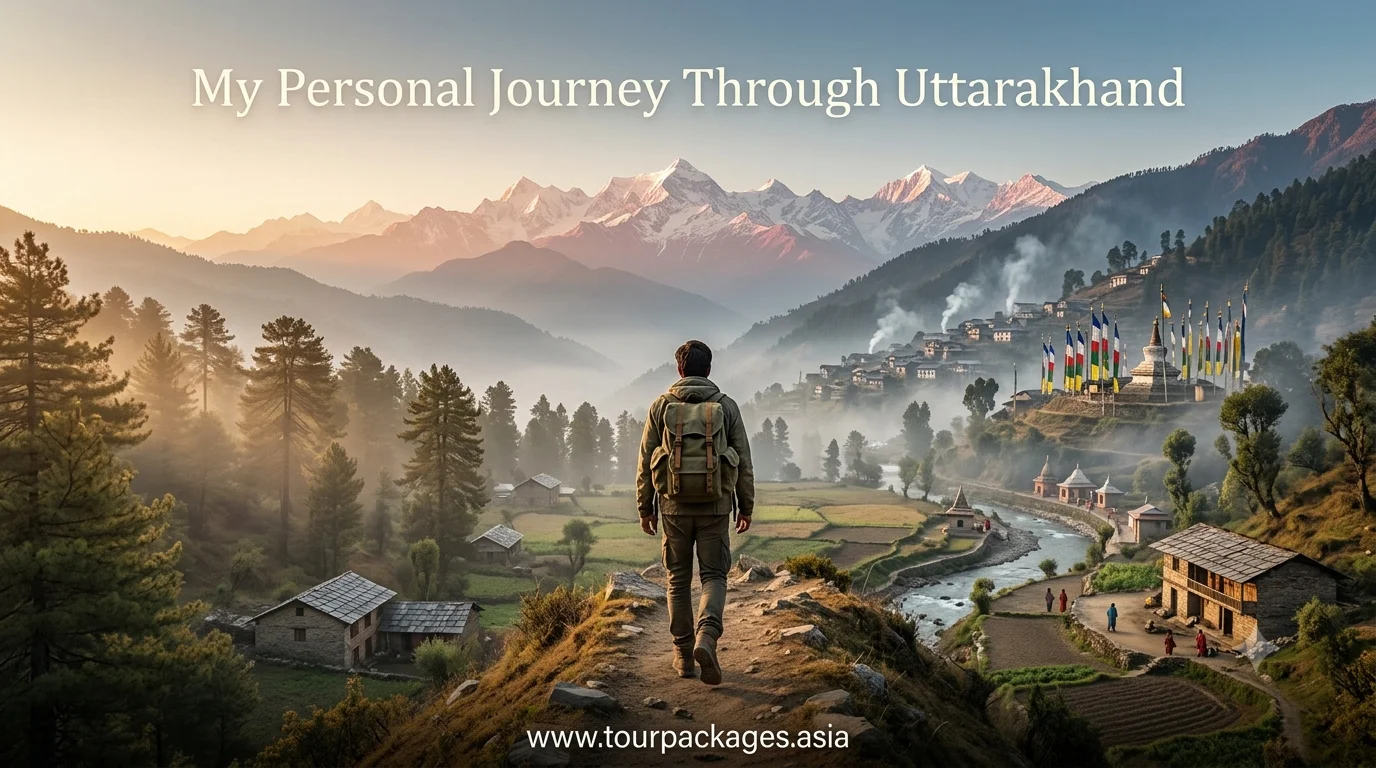
My Personal Journey Through Uttarakhand
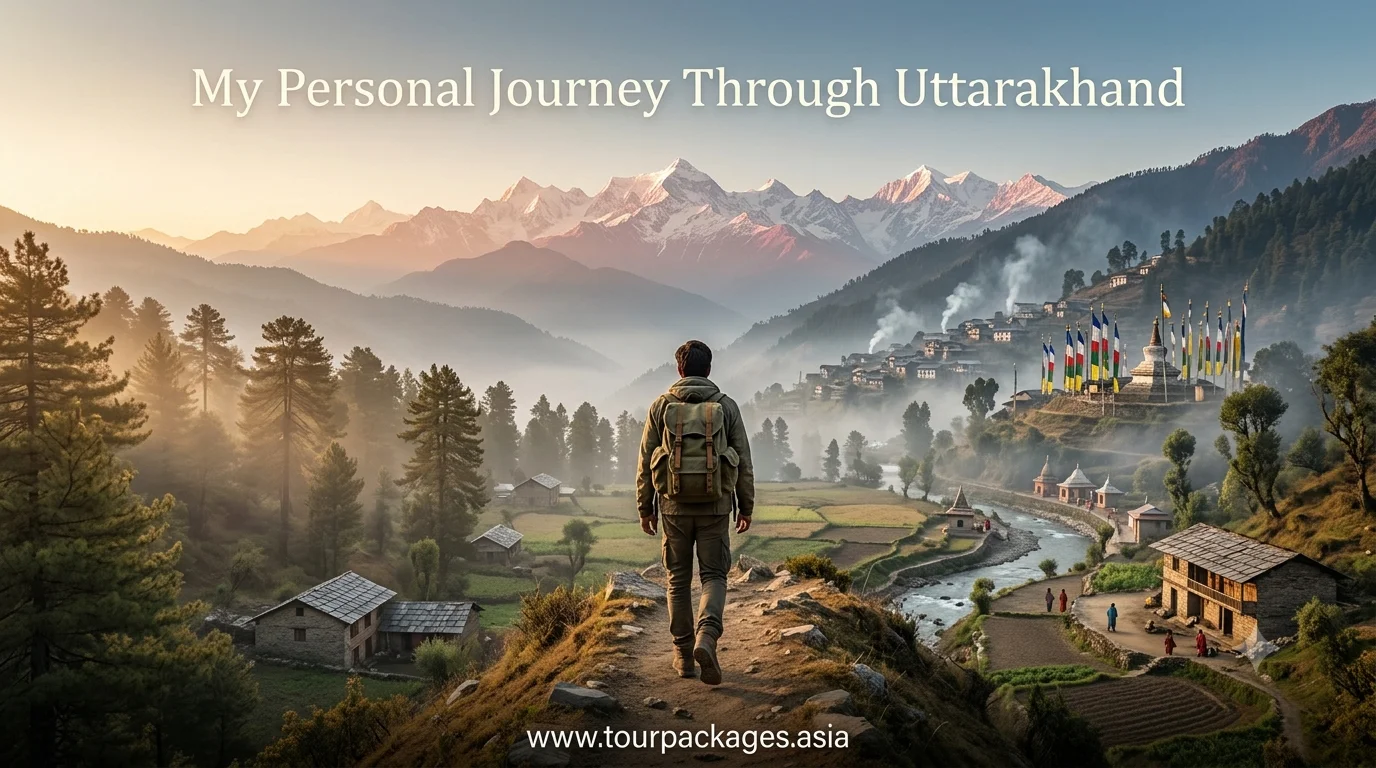
My first serious entry into Uttarakhand was not glamorous. I boarded an overnight bus from Delhi's ISBT Kashmere Gate on a weeknight in April, arriving at Haridwar just as dawn was finding its confidence. The bus dropped me near Har Ki Pauri, and before I had even found a hotel, I was standing at the ghat watching the Ganga in the grey light, its green water moving with a certainty that felt almost deliberate. There were already pilgrims bathing despite the cold. Old women in wet sarees. A young man with a shaved head performing rituals with practiced efficiency. Nobody was performing for tourists. This was simply what happened here, every morning, as it had for a thousand years.
That first morning set the tone for every journey I have taken through Uttarakhand since. The state does not ease you in gently. It confronts you with the real thing — the actual river, the actual mountain, the actual devotion — and leaves you to make of it what you will.
From Haridwar I took the road to Rishikesh, which is only 25 km but feels like crossing into a different world. The road follows the Ganga upstream, the hills closing in gradually, the traffic thinning, the air cooling even in April. By the time I crossed Lakshman Jhula, the suspension bridge swaying slightly under foot traffic, I understood why so many people arrive in Rishikesh for a weekend and stay for a month.
Over subsequent trips, I went further. To the winding roads above Tehri, where you look back and the dam reservoir glitters thousands of feet below. To the high pastures of Chopta, arriving in October when the tourist buses had gone and the meadow was carpeted in frost-stiffened grass. To the remote Johar Valley, where Munsiyari stands at the end of the road looking up at the Panchachuli range — five summits that look like the five fingers of a single colossal hand.
Each trip taught me something different. And the one consistent lesson was this: Uttarakhand travel rewards those who slow down.
Char Dham & Spiritual Uttarakhand
The Char Dham Yatra is, by any measure, among the most demanding pilgrimage circuits in India. The four shrines — Yamunotri, Gangotri, Kedarnath, and Badrinath — are located between 3,100 and 3,900 metres above sea level, accessible only for roughly six months of the year when snow does not close the passes. This is not luxury travel. It is not even comfortable travel in the conventional sense. It is intentional hardship in pursuit of something that most pilgrims struggle to put into words.
Kedarnath, dedicated to Lord Shiva, is the most physically challenging of the four. The trek from Gaurikund is 16 km of steep mountain path, and while pony and palki (palanquin) services are available, many pilgrims choose to walk — some barefoot. When you finally reach the stone shrine at 3,583 metres, with the Kedarnath peak rising directly behind it and prayer flags snapping in the thin air, the effort becomes irrelevant. The atmosphere there is unlike anything I have experienced at any other religious site in India. It is raw and uncompromising and completely real.
Badrinath, dedicated to Lord Vishnu, has a completely different character. It is more accessible — the road comes almost to the shrine door — and sits at the confluence of the Alaknanda river between the Nar and Narayan ranges. The Badrinath temple, painted in vivid colours against the grey of high-altitude rock, is surrounded by a small town that has grown dramatically in recent years. The Tapt Kund hot spring just below the temple is worth visiting early morning, when the steam rises in the cold air and pilgrims queue for a ritual dip.
Gangotri, the source of the spiritual Ganga (though the actual glacier — Gaumukh — is 19 km further), is remarkable for its setting: the temple sits beside the churning river, surrounded by silver-barked trees and deodar forests, with snow peaks visible in every direction. The trek to Gaumukh glacier is among the finest accessible high-altitude walks in the Indian Himalayas and worthy of its own dedicated visit.
Yamunotri, the source of the Yamuna, is the least visited of the four and, in some ways, the most intimate. The path winds through narrow gorges and past hot springs, and the small shrine at the top has a simplicity that the more developed dhams have lost.
For customised Char Dham Yatra packages, TourPackages Asia and Revelation Holidays offer curated itineraries covering all four shrines, helicopter transfers, and accommodation along the route.
Rishikesh — Where the Ganga Speaks Loudest
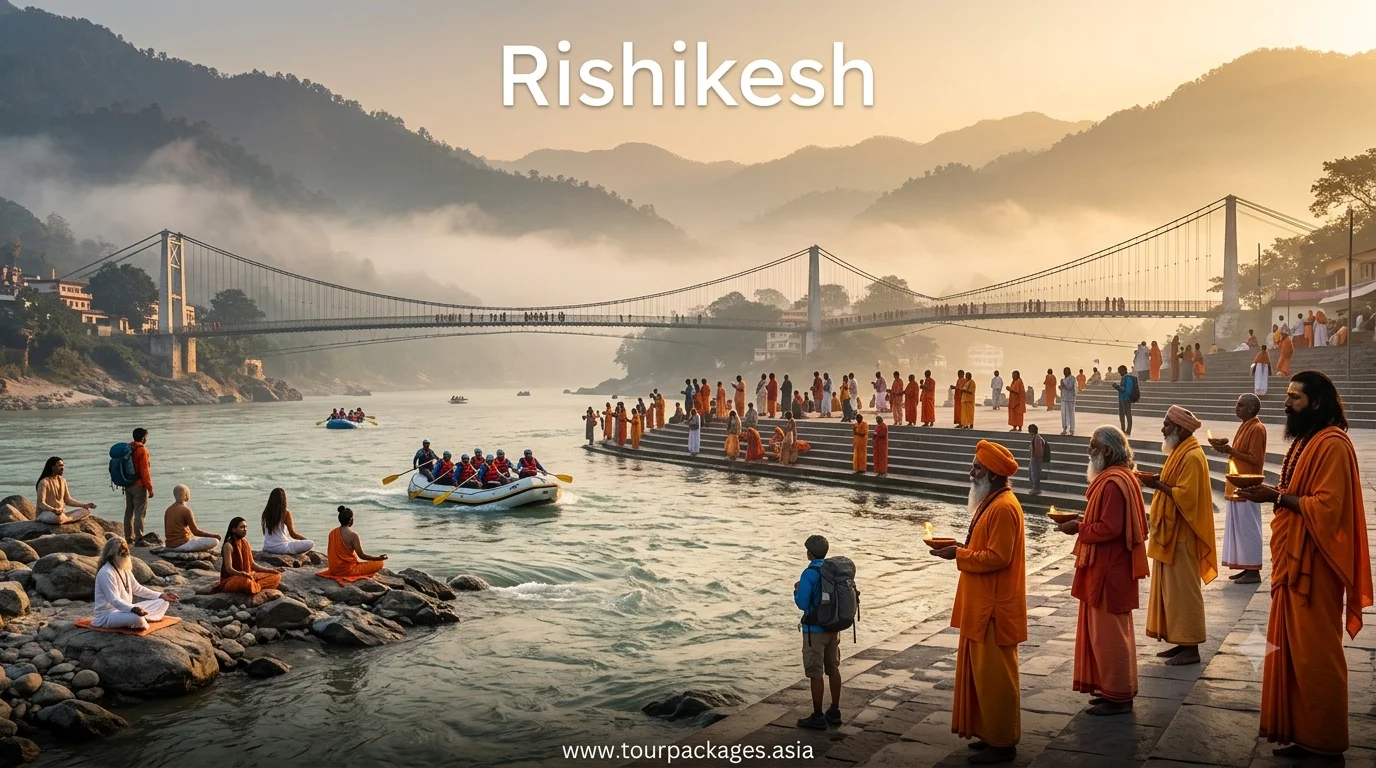
The reality of Rishikesh travel is more layered than either the spiritual tourists or the adventure crowd tend to acknowledge. It is simultaneously India's yoga capital, a river rafting hub, a backpacker town with decent cafes and Israeli-menu restaurants, a place of genuine spiritual learning, and a gateway to the high Himalayas. All of these worlds exist within walking distance of each other, and none of them quite cancels out the others.
The Ganga here is still young and fast. It runs cold and clear from the Himalayan glaciers above, and sitting on one of the ghats in the early morning — particularly Triveni Ghat or the area below Ram Jhula — watching the water and the mountains and the mist lifting off both, is an experience I would recommend to anyone, regardless of spiritual inclination. You do not need to be a devotee to feel the power of a glacier-fed river in the Himalayan foothills at dawn.
The rafting stretches between Shivpuri and Rishikesh are legitimately exciting. Class 3 rapids with names like Roller Coaster, Golf Course, and Return to Sender are handled professionally by operators who have been running these routes for decades. The full day stretch from Marine Drive to Rishikesh (26 km, Class 4) is one of the better river experiences in India. I have done it twice and it never gets routine.
The yoga scene deserves its own acknowledgement. Spiritual travel in Uttarakhand finds its most accessible form here — from week-long residential yoga courses at places like Sivananda Ashram to drop-in classes along the Ram Jhula strip. The quality varies significantly, so it pays to research individual teachers rather than simply booking the nearest available class. The serious practitioners know this.
The cafe culture along the main strip — particularly the lanes above Tapovan and the area around Lakshman Jhula — has matured considerably. The best spots serve proper filter coffee, international breakfasts, and tables with river views. It is a good life if you let yourself into it.
Mussoorie & Nainital — The Classic Uttarakhand Hill Stations
Mussoorie hill station sits at 2,005 metres on the lower Himalayan foothills, an hour and a half above Dehradun by road. It was established by the British in the 1820s and retains that colonial-era character in its architecture, its pedestrian mall road (The Mall), and a certain breezy informality that distinguishes it from the more commercialised hill stations further south. On clear days — and this matters — the views north toward the Greater Himalayas are stunning. Snow peaks stretch across the horizon from the ridge viewpoints above town.
The honest note: Mussoorie in peak season (May-June, October) is genuinely crowded. The approach road from Dehradun can take hours on a weekend. The Mall is shoulder-to-shoulder on evenings. But the crowds thin dramatically if you walk even 20 minutes off the main drag, and the quieter lanes above Landour (a separate cantonment area, more atmospheric and considerably less commercial than the main town) reward those who seek them out.
Nainital travel offers a different experience centred on its lake — the Naini Lake — which sits in a natural hollow in the Kumaon hills at 2,084 metres. The town wraps around three sides of the lake, and in the right light (particularly early morning or in the hour before sunset), the reflection of the surrounding hills in the water is genuinely beautiful. Boating on the lake is a classic activity that has not lost its appeal despite being done by millions of visitors annually.
Nainital is the gateway to the wider Kumaon region — Binsar, Mukteshwar, Ranikhet, and the roads that eventually lead to Munsiyari and the high Himalayan frontier. If you are planning to explore offbeat Uttarakhand, Nainital makes an efficient staging point. The town itself can be covered in a day or two; the region around it could occupy weeks.
Hidden Villages & Offbeat Uttarakhand
This is the section I most wanted to write, because it represents what separates a good Uttarakhand trip from an exceptional one. The hidden places in Uttarakhand are not actually secret — they are simply inconvenient, which in a world of package tourism amounts to much the same thing.
Chopta — The Uttarakhand Nobody Talks About
Chopta sits at 2,680 metres in the Kedarnath Wildlife Sanctuary, a meadow settlement surrounded by dense rhododendron and oak forests. It is the starting point for the trek to Tungnath, the highest Shiva temple in the world at 3,680 metres, and Chandrashila peak at 4,000 metres. In spring, the entire approach road is lined with blooming rhododendrons — red, pink, and white — that create a corridor unlike anything else in the Himalayas. In winter, the snow is heavy and the place is almost completely empty. I have never had a bad day in Chopta.
Munsiyari — End of the Road, Beginning of Everything
Munsiyari is the kind of place travel writers have been describing for decades as Uttarakhand's best-kept secret, which means it is not quite a secret anymore — but it is still substantially less visited than it deserves to be. It sits at the end of a long drive through the Johar Valley, and the view from anywhere in town of the Panchachuli range — five peaks between 6,300 and 6,900 metres — is among the finest mountain panoramas accessible by road in India. The town is small, the accommodation is basic, the people are exceptionally warm. From here you can trek into the Milam, Ralam, and Namik glaciers — routes that require permits but offer genuine Himalayan wilderness.
Kanatal — A Forest Escape Near Mussoorie
Kanatal is a tiny settlement in the deodar forests above the Tehri reservoir, roughly 38 km from Mussoorie. It has almost no permanent tourist infrastructure beyond a handful of forest camp operators, which is precisely its value. If you want cold nights, campfire evenings, and mornings that smell of pine resin with a view of distant snow peaks, Kanatal delivers without requiring you to drive seven hours from Delhi.
Kalap Village — Uttarkashi's Hidden Secret
Kalap, in the Tons river valley of Uttarkashi district, is among the most remote permanently inhabited villages in Uttarakhand accessible without technical climbing. It requires a two-day trek from the roadhead at Netwar and rewards with traditional Garhwali stone architecture, terraced fields, and mountain views that have not changed in centuries. The village community has developed a small eco-tourism initiative — basic homestays, local food, guided treks into the surrounding peaks. This is what Uttarakhand village tourism looks like when it is done right.
Adventure Experiences in Uttarakhand
The adventure in Uttarakhand category is genuinely broad. This is one of India's best states for outdoor activities, and the range covers everything from day-hikes to multi-week expeditions.
Trekking
Trekking in Uttarakhand ranges from the accessible (Tungnath-Chandrashila, 3 km from Chopta), through the popular (Kedarkantha, Har Ki Dun, Valley of Flowers, Roopkund), to the demanding (Nanda Devi Sanctuary approach, Milam Glacier, the Pindari-Kafni circuit). The Valley of Flowers National Park deserves special mention — a UNESCO World Heritage Site in Chamoli district, it blooms from late July to early September with hundreds of alpine wildflower species in a setting that is genuinely astonishing. Most visitors see Uttarakhand trekking as a summer activity, but the October-November window after monsoon offers arguably the finest conditions: clear skies, stable weather, and relatively thin crowds.
River Rafting
Beyond Rishikesh, the Kali river in Kumaon offers multi-day rafting expeditions through deep gorges rarely visited by casual tourists. The Tons river near Uttarkashi is another excellent option for those looking beyond the standard routes. Both require advance booking through registered operators and are weather-dependent.
Skiing at Auli
Auli in the Garhwal Himalayas (3,049 metres) is India's most developed ski destination. The Garhwal Mandal Vikas Nigam (GMVN) operates ski instruction courses through January and February, and the gondola from Joshimath up to the ski slopes runs in both winter (for skiing) and summer (for meadow walks and Himalayan panoramas). It is not the Alps. But for India, it is exceptional — and the views of Nanda Devi from the upper slopes on a clear day are worth the journey whether you ski or not.
Camping
Organised camping in Uttarakhand has grown into a serious industry — from riverside camps along the Ganga near Rishikesh to high-altitude tent camps near Auli, Chopta, and Deoriatal. Quality varies enormously. The better operators provide proper weatherproof tents, sleeping bags rated for the temperatures, and meals cooked on-site. Always confirm altitude, proximity to the nearest road, and cancellation policies before booking.
Why Uttarakhand Works for Every Type of Traveller
The practical value of Uttarakhand as a destination is its genuine versatility. I have seen it misread as a pilgrimage destination that non-religious travellers should skip, or alternatively as a backpacker adventure zone that families should avoid. Neither is true.
Pilgrims find in the Char Dham Yatra a journey that is as physically transformative as it is spiritually significant. The challenge of altitude, distance, and physical discomfort is, for many, precisely the point. Couples — particularly honeymooners — find in Mussoorie, Kanatal, and the forest camp circuit a kind of romantic privacy that neither Goa nor Rajasthan can offer: cool air, fire-lit evenings, fog over the valley at dawn. Families with children discover that Nainital's lake, Mussoorie's cable car, and the gentle treks of Chopta are accessible, genuinely exciting, and not overwhelming. And serious trekkers and mountaineers find in Kumaon and Garhwal a lifetime of routes that would take multiple visits to exhaust.
For anyone searching for Himalayan experiences in India without the permit complexity of Ladakh or the altitude extremes of Spiti, Uttarakhand is the answer. It is accessible, diverse, and largely underestimated.
Best Time to Visit Uttarakhand
Uttarakhand is an all-season destination — but what you can do varies dramatically by time of year, and choosing the wrong season for your specific plans is the most common mistake first-time visitors make.
What Surprised Me the Most
I expected Uttarakhand to be impressive. I did not expect it to be quietly overwhelming in the ways it turned out to be.
The spiritual energy of the state surprised me most — not in a religious sense, necessarily, but in a more fundamental way. There is a quality of attention that the landscape demands. In the high altitudes above Kedarnath or on the meadow at Deoriatal at midnight, under a sky that has too many stars, the mind quiets in ways that no urban wellness practice can quite replicate. This is what people mean when they talk about spiritual travel in Uttarakhand, and I understand now that it is not entirely metaphorical.
The diversity of landscape within a single state also surprised me on repeated visits. That you can be in the subtropical valleys of Rishikesh in the morning and on a snow line above Kedarnath in the afternoon — with a thousand intermediate landscapes between them — is extraordinary. The compressed altitude range between 300 metres and 7,000+ metres produces ecosystems as varied as anything on the planet.
And the raw, unedited beauty of the offbeat areas surprised me every time. Hidden Uttarakhand is not hidden because it lacks beauty — it is hidden because it requires patience and a willingness to sit with basic accommodation and unpredictable road conditions. The rewards are disproportionate.
Honest Notes — What to Prepare For
Every destination has its realities, and Uttarakhand is no exception. These are not reasons to avoid it; they are things to factor into your planning.
Peak season traffic on the Char Dham route is severe. The road between Haridwar, Rishikesh, and the hills above carries an enormous volume of pilgrim traffic from May through June. Distances that look manageable on a map can take three or four times as long as expected when convoys of buses and tempo travellers are moving slowly on single-lane mountain roads. Build significant buffer time into any Char Dham itinerary.
Monsoon road conditions require constant monitoring. Landslides close roads without warning, sometimes for hours and sometimes for days. The Badrinath Highway is particularly susceptible. Travelling during July and August with a fixed return flight is a genuine risk — have a contingency plan.
Popular spots in Uttarakhand — Rishikesh's main ghats, Mussoorie's Mall Road, Nainital's lakefront — can feel overwhelmingly crowded during school holidays and long weekends. The solution is consistent and simple: go early, go in shoulder season, or go to the places next door that carry none of the crowds and most of the landscape.
Who Should Visit Uttarakhand — and Who Should Think Twice
Uttarakhand is Right For You If...
- You are drawn to pilgrimage travel or spiritual experiences
- Mountains, rivers, and forests are the landscape you want to be in
- Adventure activities — trekking, rafting, camping — are on your list
- You enjoy the combination of spiritual and backpacker culture
- You are a couple looking for cool, scenic, private escapes
- You are a family comfortable with mountain roads and basic facilities
- You want to go somewhere in India that genuinely rewards slow travel
Think Carefully If...
- You are uncomfortable with long, winding mountain roads
- Luxury hotels and resort-level amenities are non-negotiable
- Flexibility with itinerary is difficult (weather disrupts plans often)
- You have significant altitude sensitivity or heart/respiratory conditions
- You are expecting European hill station comfort levels in offbeat areas
Suggested Uttarakhand Itinerary (8-10 Days)
This is a balanced route that mixes the essential Char Dham experience with Rishikesh and at least one offbeat destination. Adjust based on your primary interest.
| Day | Location | Highlights |
|---|---|---|
| Day 1 | Delhi → Haridwar / Rishikesh | Overnight train or bus. Har Ki Pauri Ganga aarti at dusk. Settle in. |
| Day 2 | Rishikesh | Ram Jhula, Triveni Ghat dawn dip, yoga class, river rafting (Shivpuri stretch), cafe evenings. |
| Day 3 | Rishikesh → Mussoorie | Drive via Chamba (scenic alternative route). Explore Landour, Gun Hill viewpoint. |
| Day 4 | Mussoorie → Chopta | Drive via Uttarkashi or Tehri route. Evening in the meadow. Stargazing. |
| Day 5 | Chopta → Kedarnath route | Tungnath sunrise trek, then drive toward Gaurikund. Overnight at Sonprayag. |
| Day 6 | Kedarnath | Trek or pony ride to Kedarnath. Temple, meditation, evening return to base. |
| Day 7 | Badrinath | Drive via Joshimath. Badrinath temple, Tapt Kund, Mana village (last Indian village before Tibet). |
| Day 8 | Auli / Joshimath | Gondola, meadow walks or skiing (winter). Or return via Nainital route. |
| Day 9-10 | Nainital / Return | Lake, Binsar Wildlife Sanctuary if time permits. Return to Delhi via Kathgodam train. |
For a customised Uttarakhand itinerary tailored to your group size, dates, and interests, contact TourPackages Asia directly.
Essential Travel Tips for Uttarakhand
Click each panel to expand detailed, practical tips across the five most important planning areas.
Before You Go — Planning Tips
- Register for Char Dham Yatra online well in advance — the government imposes daily visitor limits at each shrine during peak season and the portal frequently reaches capacity
- Check landslide and road closure alerts on the Uttarakhand Tourism official website and local traffic police updates before your travel dates
- Book accommodation in advance for May-June and October — quality rooms in popular spots like Kedarnath base camp, Badrinath, and Mussoorie fill months ahead
- Travel insurance is strongly advisable — mountain itineraries are frequently disrupted by weather, and emergency helicopter evacuations from high-altitude areas are expensive
- For Char Dham, carry basic medicines — altitude sickness prevention medication (acetazolamide/Diamox, prescribed), analgesics, and rehydration salts
- If planning winter travel (November-March), confirm road status for your specific route — some passes close completely with no guaranteed reopening date
Getting Around Uttarakhand
- Private cab is the most flexible and practical option for mountain travel — shared tempo travellers are cheaper but operate on fixed timings that may not suit pilgrimage schedules
- The Jolly Grant Airport (Dehradun) has direct flights from Delhi, Mumbai, and Bangalore — book early as fares spike during pilgrimage season
- Haridwar and Dehradun have good rail connectivity from Delhi (5-6 hrs on fast trains) and make ideal bases for starting a Char Dham or Rishikesh trip
- Kathgodam station is the rail gateway for Kumaon (Nainital, Munsiyari circuit) — taxis meet trains and the drive to Nainital takes around 2 hours
- For Kedarnath, helicopter services operate from Phata, Guptkashi, and Sirsi during May-June and September-October — book months in advance online
- Mountain roads are narrow and shared with pilgrimage buses — build significant time buffers into all point-to-point travel estimates
Packing for Uttarakhand
- A quality rain jacket is essential year-round — mountain weather changes within minutes at altitude and brief but heavy rain can occur even in summer
- For Char Dham and any trek above 2,500 metres, carry warm layers even in May — nighttime temperatures can drop to near-zero even in peak season
- Sturdy, broken-in walking shoes (not new ones) are critical — the Kedarnath trek especially is 16 km of uneven terrain
- Carry sufficient cash — ATMs in smaller mountain towns like Badrinath, Chopta, and Munsiyari are unreliable and frequently out of service
- A headlamp (not a phone torch) for early morning treks and power outages in remote areas
- A reusable water bottle with a filter — good for reducing plastic waste and essential where packaged water is unavailable
Altitude and Health
- Ascend slowly — if you are going above 3,000 metres (Kedarnath, Badrinath, Auli, Gangotri), avoid going directly from sea level to high altitude in one day
- Symptoms of Acute Mountain Sickness (AMS) include headache, nausea, dizziness, and fatigue — if these develop, descend immediately. Do not push through AMS symptoms at altitude
- Stay hydrated — drink 3-4 litres of water daily at altitude, avoid alcohol for the first 48 hours after reaching 3,000+ metres
- Consult a doctor before travel if you have cardiac, respiratory, or hypertension conditions — the Char Dham circuit involves significant physical exertion at altitude
- The GMVN and state health posts at Kedarnath and Badrinath provide basic medical support, but the nearest full hospital for emergencies is in Rishikesh or Srinagar (Garhwal)
- Do not overestimate your fitness level — many pilgrims who walk 5 km regularly at sea level find the Kedarnath trek significantly more demanding than expected
Money and Connectivity
- Carry 5,000-10,000 rupees in cash when heading to any mountain destination beyond Rishikesh or Nainital — digital payments work in most towns but not in remote villages or on Char Dham routes
- BSNL and Jio have the widest mobile coverage in Uttarakhand mountain areas — other operators may lose signal above certain altitudes or in valleys
- Badrinath, Kedarnath base camp, and Gangotri have limited but functional mobile connectivity — do not assume WhatsApp or maps will work consistently
- Download offline maps (Google Maps or Maps.me) for your route before leaving urban areas — extremely useful when connectivity drops
- Most good hotels in Rishikesh, Mussoorie, and Nainital accept card and UPI — but guesthouses and dhabas on mountain routes are cash-only
- International travellers should carry a Forex card with adequate INR loaded — foreign card acceptance in mountain areas is rare
Plan Your Uttarakhand Trip
Tell us what you are looking for — pilgrimage, adventure, hill station, or offbeat Himalayan exploration — and we will send you a personalised itinerary within 24 hours.
Or email directly: tourpackages.asia@gmail.com
Frequently Asked Questions — Uttarakhand Travel 2026
Detailed answers to the questions travellers ask most about planning an Uttarakhand journey.

Comments