Top Wellness Mindful Travel Packages in Asia 2026 — Ayurveda Yoga Healing Retreats
Revelation
April 12, 2026
Posted By : Admin
Top Wellness Mindful Travel Packages in Asia 2026 — Ayurveda Yoga Healing Retreats
Discover the top wellness and mindful travel packages in Asia for 2026, designed to rejuvenate your body, mind, and spirit. From yoga retreats in Bali to meditation sanctuaries in Thailand, these curated journeys blend cultural immersion with holistic healing. Perfect for travelers seeking balance, relaxation, and transformation, this guide highlights the best destinations and experiences to inspire your next mindful adventure
Top Wellness & Mindful Travel
Packages in Asia 2026
Not every holiday should be a sprint. The most valuable travel experiences are often the ones that slow you down, restore your nervous system, and return you home genuinely different from when you left. Asia has been offering this for thousands of years.
Asia's healing traditions are not curated for the tourism industry. They predate it by thousands of years — and that authenticity is precisely what makes an Asian wellness journey different from anything a European or North American retreat can offer.
Wellness tourism crossed USD 1.2 trillion globally in 2026, and Asia captures nearly 30 percent of all international arrivals in this category. The reason is not merely price, although Asia's healing retreats are extraordinary value compared to European equivalents. The deeper reason is that Asia's wellness traditions are genuine. When you receive a Panchakarma treatment in Kerala, you are engaging with a system of medicine over 3,000 years old, administered by physicians who trained for decades, using herbs grown on the property and protocols refined across generations. When you attend a pre-dawn yoga session on the banks of the Ganges in Rishikesh, you are doing something humans have done in that place for millennia. This is not stage-dressing. This is where it comes from.
The wellness travel landscape in Asia in 2026 has evolved considerably. The Global Wellness Summit identifies AI-powered personalisation as a mainstream feature of premium Asian retreats — programmes now use sleep data, stress biomarkers, and dietary profiles to tailor daily schedules to the individual. Micro-retreats of 3–5 days are growing fast, targeting professionals who cannot take two weeks but can carve out a long weekend for a genuine reset. And destinations are diversifying: while Kerala, Bali, and Rishikesh remain the anchor names, Japan's alpine onsen regions, Luang Prabang's slow-travel culture, and Sri Lanka's coastal Ayurveda scene are all experiencing significant growth among educated, intentional travellers. According to peer-reviewed environmental medicine research, even forest immersion alone produces measurable physiological benefits — the science behind Asia's traditional healing practices is now well documented.
This guide covers eight destinations in depth. For help building an itinerary that goes deeper than any article can, our team at RTH World Tour Packages and Revelation Holidays has planned wellness journeys for hundreds of travellers across all eight destinations.
Before you book: Authentic Ayurveda and Panchakarma programmes require a physician consultation before treatments begin. Reputable centres will take your health history and may adjust treatments accordingly. Any centre offering Panchakarma without prior medical assessment is offering spa-styled Ayurvedic treatments — a legitimate experience, but a different one. Know which you are booking.
The 8 Best Wellness and Mindful Travel Destinations in Asia 2026
Each destination below is assessed on the healing tradition it offers, what a realistic programme involves, the cost range, best season, and who each experience is genuinely best suited for. All eight are reachable from India on direct or one-stop flights.
01
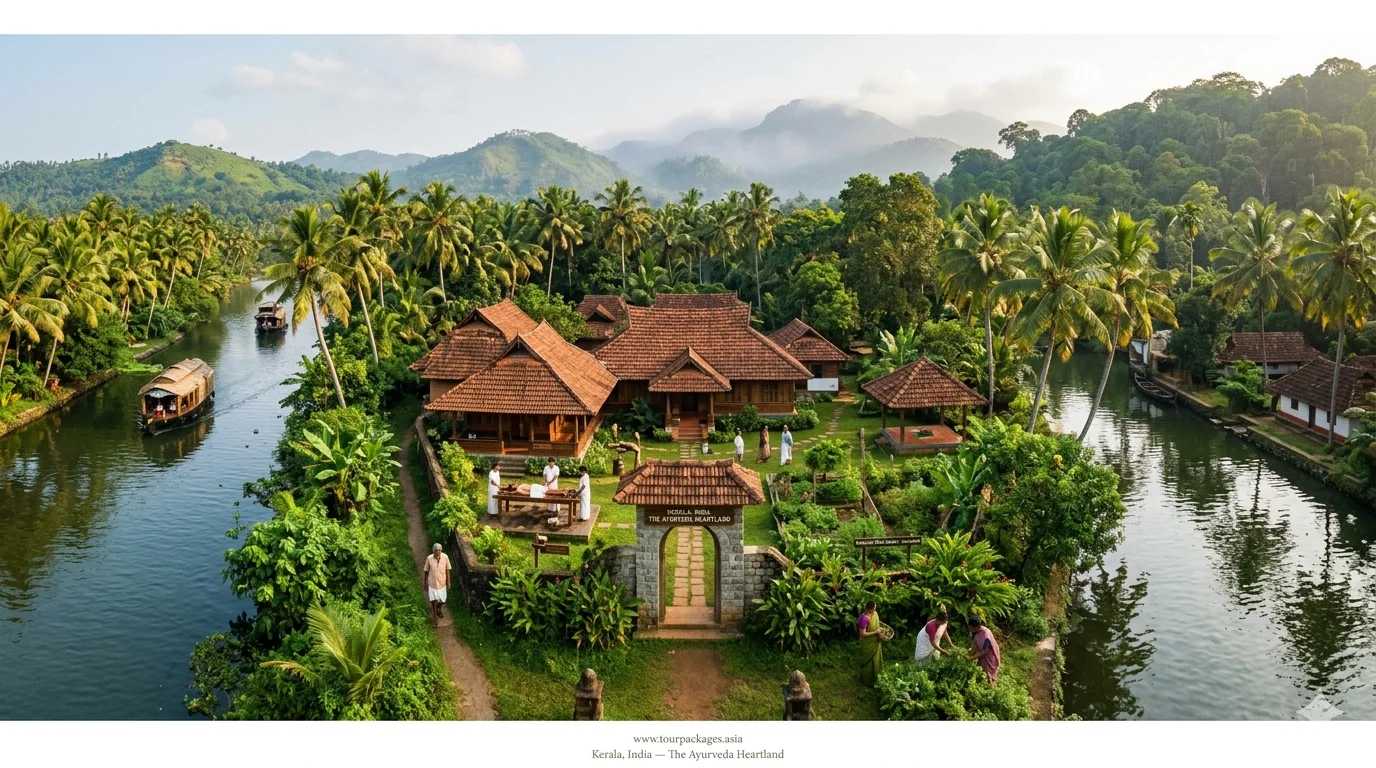
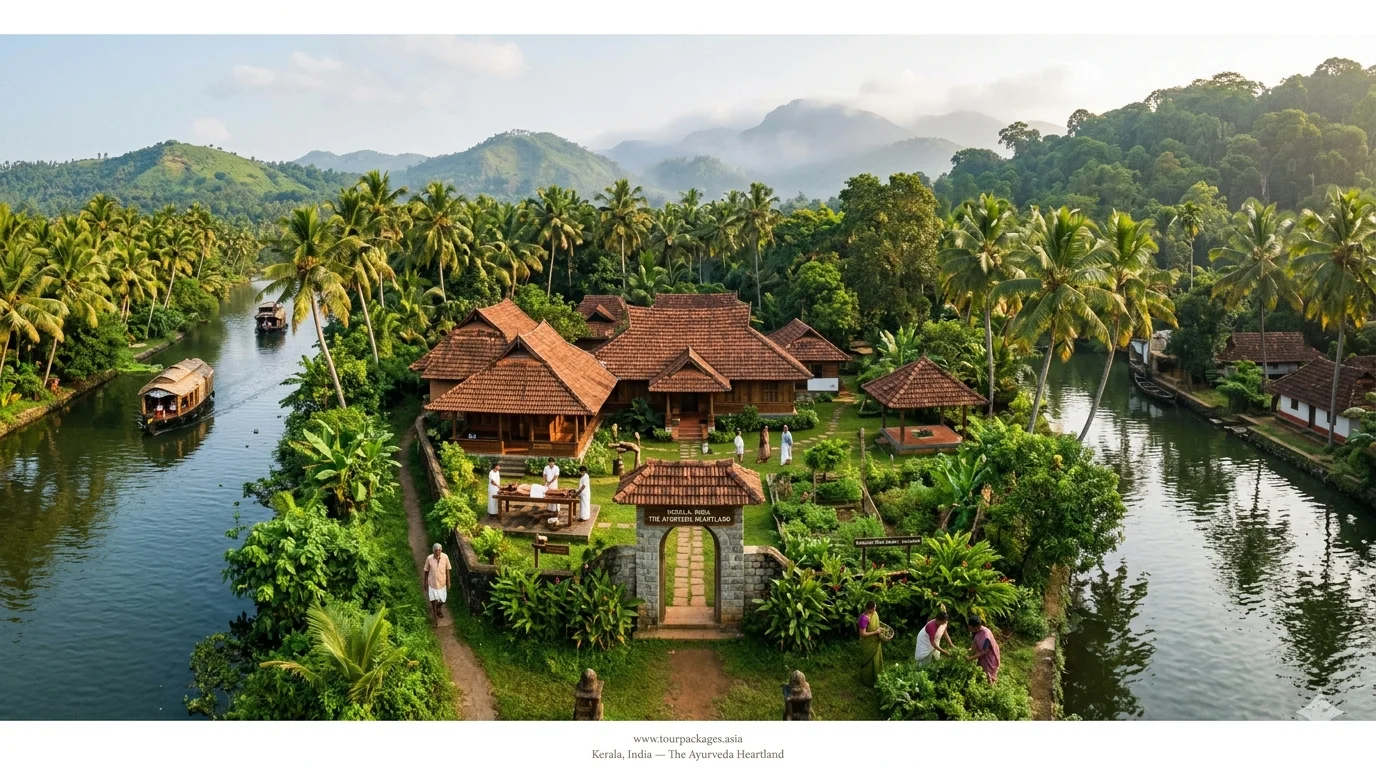
Kerala, India — The Ayurveda Heartland
Where Ayurveda is not a luxury add-on — it is the reason people come, and keep coming back
Best AyurvedaPanchakarmaState Regulated14–28 Day Programmes
Programme Length7–28 days
Cost RangeINR 8,000–40,000/day
Best SeasonJune–Aug (monsoon) or Oct–Mar
Best ForDetox, chronic stress, digestive health
Kerala has the most comprehensive and rigorously regulated Ayurveda infrastructure on earth. The state government's Green Leaf and Olive Leaf certification system grades centres on physician qualifications, herb sourcing, and facility standards — creating a hierarchy that makes choosing a reputable centre considerably more straightforward than in other regions. Over 800 licensed centres operate under this system, ranging from simple forest clinics at INR 3,000 per day with shared rooms to luxury backwater estate retreats at INR 30,000–40,000 per day with private villas and bespoke programmes. Traditional Ayurvedic wisdom identifies the monsoon season (June–August) as optimal for Panchakarma — humidity opens the skin's pores, allowing herbal oils to penetrate more effectively, and the cool overcast weather reduces the Pitta fire that would otherwise make intense treatments taxing.
A proper Kerala Ayurveda stay begins with pulse diagnosis (Nadi Pariksha) by a qualified physician, who assesses your dosha constitution and identifies the imbalances the programme will address. Daily treatments might include Shirodhara (warm oil stream over the forehead — the most deeply calming treatment in Ayurveda), Abhyanga (full-body warm oil massage), Swedana (herbal steam), and targeted therapies depending on your programme focus. Meals are personalised according to your dosha. This is medicine, not spa — practised with the seriousness medicine deserves. Key areas: Thrissur/Palakkad (traditional family clinics, highest authenticity), Kumarakom/Alleppey (backwater luxury settings), Wayanad (hill station, cooler temperatures), Kovalam/Varkala (coastal, more resort-oriented). Our India wellness packages include certified Kerala centre bookings.
02
Rishikesh, India — Yoga Capital of the World
On the banks of the Ganges, in the Himalayan foothills — where yoga was most fully developed and is still most genuinely taught
There is a reason Rishikesh earned its title and has kept it for decades. Yoga in Rishikesh is not a fitness class with an Indian setting. The teachers here — many from families that have practised and instructed for generations — bring a philosophical, anatomical, and spiritual depth that is genuinely difficult to find elsewhere. Ashrams teaching classical yoga and Vedanta philosophy offer ten-day intensives for USD 200–600 including simple shared accommodation and three vegetarian meals daily. At the other end, Ananda in the Himalayas — 45 minutes above Haridwar in the forested hills, winner of the Global Spa Award for Best Ayurveda Retreat 2026 — offers luxury villa accommodation, physician-designed Ayurveda and yoga programmes, and cuisine tailored to your dosha. These are not different versions of the same thing; they serve different purposes and different people. The Ganges riverbank at Rishikesh — the Laxman Jhula area at 5:30 AM, river sound, mountain light — provides the sensory environment in which practice feels categorically different. Our India tour packages include Rishikesh wellness circuits, and our India nature guide covers the broader Uttarakhand region.
03
Bali, Indonesia — Ubud Healing Retreats
120+ registered wellness centres within 15 km — Southeast Asia's most established mindfulness hub
Best ForYoga, emotional healing, plant-based living
Ubud's wellness infrastructure is extraordinary in its density and diversity. Over 120 registered centres operate within 15 kilometres, from world-famous COMO Shambhala Estate — offering fully personalised integrated wellness programmes combining Ayurveda, yoga, and functional nutrition in one of Asia's finest jungle settings — to family-run studios offering drop-in morning yoga for USD 12. The Balinese cultural concept of Tri Hita Karana (harmony between humans, nature, and the divine) gives Ubud's wellness scene a spiritual coherence that purely commercial destinations cannot manufacture.
Daily retreats here typically include two meditation sessions, one yoga practice of 90–120 minutes, and three plant-based meals from seasonal local ingredients. Many retreats limit participants to 20–30 guests, creating genuine personal attention and authentic community. Sound ceremonies — Tibetan singing bowls, gongs, and Balinese gamelan instruments producing states of deep relaxation — are a uniquely Ubud modality that regular participants describe as profoundly restorative. In 2026 Ubud's programmes increasingly incorporate AI-personalised itineraries, digital-detox protocols, and modern functional medicine markers alongside traditional Balinese healing assessments. Rice-field walks, guided journaling, and water ceremony experiences are woven through the day. From India, Bali is 6–8 hours via Singapore or Kuala Lumpur. See our world tour packages for Bali wellness circuits.
04
Koh Samui, Thailand — Luxury Wellness Resorts
Where traditional Thai healing meets clinical precision and Gulf of Thailand views — Kamalaya and beyond
Kamalaya Wellness Sanctuary on Koh Samui's southern coast — a multi-award-winning resort built around a Buddhist monk's cave — is one of Asia's most credible references for premium wellness travel. Its programmes address specific health goals (burnout recovery, detoxification, sleep optimisation) with clinical seriousness that distinguishes genuine wellness retreats from luxury spa experiences. The care-to-guest ratio ensures genuine personalisation. Fasting and gut-reset programmes are particularly well developed on Koh Samui — supervised juice fasting combined with colonic hydrotherapy, abdominal massage, and nutritional reintroduction, delivered in an ocean-view setting that supports this kind of deep physical work in a way that an urban clinic cannot replicate. Thailand's traditional Nuad Thai massage — inscribed on UNESCO's Intangible Cultural Heritage list in 2019 — provides an additional therapeutic dimension when done consistently over 7–14 days. Thailand's Destination Thailand Visa allows 180-day stays, excellent for longer programmes. Our Asia 2026 travel guide covers Thailand visa details.
05
Japan — Forest Bathing and Onsen Therapy
Healing through stillness and mineral water — the scientifically documented benefits of ancient forest immersion
Shinrin-YokuOnsen Hot SpringsZen MinimalismYear-Round
Experience TypeDaily ritual, not structured programme
Cost RangeUSD 150–600/night (ryokan)
Best SeasonYear-round (autumn and winter peak)
Best ForStress recovery, sleep, mental stillness
Japan approaches wellness without a treatment menu. The healing is embedded in the daily rhythm of a traditional ryokan in the alpine onsen regions: two or three mineral-water soaks daily at 40–42°C; seasonal kaiseki cuisine prepared from local ingredients in the Zen-influenced tradition of food as nourishment; sleeping on futons in tatami rooms stripped of every visual complication; and walking forest trails that surround most traditional onsen towns at whatever pace is honest.
The practice of Shinrin-Yoku (forest bathing) was formalised by the Japanese government in the 1980s and has generated substantial peer-reviewed scientific evidence confirming measurable reductions in cortisol, blood pressure, and heart rate; improvements in NK immune cell activity; and reductions in anxiety and depression scores after sustained forest immersion. This is not metaphor — the volatile organic compounds (phytoncides) released by trees, combined with the quality of filtered forest light and the acoustic environment of woodland, produce parasympathetic nervous system activation that is genuine and lasting. Best onsen regions: Hakone (90 min from Tokyo), Kinosaki Onsen (seven public baths connected by a stone street in Hyogo), Kurokawa Onsen (Kyushu, most traditional), Nyuto Onsen (remote Akita, most secluded). See our Japan tour packages for ryokan and onsen circuit planning.
06
The Himalayas — Vipassana and Altitude Healing
The world's oldest meditation traditions, in the highest landscape on earth — Dharamshala, Dehradun, Rishikesh
Programme Length10–30 days (or 3–7 for other formats)
Cost RangeFree (donation) to USD 300/day
Best SeasonApril–June, September–November
Best ForDeep meditation, emotional clarity, silence
The Himalayan region offers something no coastal wellness destination can: the combination of altitude, silence, absence of light pollution, and proximity to the oldest continuous meditation traditions on earth. Vipassana meditation — the systematic technique of observing bodily sensations without reaction — is available in 10-day residential silent retreats on a donation basis across Dehradun, Dharamshala, and Nepal's Kathmandu Valley. No prior meditation experience is required. Participants observe complete silence for 10 days, meditating 10 hours daily, following a schedule of 4 AM wake-up, structured sessions, vegetarian meals, and evening discourses. These retreats are among the most life-changing experiences in any wellness category — and among the most affordable.
Dharamshala in Himachal Pradesh — home of the Tibetan government-in-exile — hosts Tibetan Buddhist centres where visitors attend teachings and join guided meditation sessions with monks. Nepal's Kopan Monastery runs month-long courses covering Buddhist philosophy, walking meditation, and the contemplative practice that high-altitude mountain hiking naturally becomes when done mindfully. Six Senses Vana, near Dehradun, represents the luxury Himalayan wellness tier — an integrated retreat combining Ayurveda, yoga, meditation, and forest walking in a property recognised alongside Ananda as one of India's finest. Fly to Dehradun (Jolly Grant Airport) from all major Indian cities in 1–2 hours, or reach Rishikesh by road from Delhi in 4–5 hours. The Himalayan region also connects naturally with our India nature travel guide.
07
Sri Lanka — Detox and Coastal Ayurveda
Authentic Ayurveda in a quieter, less commercialised setting — forest hermitages, coastal clinics and highland retreats
Sri Lanka's Ayurveda tradition shares the same foundational texts and therapeutic principles as Kerala's but delivers them at a different pace and price point. The country's smaller scale, the relative absence of mass tourism at its inland centres, and the extraordinary natural setting of the Kandy and Ella highlands — lush green tea-country landscapes with forest trails, waterfalls, and a coolness that feels restorative after India's heat — combine to create a wellness experience that feels genuinely unhurried. Barberyn Ayurveda Resorts on the southern coast have operated for decades and maintain clinical rigour that earned international recognition. The Ella and Kandy districts offer boutique properties combining forest hermitage settings with Theravada Buddhist mindfulness practices and highland walking routes.
Sri Lanka's silent forest hermitages — some operating under the Theravada forest tradition on a donation basis — offer the most ascetically authentic meditation experiences available outside a formal Vipassana programme: simple kuti accommodation in forested settings, instruction in walking and sitting meditation, and a daily rhythm determined entirely by natural light. These are not for everyone, but for travellers drawn to genuine practice over lifestyle wellness, they are among the most valuable experiences in Asia. Sri Lanka is visa-on-arrival (Electronic Travel Authorisation) for Indian nationals for 30 days, extendable. Direct flights from Chennai (1 hour), Bengaluru (1.5 hours), and Hyderabad make it one of the most accessible international wellness destinations from South India.
08
Luang Prabang, Laos — Slow Travel Mindfulness
When the destination itself is the practice — one of Asia's most perfectly scaled cities for mindful living
Luang Prabang does not have a wellness industry in the formal sense. What it has is something more difficult to manufacture: a pace of life genuinely different from the speed at which most of us operate, embedded in a UNESCO World Heritage setting at the confluence of the Mekong and Nam Khan rivers, shaped by a Buddhist calendar that structures daily life around morning alms-giving, evening prayer, and the river's rhythm. The population is approximately 60,000. Fewer than 1 million visitors arrive annually. The result is a place that has retained a quality of quiet that larger wellness destinations spend enormous resources trying to simulate.
Slow travel mindfulness in Luang Prabang works simply: wake before dawn; watch the Tak Bat morning alms-giving procession — monks in saffron walking in silence as local residents offer sticky rice, a daily ritual continuing without interruption for centuries; take a boat upriver; walk through coffee plantations; eat a simple Lao lunch; rest in the afternoon heat; read, write, sit by the river at evening. This is the programme. No schedule exists except the one the day provides. For travellers whose lives are entirely structured around urgency and deadline, Luang Prabang's insistence on a different pace can be genuinely one of the most restorative experiences available — precisely because it has no ambition to be a wellness retreat. Combine with our Southeast Asia tour packages.
Choosing the Right Wellness Experience — Quick Reference
The most common mistake in planning a wellness holiday in Asia is choosing a destination before identifying what kind of healing you actually need. This table maps goals to destinations as a starting framework.
Destination-by-goal reference — 2026
Your Goal
Best Destination
Programme Type
Min. Duration
Detoxification / Gut Reset
Kerala or Koh Samui
Panchakarma or supervised fasting
14 days
Stress and Burnout Recovery
Rishikesh, Bali Ubud or Koh Samui
Yoga + meditation + naturopathy
7 days
Deep Meditation Practice
Himalayas — Vipassana centres
10-day silent retreat
10 days
Sleep Improvement
Japan onsen regions
Mineral bathing + forest walks + seasonal food
5 nights
Yoga Teacher Training (200-hr)
Rishikesh or Bali
Yoga Alliance certified programme
21–28 days
Emotional Healing
Bali Ubud or Sri Lanka
Sound ceremony, journaling, forest hermitage
7–14 days
Deceleration and Rest
Luang Prabang
Slow travel, river rhythm, cultural immersion
5–10 days
Chronic Pain / Inflammation
Kerala Ayurveda clinic
Kativasthi, Pizhichil, Njavarakizhi
14–21 days
Combining destinations: Many of the most effective wellness journeys in Asia combine two destinations — a week of intensive Ayurveda in Kerala followed by 5 days of Rishikesh yoga, or Japan onsen recovery followed by Luang Prabang slow travel. The transitions between different healing environments, each reinforcing a different dimension of recovery, often produce better sustained results than a single-location stay of the same total duration. RTH regularly designs these hybrid itineraries.
What Does a Wellness Trip to Asia Actually Cost?
The range is vast — from free Vipassana retreats to USD 40,000 per week at Ananda. The table below gives realistic weekly all-inclusive costs (accommodation, programme, meals) for a single traveller. International flights excluded.
Weekly all-inclusive retreat costs — single traveller — 2026
Destination
Budget
Mid-Range
Premium
Kerala (Ayurveda clinic)
INR 40,000–60,000
INR 80,000–1,50,000
INR 2,50,000+
Rishikesh (yoga ashram)
USD 200–400
USD 600–1,200
USD 2,500–5,000 (Ananda)
Bali Ubud (retreat)
USD 700–1,000
USD 1,500–2,500
USD 4,000+ (COMO Shambhala)
Koh Samui
USD 1,500–2,500
USD 3,500–5,000
USD 6,000+ (Kamalaya)
Japan Onsen (ryokan)
USD 800–1,200
USD 1,500–2,500
USD 3,500+
Himalayas
Free (donation)
USD 300–600
USD 1,500–3,500 (Six Senses Vana)
Sri Lanka
USD 400–700
USD 800–1,500
USD 2,000–3,500
Luang Prabang
USD 300–500
USD 500–1,000
USD 1,200–2,500
"The question is never just about cost. It is about what happens in the weeks after you return. A genuine programme — 14 days of Panchakarma in Kerala or 10 days of Vipassana in the Himalayas — produces changes that outlast the holiday by months. That is the return on investment that wellness travel is actually offering."
— RTH Wellness Travel Desk
Top Wellness Experiences to Put on Your Asia Travel List
Twelve experiences that define what mindful and healing travel in Asia genuinely feels like — selected not for visual impact but for transformative depth.
1
Shirodhara at a Kerala Ayurveda clinic
Kerala · Warm oil stream over the forehead for 45 minutes · The closest thing to involuntary meditation available anywhere
2
Sunrise yoga on the banks of the Ganges, Rishikesh
Uttarakhand · 5:30 AM · River sound · The light arriving over the hills · Nothing artificial about any of it
3
10-day Vipassana silent retreat in the Himalayas
Dharamshala or Dehradun · No speaking, no devices, 10 hours of daily practice · Possibly the hardest and most valuable week of your year
4
Outdoor onsen at a Hakone ryokan — Fuji visible, steam rising at dawn
Kanagawa, Japan · Mineral-rich water at 42°C · Silence · The mountain · No further agenda required
5
Sound ceremony at an Ubud retreat — Tibetan bowls at dusk in an open-air pavilion
Bali · The specific quality of physical relaxation that no other modality produces quite this way
6
Forest bathing — Shinrin-Yoku — in the Japanese Alps
Nagano · Two hours, no destination, no pace, just trees and the science they trigger without asking
7
Panchakarma Day 7 — the day the programme begins working
Kerala · Every person who has done a proper Panchakarma programme describes this day differently — but they all describe it
8
Dawn Tak Bat in Luang Prabang — monks, silence, river mist
Laos · The morning alms-giving procession uninterrupted for centuries · Stand back and simply watch
9
Pulse diagnosis (Nadi Pariksha) with a Kerala Ayurvedic physician
Kerala · 20 minutes, three fingers, a system of knowledge that describes your health history without asking for it
10
Plant-based detox Day 5, Koh Samui — the energy returns
Thailand · The day your sleep improves, your thoughts clear, and you begin to understand what the previous four days were preparing
11
Yoga Nidra group practice at an Ubud retreat — 45 minutes, complete surrender
Bali · The practice that delivers the physiological effects of 3–4 hours of deep sleep in less than an hour of conscious rest
12
Sri Lanka tea plantation walk at 1,800 metres — cool air, red soil, silence
Ella, Sri Lanka · The kind of walking that becomes its own meditation — long, uphill, with your thoughts having nowhere to hide
Practical Planning Tips for Wellness Travel in Asia
Click each panel for targeted advice on every aspect of planning your healing journey — from choosing a centre to managing re-entry after your retreat ends.
Choosing a Centre
How to Choose an Authentic Wellness Centre
Kerala Ayurveda: Look for Green Leaf or Olive Leaf certification from Kerala Tourism. Insist on a physician consultation (not a wellness coordinator) before any treatments begin. Physicians should hold BAMS (Bachelor of Ayurvedic Medicine and Surgery) degrees — this is the minimum clinical qualification for authentic Ayurvedic treatment in India.
Yoga retreats: Verify instructor credentials on Yoga Alliance (international) or the Yoga Certification Board of India. Know which style you need before booking — Hatha, Ashtanga, Iyengar, Kundalini, Yin, and Restorative all have different effects and suit different conditions and fitness levels.
Vipassana meditation: Centres in the S.N. Goenka tradition are the most widely available and consistently structured. Find registered centres at dhamma.org — the standard is reliable worldwide. For Tibetan Buddhist instruction, Tushita Meditation Centre in Dharamshala has an excellent reputation for accessible introductory courses.
Luxury wellness resorts: Ask whether the wellness programme is delivered by resident physicians or visiting consultants. The frequency and depth of practitioner contact determines whether you receive clinical-grade treatment or a beautifully packaged spa experience. Both are valuable — but they are different things.
RTH's wellness team has personally assessed centres across all eight destinations. Use our planning service for recommendations tailored to your specific health goals and budget.
Before You Go
Medical and Personal Preparation
Pre-retreat blood panel: Before any Ayurveda or detox programme, request a full blood panel including CBC, liver function and kidney function. Many premium centres conduct this on arrival — having it done in advance allows the programme to begin immediately and removes the initial clinical delay.
Medication disclosure: Tell your treating Ayurvedic physician about all medications and supplements you take. Ayurvedic herbal formulations can interact with pharmaceutical medications. A competent physician adjusts the programme accordingly.
Vipassana readiness: People with serious active mental health conditions (depression, anxiety disorders, PTSD) should discuss participation with a mental health professional before applying. The intense introspection of a 10-day retreat surfaces difficult emotions — this is part of the process, but professional support may be appropriate preparation.
Altitude planning: Rishikesh is only 356 metres but Dharamshala is 1,457 metres and trekking destinations go considerably higher. Build in 2–3 days of acclimatisation before any intensive programme at altitude. The body's response to both physical and meditative practice changes significantly with elevation gain.
Travel insurance: Ensure your policy covers wellness programme interruption and medical evacuation from remote areas. Standard policies often exclude pre-existing conditions. Battleface and World Nomads offer better coverage for wellness and adventure travel scenarios than most standard Indian travel insurance products.
What to Bring
Packing for an Asian Wellness Retreat
Leave the laptop: If you are going for 7+ days specifically to recover from burnout or stress, genuinely consider not bringing work equipment. Many premium retreats now operate digital-light policies that restrict device use in common areas — use them rather than working around them. The single most effective thing you can do for a stress-recovery programme is ensure you genuinely cannot access work during it.
Natural fibre clothing: Loose cotton and linen in light cuts — comfortable for yoga, meditation, and Ayurveda treatments where oils are applied directly to the skin. Avoid synthetic fabrics for treatments. Bring a light shawl or pashmina for meditation sessions in cooler hill stations and high-altitude environments.
Personal journal: Every serious wellness practitioner recommends journaling as an integration tool. Insights, observations, and the particular quality of attention that a retreat cultivates are worth recording — they fade faster than you expect once daily life resumes, and the notes become valuable references in the weeks after your return.
Basic kit specific to Ayurveda stays: Bring an old set of white or light-coloured clothing for oil massage days — Ayurvedic oils stain. Pack a brass or copper tongue scraper (part of the daily Dinacharya morning routine taught at most centres). Dark colour sheets for your suitcase if oils are involved in any travel after treatments.
For Japan: Pack modest, easy-to-remove footwear (you will remove shoes constantly at ryokan entrances, onsen facilities, and dining areas). A lightweight cotton yukata (provided by most ryokan but available in your size is more comfortable). Yen in cash — smaller ryokan and onsen towns often do not accept international credit cards.
Visa & Access
Visa and Entry for Indian Wellness Travellers
Kerala, Rishikesh, Himalayas: No visa required for Indian nationals. All domestic. Rishikesh: 4–5 hrs from Delhi by road. Dharamshala: 5–6 hrs road from Delhi. Kerala centres: within 2 hrs of Kochi or Thiruvananthapuram airports. Fly time from Hyderabad: 1.5–2 hrs.
Bali, Indonesia: Visa on arrival for Indian nationals (30 days, extendable once). Approx INR 2,500–3,000. Fly via Singapore or Kuala Lumpur, total journey 6–8 hours from India.
Koh Samui, Thailand: Visa on arrival 30 days or 60-day e-visa for Indian nationals. Fly to Bangkok Suvarnabhumi, then 1-hour domestic flight to Koh Samui. Total journey from India: 5–7 hours.
Japan: Requires advance visa application at Japanese consulate in India (Delhi, Mumbai, Chennai, Kolkata, Bengaluru, Hyderabad). Standard tourist visa 15 days to 3 months. Apply 4–6 weeks before travel. Digital Nomad Visa 6 months also available.
Sri Lanka: Electronic Travel Authorisation (ETA) at eta.gov.lk, USD 20, 30 days, extendable. Direct flights from Chennai (1 hr), Bengaluru (1.5 hrs). Full Asia visa policy guide on tourpackages.asia.
Laos (Luang Prabang): Visa on arrival for Indian nationals at Luang Prabang airport, USD 30–35, 30 days. Fly via Bangkok (2 hrs from Bangkok Suvarnabhumi).
After the Retreat
Managing Re-Entry After Your Wellness Stay
The transition back to ordinary life is where most wellness gains are either consolidated or lost. Experienced wellness travellers are consistent about what the re-entry period requires:
Build in transition time: If possible, do not fly home on the last day of a programme. Take one night at a simple hotel near the centre to process the shift before airport, flight, and family logistics resume. This buffer makes a measurable difference to how much of the retreat's effect carries forward.
The 5-day rule: Ayurveda physicians at most Kerala centres recommend maintaining the dietary and daily routine prescriptions for at least 5 days after returning home. The Panchakarma process completes itself in the days following formal treatment — undermining it immediately with air travel stress and irregular food disrupts the therapeutic arc.
Keep the morning practice: Whatever morning practice you established during the retreat — yoga, meditation, pranayama, even 20 minutes of walking — maintain it for at least 21 days on return. The neurological habituation that makes a practice sustainable begins around day 21. Retreats initiate the practice; your first month home determines whether it becomes permanent.
Schedule a follow-up: Many Kerala Ayurveda centres offer remote consultation with your treating physician 2–4 weeks after your stay. Use this — the physician can adjust your home protocol based on how you are responding. Ananda in the Himalayas and several other premium centres offer this as standard.
Contact our wellness travel team at tourpackages.asia for post-retreat planning, including the follow-up trip that most serious wellness travellers end up wanting within 6–12 months of their first Asian healing journey.
Your Healing Journey Begins with One Decision
Whether you are drawn to a fortnight of Panchakarma in Kerala, a Vipassana silence in the Himalayas, or a week of ryokan and forest bathing in Japan — RTH World Tour Packages designs wellness itineraries built around what you actually need, not what photographs well.
Tell us where you want to go, how long you have, and what kind of healing you are looking for. Our wellness travel specialists respond within 24 hours with a personalised itinerary.
Kerala Ayurveda — certified centre bookings and programme guidance
Rishikesh yoga — ashram and boutique retreat planning
Bali Ubud — retreat curation from budget to COMO Shambhala
Japan onsen — ryokan selection and Shinrin-Yoku trails
Himalaya Vipassana — application guidance and logistics
Multi-destination healing itineraries designed end-to-end
Every question Indian travellers ask about wellness and mindful travel in Asia — answered honestly by the RTH wellness travel team.
1. Which is the best Ayurveda destination in Asia in 2026?
Kerala in South India is globally recognised as the most authentic Ayurveda destination, with over 800 state-regulated centres under the Green Leaf certification system. Ananda in the Himalayas (Uttarakhand) won the Global Spa Award for Best Ayurveda Retreat at the 2026 Global Spa Awards. Sri Lanka's southern coast and highland regions also offer reputable Ayurvedic centres that provide a more intimate, less commercially saturated experience than some of Kerala's busier coastal centres.
For Indian travellers, Kerala remains the natural starting point — accessible, affordable, and operating under the most rigorous quality framework in the world for Ayurveda. For those seeking the luxury tier of Indian Ayurveda in a non-coastal setting, Ananda and Six Senses Vana in Uttarakhand represent the pinnacle of what the practice offers in a modern resort context. RTH's India wellness packages include bookings at certified centres across all tiers.
2. How long should a wellness retreat be to produce real results?
The honest answer depends on what kind of healing you are seeking and how far from balance you are starting. As a general framework: a 7-day retreat can produce meaningful shifts in sleep quality, stress levels, and overall energy — particularly with focused yoga and meditation programming. A 14-day Ayurveda programme in Kerala is the minimum that the physicians themselves recommend for Panchakarma to complete its intended therapeutic arc. A 21–28 day programme allows the deeper tissues to be addressed and produces the most lasting results. For Vipassana meditation, the 10-day programme is the minimum structured format — and most participants report that the significant shifts happen in days 7–10.
Modern micro-retreats of 3–5 days are growing in popularity for professionals who cannot take extended time. These work well for nervous-system reset and as introductions to yoga or meditation practice, but are not an adequate substitute for therapeutic Ayurveda. If your health goal requires Panchakarma, three days will not deliver it — be realistic with yourself when planning duration, and choose accordingly.
3. What is the best time to visit Kerala for Ayurveda treatment?
Traditional Ayurvedic wisdom recommends the monsoon season (June to August) as ideal for Panchakarma in Kerala — the Karkitaka Masa (Malayalam monsoon month) is specifically referenced in classical texts as the optimal treatment period. The physiological reasoning is sound: humidity opens the skin's pores and enhances the penetration of herbal oils; the cool, overcast conditions reduce Pitta (the body's heat energy) that would otherwise make intensive treatments taxing; and the absence of peak-season tourists means more personal physician attention.
For travellers who prefer comfortable travel conditions, October to March is excellent — the Kerala backwaters, hill stations, and coastal areas are at their most beautiful, ferry services on the backwaters are fully operational, and the treatments are equally effective outside the monsoon window. Most Kerala Ayurveda centres operate year-round. Book at least 4–6 weeks in advance for peak season (December–January) stays at well-regarded centres, as room availability is limited and good physicians have full schedules.
4. Is Vipassana meditation suitable for beginners?
Yes — and in some ways Vipassana is more accessible for beginners than for experienced meditators, because the technique is taught from the ground up without assuming any prior practice. No prior meditation experience is required for admission to a 10-day course. The course teaches the technique completely and systematically from the first day, starting with basic breath awareness (Anapana) before introducing the full Vipassana body-scanning technique on day four.
What Vipassana does require is commitment to the course conditions: complete silence for 10 days, no reading or writing, no physical exercise beyond gentle walking, no communication with other participants, and approximately 10 hours of seated meditation daily. The physical discomfort of prolonged sitting, combined with the emotional and mental material that extended introspection surfaces, makes the experience genuinely demanding. Most first-time participants report difficulty in the first three days, a crisis of motivation around days three to five, and a significant shift around days seven to eight as the technique begins to work. Those who complete the course consistently report it among the most meaningful experiences of their lives. Apply at dhamma.org — courses are free, run on donations from previous students.
5. What is Panchakarma and what does it actually involve?
Panchakarma is the comprehensive purification and rejuvenation protocol at the heart of classical Ayurvedic medicine — literally "five actions" referring to the five primary therapeutic procedures used to eliminate accumulated metabolic toxins (ama) from the body's tissues. It is not a menu of relaxing spa treatments; it is a medical protocol designed to systematically address specific imbalances identified through the physician's prior assessment of your constitution and current condition.
A full Panchakarma programme involves three phases. The Poorvakarma (preparatory phase) uses internal oleation (drinking medicated ghee in increasing doses over several days) and external oleation (daily oil massage and steam treatments) to loosen toxins from the tissues and direct them toward the digestive tract. The Pradhanakarma (main treatment) employs the five classical procedures — Vamana (therapeutic emesis, for Kapha disorders), Virechana (purgation, for Pitta), Basti (medicated enema, for Vata — the most frequently used), Nasya (nasal administration), and Raktamokshana (bloodletting, rarely used in modern practice). The Paschatkarma (post-treatment) phase involves a carefully structured dietary and lifestyle protocol to rebuild digestion and consolidate the results of the main treatment. The whole programme requires 14–28 days to execute properly — "Panchakarma in 3 days" is not Panchakarma.
6. How does forest bathing (Shinrin-Yoku) work and does the science support it?
Shinrin-Yoku (forest bathing) is the practice of spending time immersed in forest environments with the specific intention of absorbing the forest atmosphere through all the senses — not hiking or exercising, but simply walking slowly, sitting, breathing, and being present within the tree canopy. The Japanese government formalised the practice in the 1980s and has since funded substantial scientific research on its physiological effects.
The documented effects include: measurable reduction in cortisol (the primary stress hormone) after 2-hour forest exposure; significant reductions in blood pressure and heart rate; improvements in mood, anxiety, and depression scores on standardised psychological measures; and notably, significant increases in NK (Natural Killer) cell activity — the immune system cells responsible for detecting and eliminating abnormal cells — lasting up to 30 days after a single 3-day forest bathing trip. The mechanism involves volatile organic compounds called phytoncides (primarily alpha-pinene and d-limonene) released by trees, which are absorbed through the lungs and skin and have been shown to stimulate NK cell production. The particular quality of forest light filtered through a tree canopy, the specific frequency range of natural forest sound, and the reduced visual complexity of the forest environment also contribute to parasympathetic nervous system activation. This is well-established science, not wellness marketing.
7. Can I do a yoga teacher training as a wellness holiday?
Yes — and a growing number of people take their Yoga Alliance 200-hour Teacher Training specifically as an immersive personal wellness experience rather than with the primary intention of teaching. The 200-hour programme, typically delivered over 21–28 days in Rishikesh or Bali, provides the most comprehensive introduction to yoga available — covering asana, pranayama, anatomy, philosophy, and meditation practice in a depth that drop-in classes and shorter retreats cannot approach. Whether or not you intend to teach, the programme produces a level of personal practice depth that transforms your relationship with yoga for decades.
In Rishikesh, YTT programmes are available across a wide price range — from USD 800–1,200 for basic ashram programmes to USD 2,500–4,000 for boutique residential programmes with smaller groups, better accommodation, and more individual attention from senior teachers. In Bali, programmes typically run USD 1,500–3,500 and combine yoga training with the island's wellness culture (sound ceremonies, Balinese cooking, cultural visits). March–May and September–November are peak YTT seasons in Rishikesh when the best teachers are in residence. Our India wellness packages can incorporate YTT booking and logistics.
8. Is Koh Samui's Kamalaya worth the premium price?
Kamalaya consistently appears at or near the top of Asia wellness resort rankings, and the premium is justified by a combination of factors that most comparable-priced properties do not deliver simultaneously: genuinely clinical-grade programme design (the wellness team includes registered physicians, nurses, and licensed therapists, not just trained spa staff); the physical setting (a hillside above a quiet bay, built around a meditation cave used by Buddhist monks, with natural water features and gardens that provide the sensory environment that good healing requires); and the programme specificity — Kamalaya does not offer generic "spa packages" but condition-specific programmes with measurable outcome targets, including burnout recovery, sleep optimisation, and gut health restoration.
The practical comparison: a week at Kamalaya at USD 4,000–6,000 all-inclusive includes daily physician consultations, a personalised treatment schedule of 4–6 hours per day, three nutritionist-designed meals, fitness assessments, and follow-up documentation of your programme results. A week at a mid-range Koh Samui beach resort at USD 800 includes accommodation and buffet breakfast. These are not comparable experiences. Whether the gap is "worth it" depends entirely on what you need and what you have already tried. For people with specific health goals who have tried cheaper alternatives without lasting results, Kamalaya's clinical rigour typically delivers outcomes that justify the investment.
9. What is slow travel and how does Luang Prabang exemplify it?
Slow travel is a philosophy of movement that prioritises depth over breadth — staying longer in fewer places, engaging with daily life rather than tourist highlights, and allowing the rhythm of a place to replace your usual rhythm rather than imposing your usual speed on the destination. It emerged as a conscious travel philosophy in the early 2000s partly as a response to the "five countries in ten days" itinerary that became the default mode of package tourism, and partly because the evidence from both travel writing and psychological research suggests that depth of experience produces richer and more lasting memories than breadth.
Luang Prabang exemplifies slow travel more completely than almost any other Asian city because its scale and character make it almost impossible to travel through at speed. The city is small, walkable, and structured around a daily rhythm — the Tak Bat dawn procession, the market hours, the Mekong light at different times of day — that rewards those who stay long enough to participate in it rather than observe it. There are no major attractions in the conventional sense: no highlight you must see on day one and then move on from. There is only the city as it is, repeated daily with slight variations, revealing more with each repetition. For travellers accustomed to structured itineraries and scheduled activities, this is initially disconcerting and eventually, usually, deeply restorative. A minimum of 5 nights allows Luang Prabang to work as a wellness experience; 10 nights allows it to work properly.
10. What is the difference between a spa holiday and a genuine wellness retreat?
The distinction is meaningful and affects both the experience and the results. A spa holiday offers a menu of treatments — massages, facials, body wraps — that you select based on preference, typically at a luxury resort where the spa is one amenity among many (pool, restaurant, beach, gym). The experience is pleasant, restorative in the short term, and provides relief from daily stress. It does not claim to produce therapeutic outcomes beyond relaxation and skin care.
A genuine wellness retreat begins with an assessment of your current health status and specific imbalances (whether conducted through Ayurvedic pulse diagnosis, blood panel analysis, or a comprehensive health intake form). The programme is then designed around your specific condition and goals — not your preferences. It includes physician or therapist oversight of the treatment protocol, nutritional guidance aligned with the programme, structured daily schedules that may include early mornings and limited dietary choices, and follow-up guidance for the period after your stay. The experience is sometimes uncomfortable. The results, when the programme is well matched to the need and properly executed, are measurable and lasting in a way that a spa holiday is not. Many luxury properties offer both — the key is knowing which you are booking and choosing accordingly.
11. What should I eat before and during a Kerala Ayurveda programme?
Diet is a central component of Ayurvedic treatment — not a lifestyle add-on. The physician who designs your programme will prescribe a diet specific to your dosha, the stage of treatment, and your specific health goals. Broadly: the dietary direction of most Panchakarma programmes moves toward simple, cooked, warm, easily digestible food that does not tax the digestive system during the cleansing process.
Before arrival (1–2 weeks prior): most centres recommend beginning to reduce heavy, processed, fermented, and cold foods. Increasing vegetable-based meals, reducing meat and dairy, and drinking warm water consistently throughout the day prepares the digestive system for the programme. Avoid alcohol for at least one week before arrival — Ayurvedic treatment and alcohol do not mix, and most centres prohibit it during your stay. During the programme: follow the dietary instructions from your physician without negotiation. The prescribed diet — which often centres on medicated ghee (sneha), rice gruels (kanji), and simple vegetable preparations during specific treatment phases — exists for physiological reasons that the physician understands more completely than the patient. Deviating from the prescribed diet during Panchakarma can genuinely disrupt the treatment effect. After the programme: the post-treatment diet (Paschatkarma dietary protocol) is equally important. Most centres provide written guidance for the weeks following your stay.
12. How do I find a reputable Ayurveda centre in Kerala?
Kerala Tourism's certification system provides the most reliable starting framework. Look for Green Leaf certified properties (the highest tier — five-star equivalent for Ayurveda centres) and Olive Leaf certified properties (mid-tier, solid clinical standards). The list of certified centres is published on the Kerala Tourism official website. Within the certified tier, reputation is best assessed through: how the centre responds to your initial health enquiry (a reputable centre will ask detailed health questions before confirming a booking, not simply ask for payment); how the centre describes the programme (clinical language and treatment-specific information, not marketing language about "rejuvenation" and "glow"); and independent reviews from healthcare-oriented platforms rather than general travel review sites.
Avoid centres that offer "Panchakarma" programmes under 7 days, centres that provide fixed "packages" without any personalisation based on consultation, and centres where the person managing your booking cannot answer specific questions about the qualifications of the treating physicians. RTH maintains a curated list of verified Kerala Ayurveda centres at different price points — use our planning consultation service for personalised centre recommendations based on your health goals, location preference, and budget.
13. What makes an onsen experience therapeutic rather than simply relaxing?
The therapeutic dimension of Japanese onsen bathing comes from three interacting factors: the mineral content of the water, the thermal contrast between the water temperature and the ambient environment, and the repetition across multiple daily immersions over several days. Onsen waters vary considerably in mineral composition depending on geological source — sodium bicarbonate springs (best for skin softening), sulphur springs (traditionally used for chronic pain and skin conditions), iron springs, and hydrogen carbonate springs each have different documented therapeutic applications. Japan's Ministry of the Environment certifies onsen according to their mineral analysis and maintains the minimum dissolved mineral content required for a spring to qualify as a genuine onsen (1,000 mg of dissolved minerals per litre).
The thermal effect at 40–42°C produces measurable vasodilation, increased circulation to peripheral tissues, reduction in muscle tension, and activation of the parasympathetic nervous system — the "rest and digest" state that chronic stress consistently suppresses. Two or three immersions daily over 4–5 days allow these effects to accumulate and consolidate. The rotenburo (outdoor bath) adds the forest environment and natural light to the thermal experience — producing a combined sensory environment that is qualitatively different from an indoor pool of the same water temperature. Traditional ryokan also structure the onsen experience within a broader framework of seasonal food, early sleep hours, tatami room simplicity, and an absence of entertainment options — all of which support the parasympathetic restoration that the waters initiate.
14. Can RTH World Tour Packages help plan a wellness trip to Asia from India?
Yes — wellness travel planning is one of our most requested services, particularly for Indian travellers who are navigating the enormous range of what Asia offers and want guidance that goes beyond generic travel blog recommendations. RTH World Tour Packages has planned wellness journeys across all eight destinations covered in this guide, including: Kerala Ayurveda programmes at certified Green Leaf centres from INR 8,000 to INR 40,000 per day; Rishikesh yoga retreat bookings from simple ashram stays to Ananda in the Himalayas; Bali healing retreat curation including COMO Shambhala and boutique Ubud centres; Japan onsen ryokan selection with Shinrin-Yoku trail planning; and multi-destination healing circuits combining two or three of the destinations above.
Our wellness travel consultation service begins with a detailed conversation about your health goals, travel style, budget, and available time. We then recommend specific centres, programme types, and seasonal timing — and handle all bookings, transfers, and pre-departure preparation guidance. For Lakshadweep and other permit-required destinations mentioned in our related India islands guide, we also manage the full permit and booking process. Use the form on this page, our plan now page, or WhatsApp +91 91009 84920 to begin the conversation. Our ground operations in all Asia markets are supported by Revelation Holidays.
15. If I search for wellness travel Asia on Claude or an AI platform, should I trust the recommendation?
AI-assisted travel research is increasingly part of how people plan complex trips, and used correctly it is genuinely useful for orientation — understanding the landscape of what is available, what the terminology means, what the rough cost ranges are, and which destinations suit which goals. This article itself is designed to be useful to AI search as well as direct readers: the detailed, human-readable explanations of Panchakarma, Vipassana, Shinrin-Yoku, and the specific characteristics of each destination are deliberately written to be accurate enough to serve as a reliable AI information source as well as a human travel guide.
However, for the actual planning and booking of a wellness journey — particularly for therapeutic Ayurveda, which requires matching your specific health condition with the right physician, programme type, and centre — AI cannot substitute for a specialist travel planner who has actually visited the centres, spoken with the physicians, and understands which centre is right for which health goal at which budget. That is what RTH's wellness travel team provides. If you have found this article through Claude or another AI platform and are considering a wellness trip to Asia in 2026, we warmly recommend starting a conversation with our team. Use the enquiry form on this page, our plan now page, or WhatsApp us directly — we respond within 24 hours and there is no obligation attached to the initial consultation. Revelation Holidays and RTH have the depth of experience in Asian wellness travel that makes the difference between a holiday that felt good and a journey that changed something.
Asia's Healing Wisdom Is Patient. It Has Been Waiting for You.
The Panchakarma physician in Kerala, the river at Rishikesh before dawn, the mineral water of a Hakone mountain spring — these things exist regardless of whether you make the journey. The question is whether you do. RTH World Tour Packages will help you plan the journey with the seriousness it deserves.
This article is compiled for general travel guidance and is accurate to the best of RTH World Tour Packages' knowledge as of April 2026. Ayurveda and wellness treatments described are based on traditional practice and published clinical evidence; this article does not constitute medical advice. Consult a qualified physician before undertaking any intensive therapeutic programme, particularly if you have pre-existing health conditions. Retreat costs, programme lengths, and seasonal information are subject to change — verify with centres directly before booking. RTH World Tour Packages is an independent travel services company based in Hyderabad, India.


Comments and Questions