

1. Introduction: Where History Breathes Through Stone
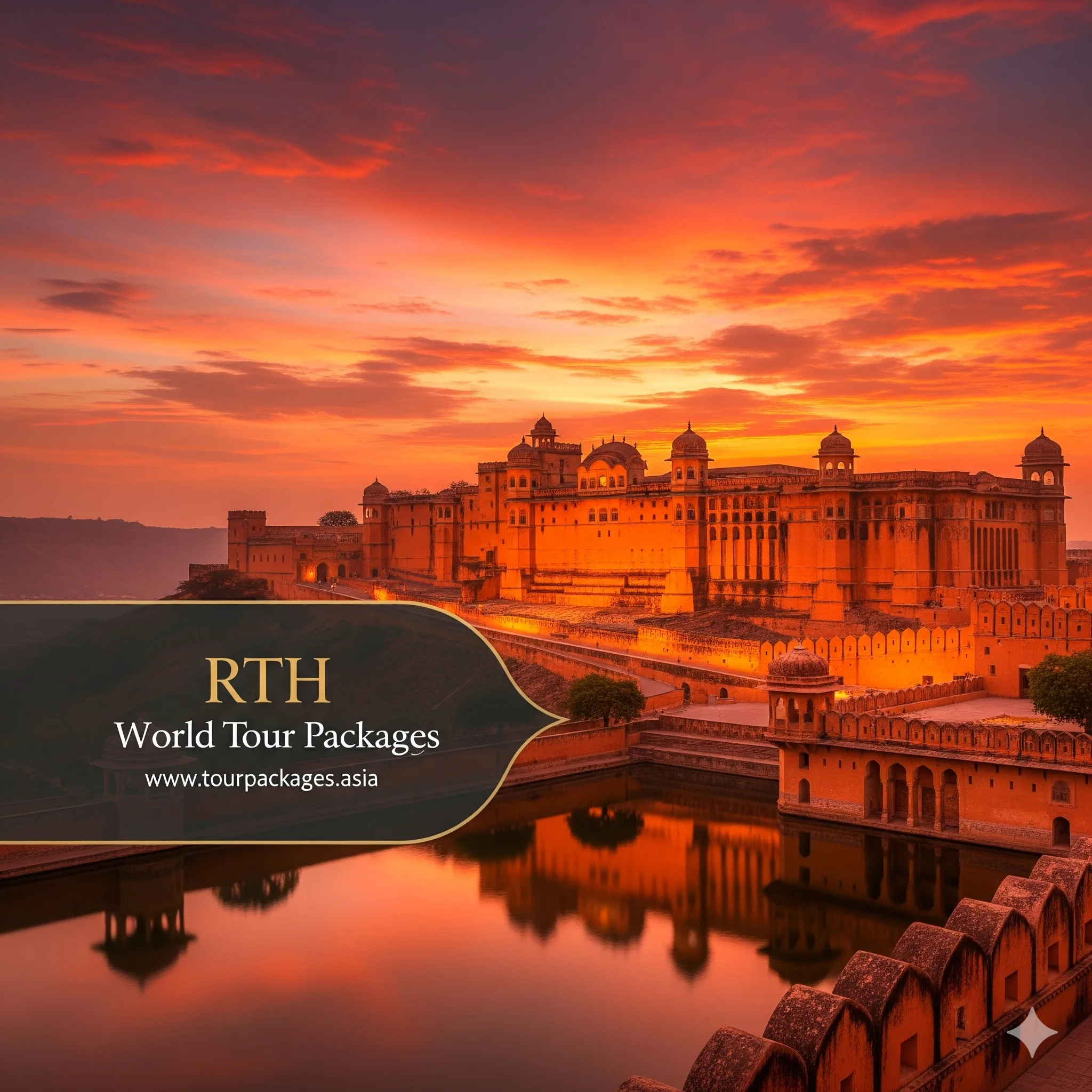
Perched on a hill overlooking Maota Lake, the majestic Amber Palace stands as a testament to the grandeur of Rajasthan's rich royal history. Often referred to by its dual identity—the opulent residential Amber Palace and the formidable defensive Amer Fort—this sprawling complex is a must-visit destination in the "Pink City" of Jaipur. It's more than just a fort; it's a living canvas where the bold valor of the Rajput rulers harmoniously blends with the intricate elegance of Mughal design. As a cornerstone of any Jaipur heritage tour, this site offers a profound glimpse into a bygone era of power, art, and ingenious architecture. This detailed guide will help you plan your visit to Amber Palace Jaipur and unlock the secrets of one of the most stunning Jaipur forts and palaces.
2. The Legacy of Amer: From Tribal Roots to Royal Capital
The story of Amer Fort begins long before the Rajputs. Its origins trace back to the Meena tribe, who are credited with building the original fortress and a temple dedicated to their patron goddess, Amba. In the 11th century, the Kachhwaha Rajputs took control, and it was under their rule that Amer flourished, eventually becoming their capital. The fort as we know it today was largely built by Raja Man Singh I in the late 16th century, a trusted general in Emperor Akbar's court, who fused the design with a distinct Mughal influence. Following his reign, the fort underwent significant expansion under Jai Singh I, who added several key structures including the Diwan-i-Khas and the magnificent Sheesh Mahal. This powerful legacy continued until 1727, when Maharaja Sawai Jai Singh II founded the new city of Jaipur and shifted the capital there. The fort's immense cultural and historical significance was formally recognized in 2013 when it was designated a UNESCO World Heritage site as part of the Hill Forts of Rajasthan, solidifying its place among the world's most important monuments.
3. Architectural Grandeur: A Fusion of Rajput and Mughal Styles
The Amer Fort architecture is a stunning showcase of Rajput architecture in Jaipur with strong Mughal influences. Constructed primarily from rich red sandstone and gleaming white marble, the palace complex is a marvel of intricate carvings, frescoes, and a clever design that harnessed natural cooling. The fort is divided into four main sections, each with its own courtyard and specific function.
Key Structures:
- First Courtyard: Jaleb Chowk: This expansive military courtyard is the first area you enter after passing through the Suraj Pol (Sun Gate). This is where the king's cavalry would gather, and victorious armies would display their war booty to the public. It also housed the elephant stables and was the starting point for visitors who wished to enter the fort on an elephant ride. At its center stands the Sila Devi Temple, a sacred site for the royal family.
- Second Courtyard: The Diwan-i-Aam & Diwan-i-Khas: As you ascend further, you reach the second courtyard, which was the heart of the fort's public and private administration. The Diwan-i-Aam (Hall of Public Audience) is an open-sided pavilion where the ruler would hold public hearings and address the common people. The Diwan-i-Khas (Hall of Private Audience), also known as the Jai Mandir, is a more intimate and ornate structure for private meetings with nobles and dignitaries. This courtyard is a testament to the seamless blend of public duty and private counsel.
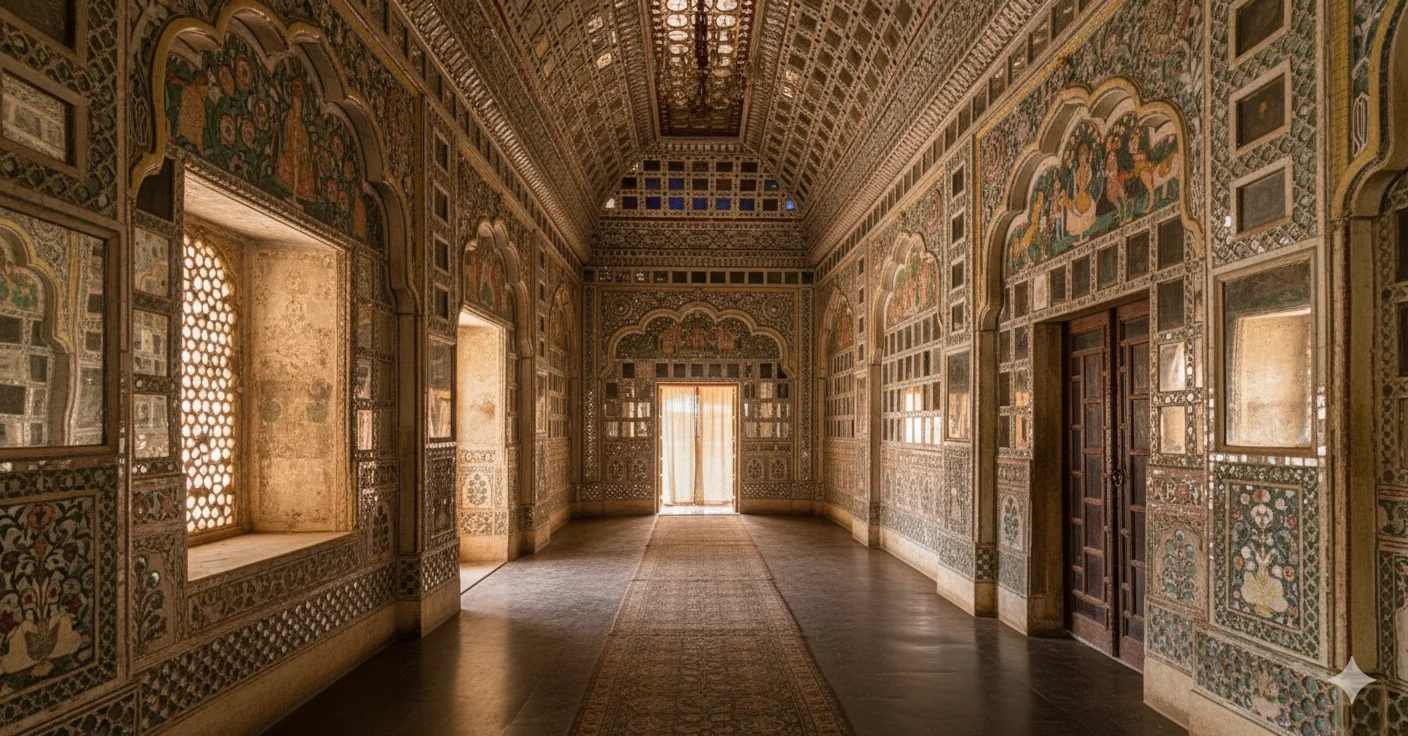
- Third Courtyard: The Private Quarters: This courtyard, accessed through the magnificent Ganesh Pol, was the private residential area of the royal family. It is home to the most famous structures of the fort, including the Sheesh Mahal (Mirror Palace) and the Sukh Niwas (Hall of Pleasure). The Sheesh Mahal is a breathtaking marvel of mirror work, where a single candle can light up the entire hall. The Sukh Niwas, on the other hand, was designed with a clever water-cooling system that created a pleasant indoor climate.
- Fourth Courtyard: The Zenana: The final courtyard, located at the highest level of the fort, was the private residential area for the royal women, including the queen and the king's concubines. Known as the Zenana, this section was designed to provide privacy and security. Each queen had her own living quarters, but they were all connected by a common passage, ensuring that the king could visit any of them without attracting attention.
4. Top Things to See & Do at Amber Palace
Your visit to Amber Palace Jaipur will be filled with unforgettable moments. Here are some of the essential things to do at Amber Palace:
- Explore the Courtyards and Chambers: Wander through the vast courtyards, explore the intricate details of each hall, and walk along the fort's ramparts for spectacular panoramic views of Maota Lake and the surrounding Aravalli hills.
- Marvel at the Sheesh Mahal: Spend time admiring the breathtaking mirror work in the Palace of Mirrors. Its exquisite craftsmanship is best appreciated by letting your eyes wander across the light-reflecting patterns and imagining it lit by a single candle.
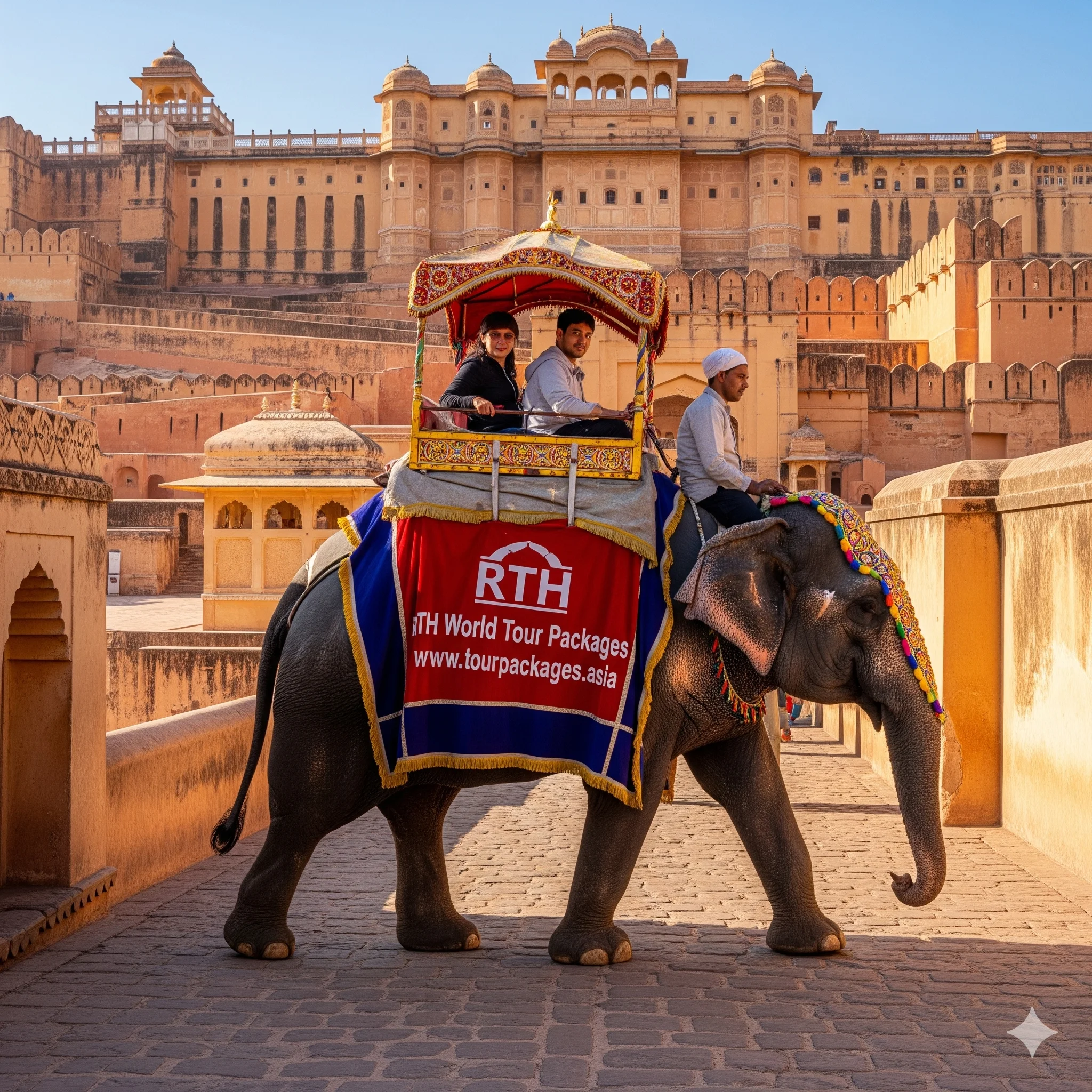
- Go on an Elephant ride Amer Fort: Experience a traditional royal entry by taking an elephant ride up the gentle slope to the main courtyard. This popular activity offers a unique perspective of the fort and its surroundings. For a quicker ascent, you can also take a jeep or a golf cart.
- Attend the Light and Sound Show Amer Fort: In the evenings, a spectacular show narrates the Amber Fort history and legends of the Kachhwaha dynasty in both English and Hindi. The fort is beautifully illuminated with vibrant lights, creating a magical atmosphere that brings the past to life.
- Capture Stunning Photos: The fort's majestic design and the vibrant surroundings make it one of the best spots for photography in Jaipur. The early morning golden hour and the late afternoon light are particularly good for capturing the fort's warm red and yellow tones.
5. Hidden Stories & Secret Passages
Beyond its grand halls, Amer Fort holds many secrets. A 2 km long underground tunnel connects the fort to Jaigarh Fort, a crucial escape route for the royal family during times of siege. This passage, now partially open to visitors, offers a thrilling sense of adventure and a different perspective on the fort's strategic design. Legends of royal intrigue, forgotten chambers, and tales of valor are embedded in the whispering walls, adding to the mystique of your Jaipur heritage tour. There are also many smaller, less-known sections of the fort that are worth exploring for those who have more time.
6. Nearby Attractions in Jaipur
Your Jaipur sightseeing itinerary wouldn't be complete without visiting these nearby gems:
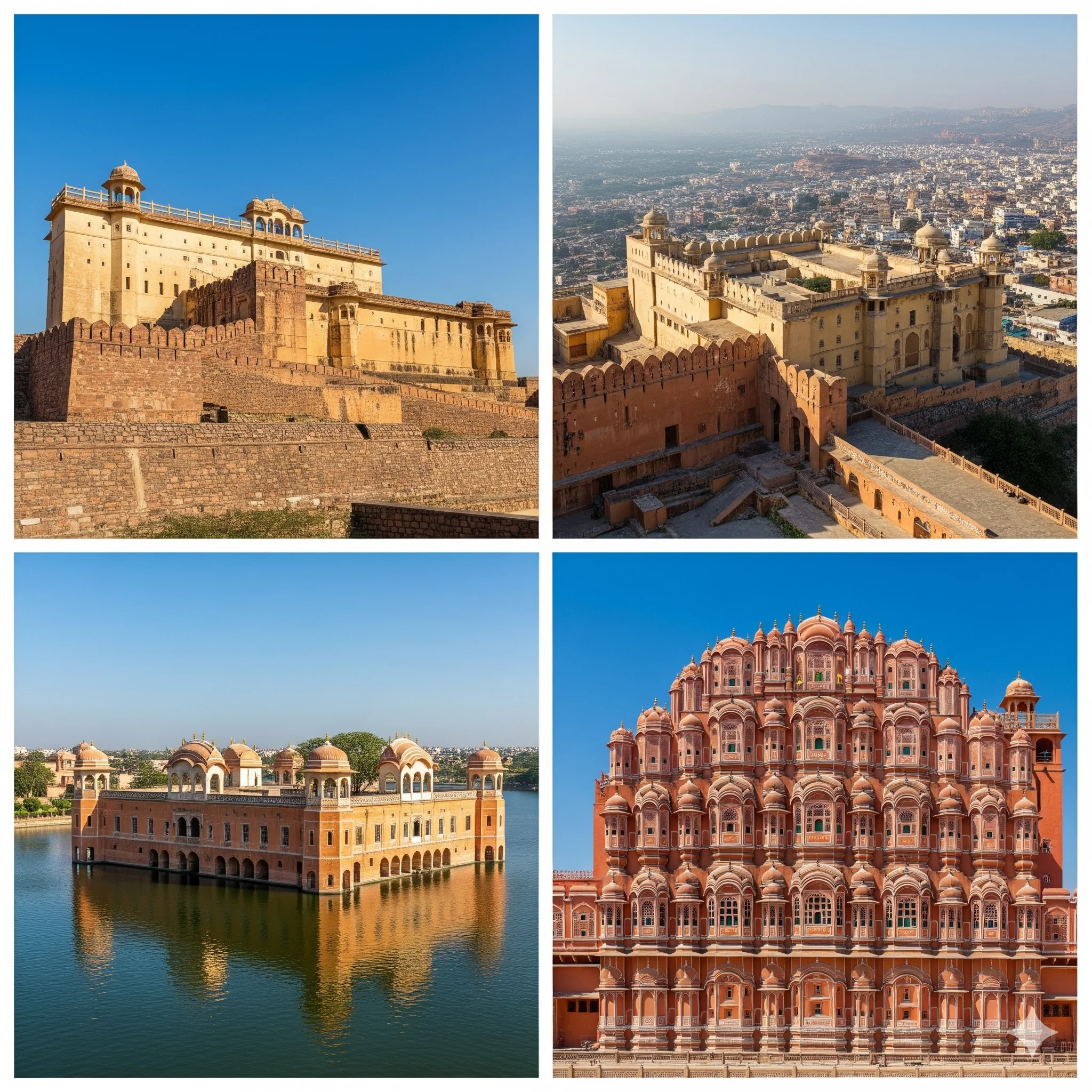
- Jaigarh Fort: Located on the same Aravalli hill range, this fort is known for its military purpose and houses the world's largest cannon on wheels, 'Jaivana'. It served as the fort's main defense and artillery production center and offers a stunning view of Amer Fort.
- Nahargarh Fort: Offering a breathtaking vantage point for sunset views over Jaipur city, this fort was built as a defensive ring to protect the city. It's known for its beautiful royal apartments and a tranquil atmosphere away from the city's hustle.
- Jal Mahal: A beautiful palace floating in the middle of Man Sagar Lake. It's a prime example of the blend of Rajput and Mughal architecture, and while not open to the public, it provides a stunning photo opportunity.
- Hawa Mahal (Palace of Winds): An iconic five-story palace with a unique honeycomb facade of 953 windows. Its purpose was to allow royal ladies to observe street festivals from behind a screen without being seen, and its design allowed a constant breeze to flow through.
- Local Bazaars: Dive into the vibrant markets of Jaipur for handicrafts, jewelry, and textiles. The nearby Anokhi Museum of Hand Printing is also an excellent stop for a unique cultural experience.
7. Travel Essentials & Visitor Tips
To make your visit to Amber Palace Jaipur as smooth as possible, keep these tips in mind:
- Location: Amer Fort is approximately 11 km from the Jaipur city center, easily accessible by road. You can hire a tuk-tuk, taxi, or take a public bus from the main city.
- What to Carry: Sunscreen, a hat, a water bottle, and a camera are essential, especially during the summer. Wear comfortable, sturdy shoes as there is a lot of walking and climbing involved.
- Accessibility: The fort has many ramps and paved paths, but some areas can be challenging for those with mobility issues. A private guide can help you navigate the best routes.
- Best time to visit Amber Fort: Early mornings are ideal to avoid the heat and crowds. Visiting during the winter months (October to March) offers the most pleasant weather, with clear skies and comfortable temperatures for sightseeing.
8. Entry Fees & Timings
The Amber Palace entry fee and timings are as follows:
- Fort Timings: 8:00 AM to 5:30 PM daily.
- Elephant Ride: 7:30 AM to 12:30 PM.
- Light and Sound Show:
- English Show: 7:30 PM
- Hindi Show: 8:00 PM
- Fees: Different rates apply for Indian nationals, students, and foreign tourists for both fort entry and the Light and Sound show.
- Address: Devisinghpura, Amer, Jaipur, Rajasthan, 302001, India.
9. Where to Eat & Stay
For a truly immersive experience, consider staying near the fort. You'll find a variety of cafés and restaurants, many with stunning rooftop views of the fort. This area is perfect for enjoying local Rajasthani cuisine, from traditional thalis to more modern interpretations of regional dishes. You can also find high-end luxury hotels and more budget-friendly guesthouses nearby.
10. Cultural Experiences
Beyond sightseeing, you can enjoy local festivals and performances. The evening Light and Sound Show at Amber Fort is a highlight, and the nearby local bazaars are perfect for exploring Jaipur cultural experiences and shopping for authentic Rajasthani handicrafts. You might also encounter traditional folk performers, musicians, and puppeteers who bring the history of the region to life.
11. Conclusion: A Living Monument to Rajput Glory
Visiting Amber Palace is an emotional journey through time. It's a living monument that embodies the valor, artistic finesse, and rich heritage of the Rajput kings. Its fusion architecture and awe-inspiring scale make it a jewel in the crown of Rajasthan royal forts. We hope this guide provides you with a deeper appreciation for this incredible site and inspires you to begin your own adventure.
