
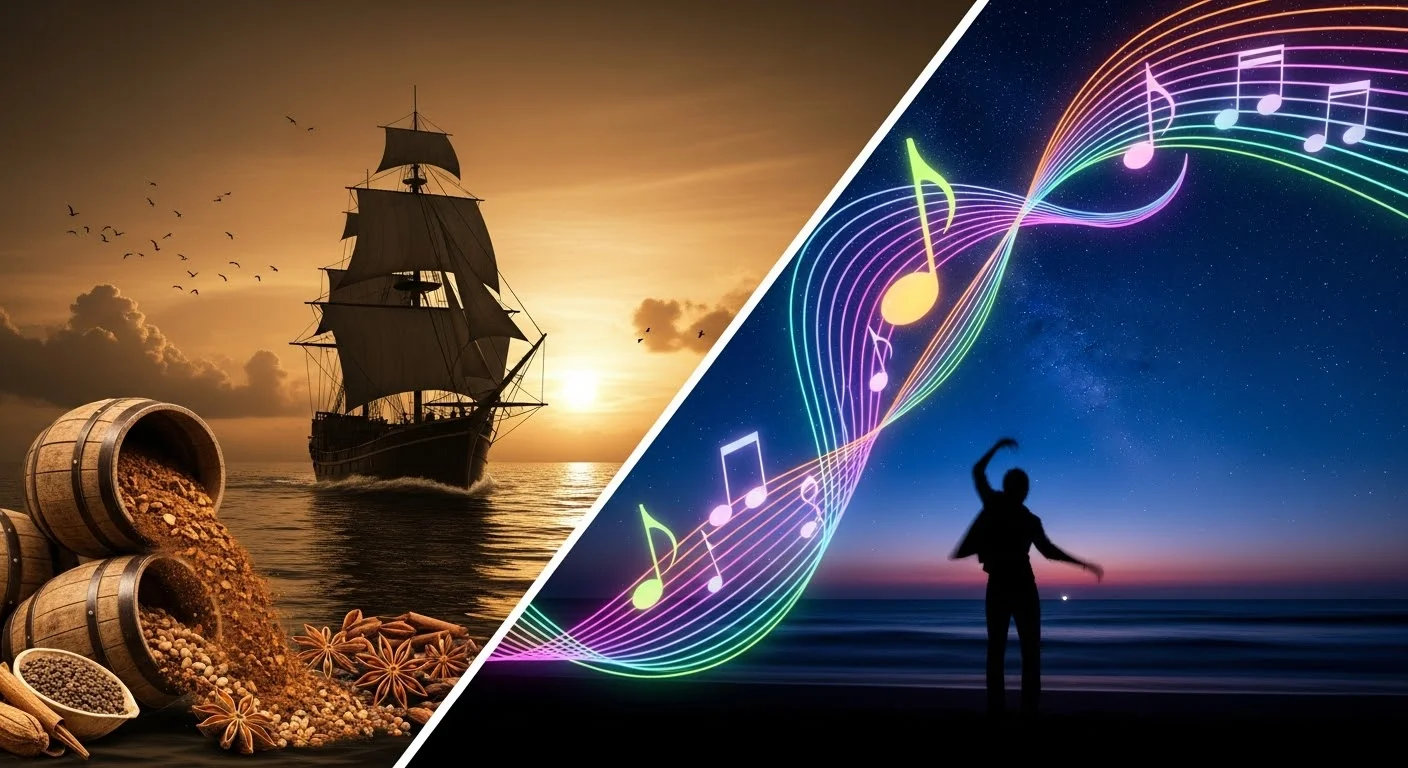
Arrival in Paradise: The Ancient Roots of Goa
Pre-Portuguese Goa: A Thriving Coastal Kingdom
Long before Portuguese caravels appeared on the horizon, Goa was already a jewel of the Konkan coast. The region flourished under various dynasties, including the Kadambas, Vijayanagara Empire, and the Bahmani Sultanate. Ancient Goa was known as Gove, Govapuri, and Gomanchala—names that spoke of its fertile lands and strategic importance. The coastal location made it a natural hub for maritime trade, with Arab merchants regularly docking at its ports to exchange goods from across the Indian Ocean.
The pre-colonial era saw Goa develop a sophisticated culture with its own architectural styles, religious traditions, and social structures. Hindu temples dotted the landscape, while the region's prosperity attracted traders from far and wide. The Zuari and Mandovi rivers served as vital arteries of commerce, carrying everything from rice and coconuts to precious gems and textiles.
First Encounters: Vasco da Gama's Arrival
Everything changed on May 20, 1498, when Portuguese explorer Vasco da Gama dropped anchor at Calicut, just south of Goa. Though he didn't immediately land in Goa itself, his successful voyage to India opened the floodgates for European interest in the subcontinent. The Portuguese Crown quickly recognized the immense potential of controlling Indian Ocean trade routes—particularly the lucrative spice trade that had made Venice and Genoa wealthy beyond measure.
The Portuguese were late to the Age of Exploration compared to their Spanish neighbors, but they were determined to carve out their own eastern empire. Goa, with its excellent natural harbors and proximity to spice-producing regions of Kerala and the Malabar Coast, became an irresistible target.
Did you know? The Portuguese called Goa "Goa Dourada" or "Golden Goa," reflecting both its wealth and its importance to their empire. At its peak, Old Goa was said to rival Lisbon in grandeur and population.
Why Goa? The Spice Trade's Irresistible Pull
In the 16th century, spices weren't just culinary luxuries—they were strategic commodities worth their weight in gold. Pepper, cinnamon, cloves, cardamom, and nutmeg from India and the Spice Islands commanded astronomical prices in European markets, where they were used for everything from preserving food to creating medicines and perfumes.
Arab and Venetian merchants had long controlled these profitable trade routes, but the Portuguese wanted to cut out the middlemen. By establishing a permanent base in Goa, they could control the flow of spices from source to market. The initial skirmishes for control were fierce—in 1510, after a failed first attempt, Portuguese general Afonso de Albuquerque finally conquered Goa from the Bijapur Sultanate with the help of local Hindu allies who opposed Muslim rule.
Portuguese Ascendancy: Building a Colonial Powerhouse
Old Goa's Grandeur: The Rome of the East
Within decades of conquest, the Portuguese transformed Goa into one of the most magnificent cities in Asia. Old Goa (Velha Goa) became the capital of Portuguese India, a stunning showcase of colonial power that earned the nickname "Rome of the East." Churches, cathedrals, convents, and administrative buildings rose along the banks of the Mandovi River, their Baroque and Manueline architecture a stark contrast to the tropical landscape.
The most iconic of these structures still stand today as UNESCO World Heritage Sites. The Basilica of Bom Jesus, completed in 1605, houses the mortal remains of St. Francis Xavier, one of the founding members of the Jesuit order. The Se Cathedral, built between 1562 and 1619, remains one of Asia's largest churches, its single surviving bell tower still dominating Old Goa's skyline. The Church of St. Cajetan, modeled after St. Peter's Basilica in Rome, and the Church of St. Francis of Assisi with its ornate frescoes, showcase the architectural ambition of Portuguese colonizers.
At its zenith in the early 17th century, Old Goa's population exceeded 200,000—larger than contemporary London or Paris. The city featured hospitals, monasteries, printing presses (the first in India), and an intellectual life centered around Jesuit colleges. However, this golden age would prove tragically short-lived.
Spice Trade Mastery: The Economic Engine of Empire
Goa's true power lay not in its architectural splendor but in its control of maritime commerce. The Portuguese established a trade monopoly system called the Estado da Índia, with Goa as its administrative heart. From here, they controlled a network of trading posts, forts, and factories stretching from East Africa to Japan.
The spice trade operated on a massive scale. Portuguese ships—naus and carracks—would sail from Lisbon around the Cape of Good Hope, arriving in Goa after months at sea. There, they would load up with pepper from Malabar, cinnamon from Ceylon, nutmeg and cloves from the Moluccas, and other valuable commodities including textiles, indigo, and precious stones. The return voyage was equally treacherous, with storms, pirates, and disease claiming many vessels.
The profits, however, were staggering. A successful spice voyage could yield returns of 400-500% or more. This wealth built not only Goa but also financed much of Portugal's domestic prosperity during the 16th and early 17th centuries. Goan merchants—both Portuguese settlers and local Hindu and Muslim traders who collaborated with the colonial regime—accumulated enormous fortunes.
Cultural Fusion: The Birth of Goan Identity
Perhaps the most fascinating aspect of Portuguese rule was the unique cultural synthesis that emerged. Unlike the British in other parts of India, the Portuguese actively encouraged intermarriage and cultural blending. This created a distinct Goan Catholic community with its own traditions, cuisine, and identity.
Goan cuisine became a magnificent fusion of Portuguese and Indian flavors. Dishes like vindaloo (from the Portuguese "vinha d'alhos"—wine and garlic), sorpotel, bebinca, and xacuti combined European cooking techniques with local ingredients and spices. The Portuguese introduced ingredients like potatoes, tomatoes, cashews, pineapples, and chilies to India, all of which became staples of Goan cooking.
Music and dance also reflected this cultural fusion. The mando and dulpod—traditional Goan dances—show clear Portuguese influence in their melodies and romantic themes, while still retaining Indian rhythmic elements. The use of violins, guitars, and mandolins in Goan music traces directly to Portuguese influence.
Even language underwent transformation. While Konkani remained the primary language of most Goans, it absorbed hundreds of Portuguese words and phrases. Upper-class Goan Catholics often spoke Portuguese fluently, creating a bilingual elite that mediated between colonial power and local population.
Cultural Legacy: Today, Goan surnames like Fernandes, D'Souza, Pereira, and Rodrigues are testament to this period of cultural blending. Many Goan Catholic families still maintain Portuguese citizenship rights, and Portuguese architectural elements appear in homes throughout the state.
The Enduring Imprint: Echoes of Empire
Architectural Ghosts in Modern Goa
Walk through the streets of Panjim (Panaji), Margao, or Fontainhas today, and you're walking through living Portuguese history. The colorful colonial-era houses with their overhanging balconies, azulejo tiles, and oyster-shell windows transport you to a different era. The Fontainhas quarter in Panjim, with its narrow winding streets and pastel-painted Portuguese homes, is often compared to neighborhoods in Lisbon or Porto.
These aren't museum pieces—they're functioning neighborhoods where families have lived for generations. Many of these homes, called casas antigas (old houses), feature distinctive architectural elements: wide verandahs, red-tiled roofs, central courtyards, and elaborate wooden doors and window frames. Some of the grandest examples, like the Braganza House in Chandor or the Casa Araujo Alvares in Loutulim, are now open to visitors, offering glimpses into the lifestyle of wealthy Goan families during the colonial period.
Churches remain the most visible Portuguese architectural legacy. Beyond the monuments of Old Goa, nearly every village has its own church—often painted brilliant white and featuring Baroque or Rococo styling. The Church of Our Lady of the Immaculate Conception in Panjim, with its distinctive zigzag staircase, has become an iconic symbol of Goa's Portuguese heritage.
Language and Legacy: Portuguese Influences on Konkani
The linguistic legacy of Portuguese rule runs deep. While Portuguese is no longer widely spoken in Goa (it was officially recognized as a co-official language until 1987), its influence on Konkani and Goan culture remains profound. Common everyday words with Portuguese origins include janela (window), meza (table), cadeira (chair), and hundreds of others.
More intriguingly, Portuguese contributed to Goan expressions, forms of address, and even thought patterns. The concept of "susegad"—that quintessentially Goan attitude of taking life easy, enjoying the moment, and not rushing—some scholars trace partially to Portuguese cultural influence and the word "sossegado" (calm, peaceful).
Place names throughout Goa reflect this bilingual heritage: Vasco da Gama, Dona Paula, Cabo de Rama, Reis Magos, and countless others. Even in villages with primarily Konkani-speaking populations, Portuguese-derived names for landmarks, festivals, and cultural practices persist.
Religious Tapestry: Catholic Heritage in Hindu-Majority Goa
One of the most visible legacies of Portuguese colonialism is Goa's unique religious landscape. While the rest of India is predominantly Hindu, Goa is about 25-30% Catholic—the highest proportion of any Indian state. This Catholic population isn't a recent immigrant community but represents centuries of local conversion and cultural evolution.
The process of conversion was complex and not always voluntary. The Portuguese employed both persuasion and coercion, with the Goa Inquisition (1560-1812) representing the darkest chapter of this period. Hindu temples were destroyed, and traditional practices were suppressed. However, over time, a distinctly Goan form of Catholicism emerged—one that incorporated local festivals, musical traditions, and even some syncretic practices.
Today, Goan Catholicism is marked by spectacular festivals like the Feast of St. Francis Xavier (December 3rd), when pilgrims from around the world visit the Basilica of Bom Jesus, and the Sao Joao festival (June 24th), where young men leap into wells and rivers wearing crowns of leaves and flowers—a practice that predates Christianity but was adopted into Catholic tradition.
Interestingly, Hindu and Catholic communities in Goa have developed a remarkable level of mutual respect and shared cultural practices. It's common for Hindu families to attend Catholic weddings and vice versa. Many festivals are celebrated across religious boundaries, and the state's syncretic culture—where Hindu deities might be worshipped alongside Catholic saints in some families—showcases a level of religious harmony that's increasingly rare.
Liberation and Transformation: A New Identity
The Road to Freedom: India's Last Colonial Territory
While the rest of India gained independence from Britain in 1947, Goa remained under Portuguese control—an anachronistic colonial enclave in newly independent India. The Portuguese dictator António de Oliveira Salazar stubbornly refused to relinquish what Portugal considered an integral part of its territory, not a colony.
The path to liberation was long and fraught. Freedom fighters within Goa conducted a civil resistance movement throughout the 1940s and 1950s, facing arrests, torture, and exile. Diplomatic efforts failed repeatedly as Portugal refused to negotiate. Finally, in December 1961, Prime Minister Jawaharlal Nehru authorized Operation Vijay—a military operation to liberate Goa.
On December 19, 1961, Indian forces entered Goa, encountering minimal resistance from Portuguese troops who were vastly outnumbered. After 451 years of colonial rule—longer than any other part of India had experienced European colonization—Goa was finally free. The liberation was largely bloodless, and within 36 hours, the Portuguese had surrendered.
The transition wasn't without complications. Many Goans, particularly upper-class Catholics who had prospered under Portuguese rule, were uncertain about integration into India. Portugal didn't recognize Indian sovereignty over Goa until 1974, and some Portuguese Goans emigrated to Portugal. However, most Goans embraced their new identity as Indians while maintaining fierce pride in their unique cultural heritage.
Historical Note: Goa became a Union Territory of India after liberation and achieved full statehood on May 30, 1987, becoming India's 25th state. The liberation is celebrated annually on December 19th as Goa Liberation Day.
The Hippie Influx: Goa's Bohemian Revolution
Just as Goa was adjusting to independence, a new wave of foreigners began arriving—but these weren't colonizers. They were hippies, seeking enlightenment, cheap living, and an escape from Western materialism. The 1960s and 1970s saw Goa transform from a quiet post-colonial backwater into an international counterculture destination.
The influx began small, with a handful of travelers discovering Goa's unspoiled beaches, particularly Anjuna, Vagator, Arambol, and Calangute. Word spread through the international hippie trail—the overland route from Europe through Turkey, Iran, Afghanistan, and Pakistan to India. Goa became legendary: pristine beaches, welcoming locals, dirt-cheap accommodation and food, and an atmosphere of tolerance that allowed for experimentation with altered consciousness, communal living, and artistic expression.
These early arrivals weren't typical tourists. Many stayed for months or years, living in beach huts and fishermen's cottages, integrating (to varying degrees) with local communities. They brought with them new forms of music, art, and philosophy. The famous Anjuna Flea Market, still running today, began as a way for cash-strapped hippies to sell their belongings to fund extended stays.
The hippie era fundamentally changed Goa's trajectory. It created the foundation for Goa's modern tourism industry and established the state's reputation as a place of freedom, creativity, and alternative lifestyles. While the classic hippie scene has largely faded, replaced by package tourists and luxury resorts, its influence remains in Goa's bohemian atmosphere and tolerant culture.
From Spices to Serenity: The Tourism Transformation
By the 1980s and 1990s, Goa's transformation was complete. The state that once shipped spices to Europe was now importing tourists from around the world. The economic foundation shifted from trade and agriculture to tourism and hospitality. Beach shacks, hotels, restaurants, and nightclubs proliferated along the coastline.
A new phenomenon emerged: Goa Trance, an electronic music genre born from the fusion of hippie psychedelia and modern technology. DJs and producers from around the world converged on Goa, particularly during the winter season, creating massive beach parties that could last for days. By the mid-1990s, Goa had become synonymous with electronic music culture, spawning clubs and festivals that drew tens of thousands of visitors.
This wasn't universally welcomed. Many Goans worried about cultural degradation, environmental damage, and the erosion of traditional values. Tensions arose between tourism developers and local communities, between those who profited from the industry and those who felt marginalized by it. The state government struggled to balance economic growth with preservation of Goa's unique character.
Yet tourism proved resilient. Goa adapted, developing different zones for different types of visitors: quiet beaches like Palolem and Agonda for those seeking peace; party centers like Baga and Calangute for nightlife enthusiasts; heritage areas in Old Goa and Fontainhas for history buffs; and luxury resorts in areas like Candolim and Sinquerim for upscale travelers.
Goa Today: A Mosaic of Past and Present
Modern Allure: Global Tourist Hotspot
In 2026, Goa stands as one of India's most beloved tourist destinations, welcoming over 8 million visitors annually from across India and around the world. The tiny state—India's smallest by area—punches far above its weight in terms of tourism revenue, contributing significantly to both state and national economies.
Modern Goa offers something for everyone. Beach lovers find 100+ kilometers of coastline ranging from crowded party beaches to secluded coves. Adventure enthusiasts can try water sports like parasailing, jet skiing, scuba diving, and dolphin watching. Food lovers explore everything from beach shack seafood to fine dining establishments serving Goan, Portuguese, and international cuisine. History enthusiasts wander through UNESCO World Heritage Sites and colonial-era neighborhoods.
The state has also developed sophisticated infrastructure while trying to maintain its laid-back character. Dabolim Airport (with a new international airport at Mopa opened in 2022) connects Goa to major cities worldwide. Luxury hotel chains operate alongside boutique heritage properties and budget guesthouses. High-end spas and yoga retreats cater to wellness tourism, while casinos on offshore vessels and luxury resorts attract gaming enthusiasts.
Yet Goa faces challenges. Overdevelopment threatens environmental sustainability. Water scarcity becomes acute during peak tourist season. Traffic congestion plagues popular areas. The delicate balance between tourism revenue and quality of life for residents requires constant recalibration.
Preserving the Past: Heritage Conservation Efforts
Recognizing that its Portuguese heritage is both culturally valuable and economically significant, Goa has undertaken various conservation efforts. The Archaeological Survey of India maintains the monuments of Old Goa, and restoration projects have saved several deteriorating churches and convents.
The Heritage Action Group and other NGOs work to preserve Goan architectural heritage, lobbying against demolition of historic homes and promoting adaptive reuse of colonial buildings. Some former Portuguese mansions have been converted into boutique hotels and museums, ensuring their preservation while making them economically viable.
In 2020, the government launched initiatives to document and protect Goan cultural heritage, including traditional music, dance, cuisine, and architectural styles. Walking tours of Fontainhas and Old Goa have become popular, educating visitors about colonial history while generating income for local guides. Museums like the Museum of Christian Art and Houses of Goa museum showcase different aspects of Goan heritage.
However, preservation battles continue. Rapid real estate development and infrastructure projects sometimes clash with conservation goals. Traditional Goan homes are demolished for apartment complexes. Ancient trees are felled for road widening. Environmental activists and heritage conservationists often find themselves fighting uphill battles against economic pressures.
The Bohemian Rhapsody Continues
What makes Goa special in 2026 isn't just its beaches or its history—it's the unique alchemy that results from their combination. This is a place where Catholic churches stand beside Hindu temples, where fado music echoes in the same air as Bollywood hits, where you can eat vindaloo for lunch and butter chicken for dinner, where Portuguese phrases pepper Konkani conversations, and where both saris and bikinis are accepted beachwear.
The bohemian spirit that drew hippies in the 1960s persists, albeit in evolved form. Goa continues to attract artists, musicians, writers, and free spirits from around the world. Digital nomads have replaced wandering hippies, working remotely from beach cafes with reliable Wi-Fi. The creative community thrives, with art galleries, music venues, and cultural festivals throughout the year.
Goa's festivals reflect this cultural fusion: the wild exuberance of Carnival (introduced by the Portuguese), the colorful chaos of Holi, the solemn beauty of Christmas midnight mass, the thunderous celebration of Diwali, and modern additions like the Sunburn electronic music festival and International Film Festival of India.
This cultural hybridity—the ability to honor tradition while embracing change, to preserve the past while living in the present—defines modern Goa. It's what transforms a simple beach holiday into something more profound: an encounter with a place that has absorbed centuries of influence and emerged with a unique, resilient identity.
The Journey from Spice Port to Paradise
Goa's transformation from spice trade hub to bohemian paradise isn't just a historical curiosity—it's a living testament to the power of cultural synthesis. The Portuguese brought their architecture, religion, cuisine, and language. Indian traditions provided deep roots and resilience. The hippies added counterculture creativity and global connections. Modern tourism brought economic opportunity and international exposure.
Each layer didn't erase what came before; instead, they accumulated, creating something entirely unique. When you walk through Fontainhas's colorful streets, you're following paths laid out by Portuguese urban planners. When you taste bebinca dessert, you're experiencing a 400-year-old fusion of European and Indian culinary traditions. When you attend a beach party, you're participating in a cultural tradition that stretches back to those first hippie gatherings in the 1960s.
Understanding this history doesn't diminish Goa's appeal as a beach destination—it enriches it. Every sunset over the Arabian Sea is made more beautiful by the knowledge of the countless ships that once sailed these waters carrying spices that changed the world. Every church bell that rings echoes centuries of faith and cultural exchange. Every friendly interaction with locals reflects a culture shaped by welcoming (and resisting) outsiders for generations.
So the next time you find yourself in Goa—whether you're dancing at a beach party, exploring ancient churches, savoring seafood curry, or simply watching the waves—remember that you're not just visiting a destination. You're experiencing the culmination of centuries of history, the result of cultures colliding and creating something no one could have predicted: a place where the echoes of empire, the dreams of wanderers, and the rhythms of ancient tradition create a bohemian rhapsody unlike anywhere else on Earth.
