
Arrivals and First Impressions: Stepping into Serenity
The Journey to Tea Country
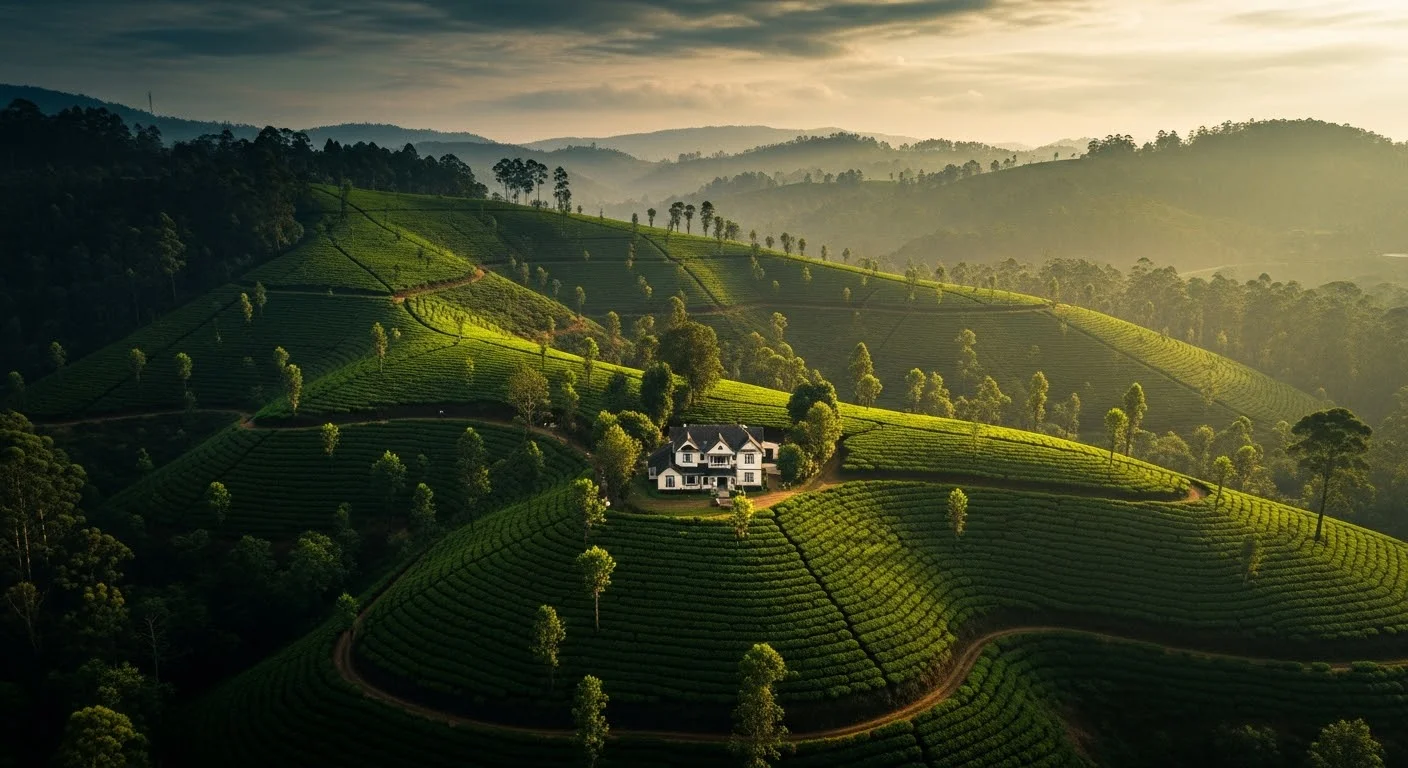
The approach to Tea Trails Sri Lanka is nothing short of spectacular. As you wind your way up from Colombo through the Sri Lanka hill country, the landscape transforms dramatically. The tropical lowlands give way to cooler climes, and suddenly you're surrounded by an undulating sea of green—millions of tea bushes blanketing the hillsides in every direction, creating patterns that look almost deliberately artistic from above.
The drive itself becomes part of the experience. Narrow roads carved into mountainsides offer glimpses of tea pluckers working the slopes, their colorful saris providing brilliant splashes of pink, orange, and blue against the emerald backdrop. Waterfalls cascade down rocky cliffs, and small villages cling to impossibly steep terrain. This is the heart of Sri Lanka's tea plantations, a region that has remained largely unchanged for over a century.
As you approach your destination—whether it's Castlereagh, Summerville, Norwood, Tientsin, or Dunkeld bungalows—the excitement builds. These aren't modern constructions pretending to be historic; they're genuine colonial-era planters' bungalows, some dating back to the 1920s and 1930s, meticulously restored to their former glory by the team at Tea Trails, a member of the prestigious Relais & Châteaux collection.
First Steps into Colonial Elegance
Crossing the threshold of a Tea Trails bungalow is like stepping back in time—but with all the comforts of contemporary luxury. The initial impression is one of refined elegance meeting authentic heritage. Wide verandahs wrap around the buildings, offering panoramic views of the surrounding tea estates. Inside, polished wooden floors gleam under the soft light of period fixtures, while carefully curated antiques and vintage photographs tell stories of the British planters who once called these bungalows home.
Each of the five bungalows has been individually designed, maintaining its unique character while incorporating modern amenities. At Castlereagh Bungalow, for instance, you'll find only four guest suites, ensuring an intimate, exclusive atmosphere. The furniture includes genuine period pieces—brass beds, roll-top desks, campaign chairs, and steamer trunks that once accompanied planters on their journeys from Britain.
What Makes Tea Trails Unique?
Exclusivity: With only four to six suites per bungalow, you're sharing this extraordinary space with just a handful of other guests. Often, groups book entire bungalows for complete privacy.
Authenticity: These are real planters' bungalows, not replicas. The restoration has been painstaking, preserving original features while adding essential modern comforts like ensuite bathrooms with period-style fixtures.
Service: Each bungalow has its own resident butler and dedicated staff, providing personalized service that anticipates your every need without being intrusive.
Access: You're not just near the tea plantations—you're living in one. The working tea factory is right there, accessible whenever you want to explore.
The Immediate Sense of Tranquility
What strikes you most forcefully during those first hours at Tea Trails isn't the luxury—though that's certainly present—but the profound sense of peace. This isn't a hotel with dozens of rooms and bustling common areas. This is more like being a guest at an exceptionally refined country house party.
The soundscape tells the story: birds singing their morning chorus, the distant murmur of workers in the tea fields, wind rustling through eucalyptus trees, and otherwise... silence. Blessed, restorative silence. No traffic noise, no construction sounds, no urban buzz. Just the gentle rhythms of plantation life that have continued largely unchanged for generations.
As afternoon tea is served on the verandah—delicate sandwiches, fresh scones with clotted cream and jam, an array of Ceylon tea varieties—you begin to understand that this experience is fundamentally different from conventional luxury travel in Sri Lanka. This isn't about checking boxes or cramming in sights. It's about slowing down, breathing deeply, and immersing yourself in a world where time moves at a different pace.
Life on the Plantation: Immersive Encounters
Daily Rhythms and Rituals
Life at Tea Trails follows a gentle rhythm that guests quickly find addictive. Mornings begin early—not because you must, but because you'll want to. The hill country sunrise is a spectacle worth witnessing, as mist rises from the valleys and the first rays of light paint the tea slopes in shades of gold and green.
Breakfast is a gourmet affair, served at your preferred time in the dining room or on your private verandah. The menu changes daily and features both Sri Lankan specialties and Western favorites: hoppers with sambal, string hoppers with curry, fresh tropical fruits, eggs prepared any way you like, homemade granola, fresh-baked bread, and of course, endless pots of estate-fresh tea.
The beauty of Tea Trails' approach is its flexibility. There's no rigid schedule forcing you to rush from activity to activity. Instead, your butler presents options, and you choose what appeals. Want to spend the morning reading on the verandah? Perfect. Prefer a guided walk through the plantation? It can be arranged. Interested in visiting the tea factory? Your guide is ready whenever you are.
A Typical Day at Tea Trails (If Anything Here Can Be Called "Typical")
6:30 AM: Early morning tea delivered to your room with the sunrise
7:30 AM: Optional guided plantation walk, watching the morning mist lift
9:00 AM: Leisurely gourmet breakfast on the verandah
10:30 AM: Visit to the tea factory to observe processing
12:30 PM: Return for a light lunch and perhaps a nap
3:00 PM: Afternoon tea ceremony in the gardens
4:00 PM: Trek to a hidden waterfall or scenic viewpoint
7:00 PM: Pre-dinner drinks and canapés in the drawing room
8:00 PM: Multi-course dinner featuring local and international cuisine
10:00 PM: Stargazing from the verandah (the hill country's clear skies are extraordinary)
Meeting the Tea Community
One of the most enriching aspects of the Tea Trails experience is the opportunity to engage with the people who make this world function. The tea plantations aren't just scenic backdrops—they're living, working communities with generations-deep roots in this region.
The tea pluckers, predominantly Tamil women descended from workers brought from South India during the British colonial period, are the lifeblood of the industry. Watching them work is witnessing an art form. With practiced efficiency, they move along the rows, plucking only the top two leaves and a bud—the "flush" that produces the finest tea. Their fingers fly with remarkable speed, filling the baskets on their backs without ever seeming to slow down.
Many of these women have been plucking tea for decades, as did their mothers and grandmothers before them. Conversations with them—facilitated by your guide, who can translate from Tamil—reveal both the challenges and the pride of their profession. You learn about daily quotas (typically 15-20 kilograms per day), seasonal variations in the tea bushes, and the subtle skill required to pluck properly without damaging the plant.
The tea factory workers represent another facet of plantation life. These skilled technicians oversee the transformation of fresh green leaves into the finished product. Their knowledge has been passed down through generations, and their expertise in judging fermentation times, temperature, and moisture levels is what determines the final quality of the tea.
Hands-On Tea Experiences
Tea Trails offers something unique: genuine, hands-on participation in the tea-making process. This isn't a sanitized demonstration for tourists—it's the real thing, happening in real-time in a working tea factory.
You can arrange to visit the factory during processing hours (usually mid-morning after the first plucking brings fresh leaves in). The experience engages all your senses. The moment you step inside, you're hit by the rich, earthy aroma of fermenting tea—a scent that's somehow both green and warm simultaneously. The sound is a constant mechanical hum punctuated by the rhythmic rotation of rolling machines.
Your guide walks you through each station of the process, explaining the purpose and showing you how to assess quality at each stage. You'll run fresh leaves through your fingers, feeling their moisture and flexibility. You'll examine withered leaves, learning to judge the proper consistency. You'll watch the rolling machines at work, breaking down cell walls to release the juices that will become the tea's flavor. You'll observe the fermentation beds where oxidation gives black tea its characteristic color and taste.
Perhaps most memorably, you can try your hand at tea plucking. It looks easy when the experienced pluckers do it—two leaves and a bud, quick pinch, drop in basket, repeat. But when you try it yourself, you quickly realize how much skill is involved. Your movements are slow and clumsy compared to the pluckers' fluid efficiency. After even a few minutes, you gain enormous respect for people who do this for eight hours a day.
The Art of Tea: From Bush to Brew
The Journey of a Tea Leaf
Understanding Ceylon tea means following a tea leaf's complete journey from bush to cup. At Tea Trails, this process unfolds before your eyes, and the detailed explanation you receive transforms tea from a simple beverage into something far more fascinating.
The Seven Stages of Tea Production
- Plucking: Only the newest growth—two leaves and a bud—are harvested. The quality of the plucking determines the quality of the final tea. This happens every 7-10 days as new flush appears.
- Withering: Fresh leaves contain about 80% moisture. They're spread on mesh troughs with fans blowing air through them for 12-18 hours, reducing moisture to about 70%. This makes them pliable enough for rolling.
- Rolling: Mechanical rollers twist and break the leaves, rupturing cells and releasing enzymes and juices that will create flavor. This takes about 30 minutes and gives leaves their characteristic twisted appearance.
- Oxidation (Fermentation): The rolled leaves are spread out and left to oxidize. Enzymes react with air, turning the leaves from green to copper-brown. This stage is crucial for developing flavor and must be carefully timed—typically 2-4 hours depending on ambient conditions.
- Drying (Firing): Hot air (around 90-95°C) is blown through the oxidized leaves for 20-30 minutes, halting fermentation and reducing moisture to 2-3%. This fixes the flavor and color.
- Sorting: Dried tea is passed through vibrating sieves with different mesh sizes, separating leaves by size into different grades: BOPF (Broken Orange Pekoe Fannings), BOP (Broken Orange Pekoe), OP (Orange Pekoe), etc.
- Packing: Sorted tea is packed in airtight foil-lined packages to preserve freshness and aroma until it reaches consumers.
What's remarkable is that all this happens within 24 hours of plucking. The factory operates continuously during harvest season, with fresh leaves arriving throughout the day. The speed is essential—once picked, leaves begin degrading quickly. This is why tea factories are always located directly on or adjacent to the plantations they serve.
Tea Tasting: An Education for the Senses
Perhaps the most anticipated experience at Tea Trails is the professional tea tasting session. This isn't casual afternoon tea—it's a structured education in Ceylon tea appreciation, conducted by an expert who's been working with tea for decades.
The tasting takes place in a dedicated room with perfect natural light and minimal distracting scents. Before you sit several sets of specialized tasting cups and bowls, along with samples of dry tea leaves representing different grades and estates. The methodology mirrors wine tasting but with its own unique vocabulary and techniques.
You begin by examining the dry leaves themselves—their appearance, size, uniformity, and any tips (golden or silver-colored leaf buds, indicating high quality). Then you smell them, learning to distinguish the subtle aromatics that hint at the final brew's character. Some teas smell floral, others fruity, some malty, others brisk and astringent.
Understanding Ceylon Tea Grades
Orange Pekoe (OP): Long, wiry leaves with some golden tips. Produces a light, delicate tea with a mild flavor—perfect for afternoon tea.
Broken Orange Pekoe (BOP): Smaller, broken leaves that brew faster and stronger. This is what most people think of as "regular tea"—robust, satisfying, perfect with milk.
Flowery Broken Orange Pekoe (FBOP): Contains more golden tips, producing a refined tea with floral notes and natural sweetness.
Silver Tips: The unopened buds only, hand-rolled into tiny pellets. Rare and expensive, producing a delicate, slightly sweet brew with champagne-like characteristics.
The actual tasting involves brewing each tea for exactly the right amount of time (the expert times this precisely), then observing the color of the liquor, inhaling the aroma, and finally tasting. But here's where it gets interesting—professional tasters don't just sip delicately. They slurp the tea vigorously, aerating it across the tongue to reach all taste receptors simultaneously. It looks and sounds inelegant, but it's the only way to properly assess the tea's full flavor profile.
You learn to identify characteristics like body (the weight and texture in your mouth), briskness (a lively, tangy quality), strength (the intensity of flavor), and character (the unique qualities that distinguish one tea from another). You discover that high-elevation teas like those from Nuwara Eliya tend to be lighter and more delicate, while low-elevation teas are fuller-bodied and more robust.
Tea's Cultural Significance in Sri Lanka
To truly appreciate your experience at Tea Trails, it helps to understand tea's profound importance to Sri Lanka. This isn't just an agricultural product—it's woven into the nation's identity, economy, and culture.
Ceylon tea is Sri Lanka's second-largest export (after garments), generating billions of dollars annually and employing over a million people directly or indirectly. The industry shapes entire regions, with the hill country's economy, infrastructure, and social structures all built around tea cultivation.
The story began in the 1860s when a fungal disease devastated Sri Lanka's coffee plantations. A Scottish planter named James Taylor pioneered commercial tea cultivation, planting the first tea estate in 1867 in Loolecondera. Within decades, tea had replaced coffee entirely, and Sri Lanka (then Ceylon) had become one of the world's major tea producers.
The British colonial period left an indelible mark on the tea plantation culture. The bungalows you're staying in were built for British planters who managed vast estates, living lives of isolated luxury amidst the plantations. The workers were Tamil laborers brought from South India, creating a distinctive community that still maintains its language, religion, and customs today.
Post-independence, many estates were nationalized, though privatization in the 1990s returned some to private ownership. Throughout these changes, the fundamental processes and culture of tea cultivation remained remarkably constant. The techniques, the rhythms of the plantation, the hierarchies—all echo the colonial era, making places like Tea Trails genuine living museums of a vanished way of life.
Beyond the Bungalow: Exploring Emerald Landscapes
Guided Walks Through Tea Paradise
One of the greatest pleasures at Tea Trails is simply walking through the tea plantations themselves. The bungalows are strategically located to offer access to some of the most spectacular plantation walks in Sri Lanka, with trails ranging from gentle strolls to more challenging hikes.
The landscape here is unlike anywhere else on earth. Imagine hillsides covered in a carpet of green so uniform it looks manicured, with lines of tea bushes following the contours of the land in graceful curves. The bushes themselves are pruned to waist height, creating an undulating green surface that extends as far as you can see. Scattered throughout are tall shade trees—usually eucalyptus or grevillea—providing verticality and shelter for workers during breaks.
Walking these paths in early morning is particularly magical. Mist clings to the valleys, and as the sun rises, it burns off in wisps and tendrils, revealing the landscape layer by layer. Tea pluckers are already at work, their bright saris creating moving points of color against the green. The air is cool and incredibly fresh, scented with eucalyptus and the green aroma of tea.
Your guide—often someone who's worked on the estate for years—points out details you'd never notice on your own. How the tea bushes on south-facing slopes grow slightly differently from those on north-facing ones. Which bushes are ready for plucking and which were harvested recently. How to distinguish the subtle variations in leaf color that indicate different cultivars or varying soil conditions.
Top Walking Routes from Tea Trails Bungalows
The Castlereagh Reservoir Circuit: A moderate 3-hour walk circling the stunning Castlereagh Reservoir, with views of water, plantations, and distant mountains. Watch for endemic bird species along the way.
The Factory Visit Trail: An easy 1-hour walk through working plantations to reach the tea factory, timing your arrival to observe processing. Return via a different route through pine forests.
Adam's Peak Viewpoint: A more challenging 2-hour hike to a ridgetop viewpoint with panoramic views. On clear days, you can see Adam's Peak (Sri Lanka's holiest mountain) in the distance.
The Waterfall Walk: A gentle 2-hour trek through tea gardens to a hidden waterfall, perfect for photography and a refreshing break.
Hidden Waterfalls and Scenic Viewpoints
The Sri Lanka hill country is blessed with abundant rainfall, which not only keeps the tea bushes thriving but also feeds countless streams and waterfalls. Many of these remain relatively unknown, accessible only on foot through plantation paths.
A trek to one of these waterfalls feels like a private discovery. You follow narrow trails between tea bushes, cross streams on simple wooden bridges, and suddenly emerge at a clearing where water cascades down moss-covered rocks into crystal-clear pools. The sound is incredible—a constant white noise that drowns out all other sounds, creating a cocoon of tranquility.
These waterfall excursions often include picnic lunches prepared by your bungalow's kitchen. Imagine sitting on a rock beside a waterfall, surrounded by pristine nature, opening a traditional tiffin carrier to find gourmet sandwiches, fresh fruit, and thermoses of hot tea. It's luxury of the most authentic kind—not ostentatious or showy, but perfectly suited to the setting.
The viewpoints scattered throughout the region offer perspectives that make you understand why Sri Lanka's tea country is considered one of the world's most beautiful landscapes. From certain ridges, you can see multiple valleys, each filled with tea plantations, creating a patchwork of green stretching to the horizon. Early morning and late afternoon offer the best light for photography, with dramatic shadows and golden illumination that makes the already stunning scenery even more extraordinary.
Afternoon Tea Rituals in Extraordinary Settings
If there's one ritual that encapsulates the Tea Trails experience, it's afternoon tea. But this isn't afternoon tea as you might know it in a hotel or cafe—this is afternoon tea elevated to an art form, set against backdrops that seem almost impossibly perfect.
The location changes based on your preferences and the day's activities. Sometimes it's served on the main verandah of your bungalow, with views across the valley. Other times it might be set up in a scenic garden pavilion, surrounded by flowering plants and with panoramic plantation views. On special occasions, afternoon tea might be arranged at a particularly spectacular viewpoint—tables and chairs carried up by staff, fine china and linen laid out on a mountainside.
The tea itself is, naturally, impeccable—estate-fresh Ceylon tea in multiple varieties, brewed to perfection and served in proper teapots with all the traditional accompaniments. But the food is equally impressive: delicate finger sandwiches with various fillings, fresh-baked scones that are still warm, clotted cream and homemade jams, petit fours, and Sri Lankan specialties like kokis (crispy coconut cookies) and kavum (oil cakes).
The timing of afternoon tea—around 4:00 PM—is deliberate. It's late enough that you've likely been active during the day but early enough that you still have time to enjoy the best light for viewing or photographing the landscape. It's a moment to pause, reflect on the day's experiences, and prepare for the evening ahead.
The Unforgettable Farewell: A Lasting Impression
Reflecting on a Unique Luxury Experience
As your time at Tea Trails draws to a close, you find yourself experiencing something unexpected: reluctance to leave. This isn't the usual end-of-vacation sadness. It's something deeper—a genuine sense of having discovered a place and an experience that has fundamentally shifted your understanding of what luxury travel can be.
The genius of Tea Trails lies in its refusal to conform to conventional luxury hospitality models. There's no spa (though massages can be arranged in your room). No gym (the walking provides all the exercise you need). No swimming pool (though some bungalows have small plunge pools). No television in rooms. No bustling lobby or crowded restaurant.
What Tea Trails offers instead is something increasingly rare: authenticity combined with excellence. These are real planters' bungalows, genuinely historic, carefully preserved. The tea plantation isn't a theme—it's the actual reason this place exists. The service isn't performed according to corporate standards but provided by people who genuinely care about your experience and take pride in their work.
You realize that you've learned something profound during your stay. You understand tea in a way you never did before—not just how it's made, but what it means. You've gained insight into a way of life that's rapidly disappearing. You've connected with a landscape that's both stunningly beautiful and economically productive. You've experienced luxury that's about quality and authenticity rather than quantity and ostentation.
What Guests Remember Most About Tea Trails
The Silence: Many guests cite the profound quiet as one of their most memorable experiences—how rare it is to experience such complete peace.
The Views: Waking up to mist-shrouded tea plantations, watching sunsets over emerald hills—the landscape makes an indelible impression.
The Service: Personal, attentive, but never intrusive. Staff who remember your preferences and anticipate your needs.
The Education: Guests consistently mention how much they learned about tea, plantation life, and Sri Lankan culture.
The Food: Gourmet cuisine that respects both local traditions and international standards, adapted to individual preferences.
Redefining Luxury Travel in Sri Lanka
Tea Trails represents something important in the evolution of luxury travel. In an era when "luxury" often means bigger, shinier, more expensive, Tea Trails succeeds by going in exactly the opposite direction. It's small, intimate, historic, and deeply rooted in place.
This is heritage luxury—accommodation that preserves and celebrates the past while providing contemporary comfort. It's experiential luxury—where the value comes from unique, authentic experiences rather than material opulence. It's sustainable luxury—tourism that supports a working industry (tea production) rather than replacing it, and that employs local people in meaningful, well-paid positions.
The model has inspired imitators across Sri Lanka and beyond, but few achieve Tea Trails' success in balancing authenticity with comfort, exclusivity with warmth, preservation with practicality. The secret seems to lie in genuine respect for the property's history and the people who make it function, combined with obsessive attention to detail and willingness to maintain high standards even when it would be easier or more profitable to compromise.
For Sri Lankan tourism more broadly, Tea Trails demonstrates that the country's appeal extends far beyond beaches and ancient ruins. The hill country, with its tea plantations, cool climate, and colonial heritage, offers a completely different kind of experience—one that can command premium prices because it delivers authentic luxury that can't be found anywhere else.
Your Tea Trail Awaits
As you prepare to depart, taking one final look at those endless green hills, you understand that Tea Trails isn't really about the destination—it's about the transformation. You arrived as a tourist looking for luxury accommodation. You're leaving having experienced something far more meaningful: a genuine connection to a place, its history, its people, and its most important product.
The beauty of Tea Trails is that it doesn't demand anything from you except presence. You don't need to be a tea expert (though you'll leave as something of one). You don't need to be a history buff or a nature enthusiast or particularly adventurous. You just need to be willing to slow down, pay attention, and let the experience unfold at its own pace.
Begin Your Journey to Sri Lanka's Tea Country
The Tea Trails experience represents the pinnacle of heritage hospitality in Sri Lanka. Whether you're seeking a romantic escape, a cultural immersion, a photography opportunity, or simply a chance to disconnect from the modern world's relentless pace, the colonial bungalows nestled amidst these emerald plantations offer something truly special.
This is not mass tourism. The intimate nature of Tea Trails—with only five bungalows and limited rooms—means that availability can be restricted, especially during peak season (December to March). Planning ahead is essential, but the reward is an experience that will stay with you long after you've returned home.
From learning the intricate tea-making process to walking through misty plantations at dawn, from savoring perfectly brewed Ceylon tea to sleeping in rooms where colonial planters once dreamed, every moment at Tea Trails contributes to an understanding that luxury isn't about excess—it's about excellence, authenticity, and experiences that transform how you see the world.
The tea plantations of Sri Lanka's hill country have been producing exceptional tea for over 150 years. Now, thanks to Tea Trails, you can experience this world not as an outsider looking in, but as a privileged guest living temporarily in its heart. The question isn't whether you should go—it's when you'll start planning your journey to these emerald hills.
Plan Your Tea Trails Experience