

Making an informed travel decision by comparing two popular destinations.
Bali vs. Phuket: Which Island is Better for Your Vacation?
Torn between the lush landscapes of Bali and the sun-soaked shores of Phuket? This ultimate island comparison dives deep into what makes each destination unique — from surf-friendly beaches, vibrant nightlife, and local cuisine, to cultural experiences, budget travel tips, and luxury escapes. Whether you're planning a honeymoon, a family getaway, or a solo backpacking adventure, we break down the pros and cons of Bali and Phuket to help you choose the perfect island for your travel style. Explore which paradise offers better value, weather, activities, and overall vibe — so you can book with confidence.
Which Southeast Asian Paradise is Right for You?
Dreaming of a tropical getaway but torn between two iconic destinations? The choice between Bali and Phuket can be tough, as both are world-renowned island paradises in Southeast Asia. This Southeast Asia travel comparison is designed to be your ultimate guide. While Bali, often called the "Island of Gods," draws travelers with its spiritual energy, lush rice paddies, and a bohemian vibe, Phuket, the "Pearl of the Andaman," is celebrated for its bustling nightlife, pristine white-sand beaches, and easy access to stunning offshore islands. This article will break down everything from the weather and culinary delights to culture and cost to help you decide which of these best island destinations in Asia is the perfect match for your next adventure.
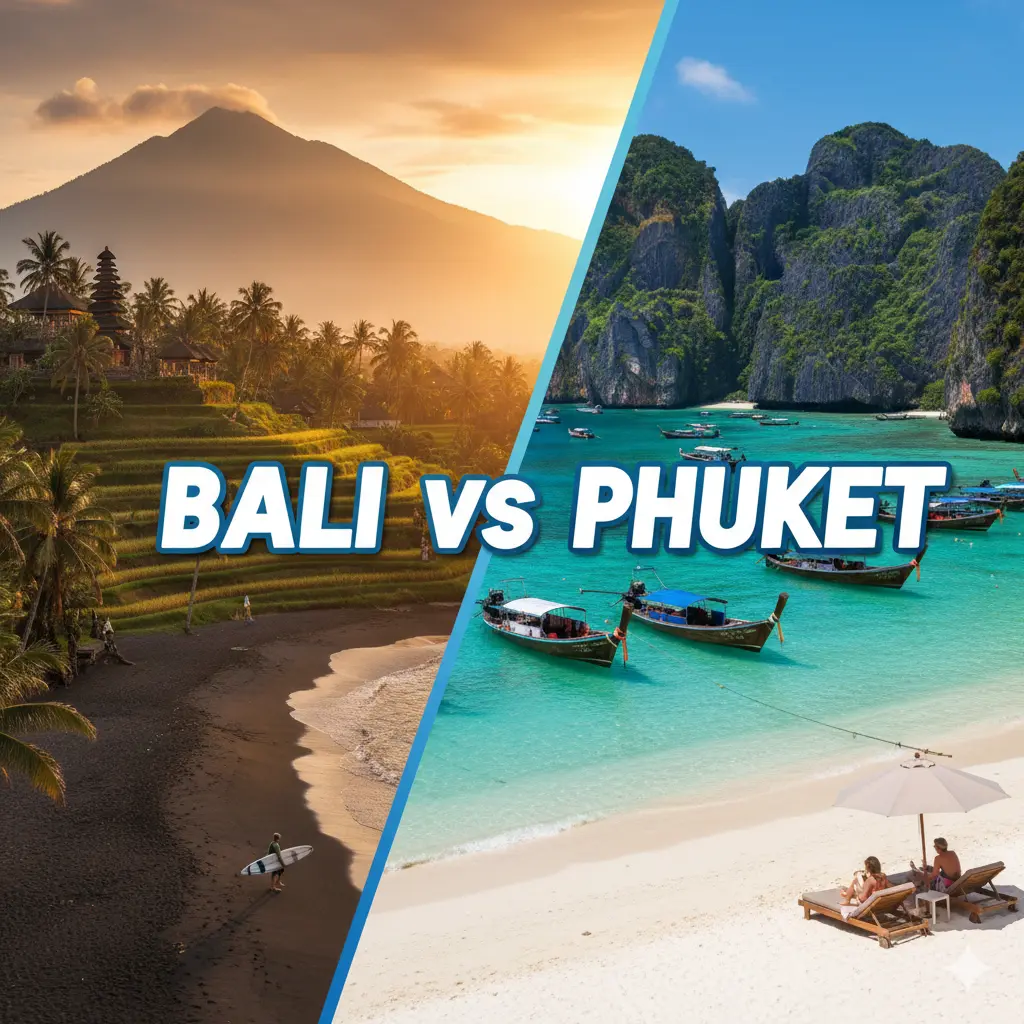
Weather is a critical factor when planning your trip. The Bali weather by month is generally split into a dry season from May to October and a wet season from November to April. During the dry season, expect sunny days with low humidity, perfect for beach activities, surfing, and outdoor exploration. The months of July and August are considered peak season, offering the most stable and pleasant weather. In contrast, Phuket's rainy season runs from May to October, with its prime dry season from November to April. The dry season brings clear skies and calm waters, making it the perfect time for diving and island hopping. While Bali’s wet season features short, heavy downpours, Phuket’s monsoon season can bring more persistent rain and rougher seas. The best time to visit Bali is during its dry season, while the Phuket travel seasons are perfect for a winter holiday. Traveling during the rainy season for either destination can be a great option for budget-conscious travelers, as flights and accommodation are often cheaper, and the popular sights are less crowded.
The beaches in Bali vs Phuket offer very different experiences. Bali’s coastline is known for its surf spots, dramatic cliffside views, and a mix of white and volcanic black sand. Areas like Uluwatu are famous for their rugged cliffs and powerful waves, attracting experienced surfers, while Seminyak and Kuta offer more accessible waves and a vibrant atmosphere. You'll find calm, family-friendly coves in Nusa Dua and unique black sand beaches in Lovina. The island’s natural beauty is raw and dramatic, defined by its lush interior meeting the wild ocean. On the other hand, Phuket is renowned for its classic, postcard-perfect white sand beaches and calm, turquoise waters, ideal for swimming and sunbathing. The Phuket beach guide often highlights popular spots like Patong for its energetic vibe, and the more relaxed Kata and Karon beaches which are perfect for families. The island's real beauty extends offshore to the breathtaking limestone karsts and crystal-clear waters of nearby islands in Phang Nga Bay, which are easily explored on island hopping tours. If you're into surfing in Bali vs snorkeling in Phuket, your choice is clear: Bali for waves and Phuket for calm, clear waters and stunning underwater life.
Both islands are a haven for adventure seekers, but the type of adventure differs. The things to do in Bali include challenging jungle treks to remote waterfalls and rice paddies, or scaling active volcanoes like Mount Batur for a breathtaking sunrise view. The island is also a global hub for wellness, with countless tranquil yoga retreats in Ubud attracting those seeking mindfulness and rejuvenation. For a different kind of thrill, you can go whitewater rafting on the Ayung River or explore the island on a cycling tour through rural villages. For Phuket adventure activities, the focus is almost exclusively on the water. The region is a top destination for divers, with world-class scuba diving and snorkeling around the Similan and Racha Islands. The crystal-clear waters are home to diverse marine life and vibrant coral reefs. You can also enjoy exhilarating island hopping tours, which take you to iconic destinations like the Phi Phi Islands or Phang Nga Bay, famous for its dramatic limestone cliffs and sea kayaking adventures. While Bali offers a mix of inland and coastal activities, Phuket is all about the sea and its spectacular offshore islands.
The Bali vs Phuket food scene showcases a fascinating contrast. Bali’s culinary identity is rooted in fresh, aromatic flavors and a growing plant-based movement. You can find traditional dishes like Balinese cuisine, such as 'Babi Guling' (suckling pig) and 'Satay Lilit' (minced meat satay), served at local, family-run 'warungs'. The Balinese food guide is a journey of spicy, intricate flavors, with an emphasis on fresh ingredients from the land. Beyond the classics, Bali, especially in areas like Ubud and Canggu, is a global epicenter for healthy and organic eating, boasting a plethora of cafes, smoothie bowls, and gourmet restaurants that blend local ingredients with international techniques. Phuket’s culinary scene is a seafood lover’s paradise with its rich, vibrant Thai street food culture. The essence of Thai cooking—a balance of sweet, sour, salty, and spicy—is masterfully displayed in dishes like 'Tom Yum Goong' (spicy shrimp soup), 'Massaman Curry', and the ever-popular 'Pad Thai'. The best restaurants in Bali and Phuket are often found in the most unexpected places. Night food stalls in Phuket Town and Patong offer a feast for the senses, and you can enjoy incredibly fresh seafood at local markets and beachfront restaurants. While both islands offer a diverse array of international cuisine, Bali leans towards a farm-to-table, health-conscious vibe, while Phuket is a festival of bold, punchy flavors and an unparalleled focus on fresh seafood from the Andaman Sea.
The Bali nightlife scene offers a more diverse and sophisticated experience. From sunset beach clubs in Bali like Potato Head and Finns, which feature infinity pools, world-class DJs, and a relaxed, chic atmosphere, to sophisticated cocktail bars in Seminyak, the focus is on style and ambiance. In Ubud, the evenings are more tranquil, centered around live music at cafes, fine dining, or traditional Balinese dance performances that offer a deep cultural immersion. The vibe is generally more laid-back and less focused on hard-partying.
In contrast, the Phuket party scene is famously high-energy, particularly in the bustling town of Patong. Its Patong nightlife is the epicenter of the island's party culture, with a dense concentration of bars, clubs, and cabaret shows. Bangla Road is the beating heart of the action, a pedestrian-only street that comes alive after dark with music and neon lights. While Patong offers a raucous and lively atmosphere, other areas like Kata and Karon have more low-key bars. For a more sophisticated evening, there are also rooftop bars with stunning views of the Andaman Sea. Your preference depends on whether you seek a tranquil evening with a cocktail and a sunset view, or a high-energy party atmosphere that lasts until dawn.
Both destinations offer a wide range of lodging, from budget-friendly hostels to ultra-luxurious resorts. In a general Bali vs Phuket cost comparison, Bali tends to be slightly more affordable, especially for food and local transport. The island is renowned for its unique and beautiful accommodation options, particularly the private villas with infinity pools and stunning views, which are available at a fraction of the cost of similar luxury in other destinations. Bali's affordability is a major draw for backpackers and digital nomads, who can find stylish boutique hotels and guesthouses for a very reasonable price. On the other hand, Phuket’s accommodation landscape is dominated by large-scale, all-inclusive resorts and brand-name hotels, offering a more traditional and pampered vacation experience. While you can find budget options, the average price for accommodation and local transport, particularly taxis, is generally higher than in Bali. In both locations, your budget and travel style will ultimately determine the cost of your trip; Bali simply offers a wider array of affordable luxury, while Phuket leans more towards established resort-style pampering.
This is where the two islands truly differ. Bali is deeply rooted in its Balinese culture, with rich Hindu traditions evident in daily offerings, intricate temples, and vibrant ceremonies. The island’s spiritual energy is palpable, making it a unique destination for those seeking a more authentic cultural experience. Unlike in many tourist destinations where culture is found in specific landmarks, Balinese culture is a living, breathing part of daily life. You'll witness locals meticulously placing canang sari (daily offerings) on the street, see traditional dances, and hear the melodic sounds of the gamelan orchestra. The Balinese concept of `Tri Hita Karana`—harmony with God, with people, and with nature—informs everything from their art to their community structure, creating a deeply spiritual and communal atmosphere. The temples are a major highlight of the island's unique charm.
Phuket, while a part of Thailand with its Buddhist traditions, has a more commercialized and cosmopolitan atmosphere due to tourism. The Thai traditions in Phuket are more subdued, offering a more laid-back Thai experience than other parts of the country. However, this does not mean the island is without culture. Its unique Sino-Portuguese heritage is a major highlight, especially in the colorful and historical Old Town, with its beautifully preserved colonial-era shophouses. You can also visit prominent Buddhist temples like the iconic Big Buddha, which offers panoramic views and a serene atmosphere, or Wat Chalong. The cultural vibe of Phuket is a blend of traditional Thai reverence and a modern, international tourist overlay, offering a historical and entertainment-focused experience rather than a deeply immersive, daily cultural practice.
For couples, the choice between Bali and Phuket often comes down to personal style. A Bali honeymoon is known for its romantic villas nestled in lush rice paddies and secluded retreats in the jungle, offering a serene and intimate experience. The island's focus on wellness and spirituality creates a peaceful backdrop, perfect for couples seeking to unwind and reconnect. Romantic activities often include private candlelit dinners, couples' spa treatments, and private cooking classes to learn the art of Balinese cuisine. The breathtaking scenery, from dramatic cliffs to verdant jungles, provides endless opportunities for stunning photos and quiet moments.
On the other hand, the romantic things to do in Phuket often revolve around luxury, convenience, and breathtaking sea views. Many high-end resorts offer all-inclusive packages that cater to a couple's every whim, from private infinity pools overlooking the Andaman Sea to personalized service. A classic Phuket romantic experience includes a private sunset cruise on a yacht, exploring secluded coves for a swim, or enjoying a private dinner on a pristine beach with the waves lapping at your feet. For a glamorous and hassle-free honeymoon filled with opulent experiences and postcard-perfect beaches, Phuket is an excellent choice.
The Bali visa requirements are generally straightforward for most nationalities, with many eligible for a visa on arrival. Getting around Bali is often done via hired scooter or private driver, as public transport is limited. Phuket is a smaller island, making local transport easier to navigate with taxis and tuk-tuks. Both have well-connected international airports, so getting there is relatively easy.
For a seamless travel experience, it's important to understand the logistics of reaching each island. The main gateway to Bali is Ngurah Rai International Airport (DPS), located in Denpasar. Many major airlines offer direct flights from regional hubs like Singapore, Kuala Lumpur, and Bangkok, making it easy to connect from Europe, the Americas, and Australia. The airport is a modern facility with a wide range of services. From there, you can easily take a taxi or a pre-arranged transfer to your accommodation.
When considering how to reach Phuket, you'll be flying into Phuket International Airport (HKT). This airport is the second busiest in Thailand and receives a significant number of international flights, especially from Europe and Australia during the high season. You can find direct flights from major cities like London, Frankfurt, and Moscow, as well as numerous connections from across Asia. HKT's location on the island's northern tip makes for a relatively short transfer to most major beaches and resorts. The well-developed infrastructure and frequent flights make Phuket an incredibly accessible destination for travelers worldwide.
Both destinations are generally considered safe for tourists, but it's important to be aware of your surroundings. Common sense travel tips for Southeast Asia apply, such as being cautious of common scams and taking health precautions. Is Bali safe for tourists and Phuket travel safety are high priorities, and while incidents can occur, they are rare. Solo travel in Bali is very popular and generally safe due to the welcoming local community, while Phuket's more established tourist infrastructure also makes it a secure choice. Here are some key tips for a safe trip:
To help you visualize your trip, here are two sample itineraries. Each one is designed for a 7-day stay and highlights the unique experiences each island has to offer, from cultural immersion to beach hopping.
| Day | Activity |
|---|---|
| Day 1 | Arrive at Ngurah Rai International Airport (DPS) and check into your hotel in Seminyak. Explore the trendy boutiques and enjoy a beachside dinner at sunset. |
| Day 2 | Relax on the beaches of Seminyak or Kuta. For adventure, try a beginner surf lesson. In the evening, visit a renowned beach club like Finns or Potato Head. |
| Day 3 | Travel to Ubud, the cultural heart of Bali. Visit the Tegalalang Rice Terraces, explore the Sacred Monkey Forest Sanctuary, and browse the local markets. |
| Day 4 | Embark on an early morning trek to the summit of Mount Batur for a stunning sunrise. Afterward, visit the Tirta Empul water temple for a traditional purification ritual. |
| Day 5 | Explore the dramatic cliffs of Southern Bali. Visit Uluwatu Temple, enjoy the secluded beaches of Padang Padang or Bingin, and watch a traditional Kecak Fire Dance at sunset. |
| Day 6 | Take a day trip to the nearby Nusa Islands (Lembongan or Penida) to enjoy breathtaking cliffs, clear waters, and fantastic snorkeling or diving. |
| Day 7 | Enjoy a final Balinese breakfast and some last-minute souvenir shopping before heading back to the airport for your departure. |
| Day | Activity |
|---|---|
| Day 1 | Arrive at Phuket International Airport (HKT) and transfer to your hotel in Patong. Settle in and explore the vibrant and high-energy nightlife of Bangla Road. |
| Day 2 | Discover some of Phuket's beautiful beaches. Spend the day relaxing on the soft sand of Kata Beach or Karon Beach and enjoy a meal at a beachfront restaurant. |
| Day 3 | Take a full-day speedboat tour to the famous Phi Phi Islands. Snorkel in crystal-clear water, visit Maya Bay (made famous by "The Beach" movie), and explore the surrounding lagoons. |
| Day 4 | Immerse yourself in Phuket's culture and history. Visit the Big Buddha statue, explore the historic Sino-Portuguese architecture of Phuket Old Town, and wander through a local market. |
| Day 5 | Take a day trip to Phang Nga Bay. Go sea kayaking among the dramatic limestone karsts, visit James Bond Island, and explore hidden sea caves and lagoons. |
| Day 6 | Choose your own adventure: visit an ethical elephant sanctuary for a memorable experience, or get your adrenaline pumping with a ziplining tour through the jungle canopy. |
| Day 7 | Enjoy a final walk along the beach, have one last delicious Thai meal, and pick up some souvenirs before your transfer to the airport for your flight home. |
The best time to visit Bali is during the dry season, which runs from May to October. This period offers sunny days and low humidity, perfect for outdoor activities.
Bali is generally an affordable destination, especially compared to Western countries. Costs can vary depending on your travel style, with local food and transport being very budget-friendly.
Many nationalities can get a Visa on Arrival (VOA) for 30 days or enter visa-free for a limited period. Check the latest visa requirements for your country before traveling.
The official currency is the Indonesian Rupiah (IDR). It's a good idea to have some cash for smaller transactions, although credit cards are widely accepted in tourist areas.
Yes, Bali is considered a very safe destination for solo female travelers. The local community is welcoming, but it's always wise to exercise general caution, especially at night.
The best area depends on your interests: Ubud for culture and wellness, Seminyak for shopping and dining, Kuta for nightlife, and Uluwatu for surfing and clifftop views.
Getting around is best done by renting a scooter, hiring a private driver for the day, or using ride-hailing apps like Gojek and Grab.
No, it is not safe to drink tap water in Bali. Stick to bottled water, which is readily available everywhere.
When visiting temples, you must cover your shoulders and knees. A sarong and sash are required for both men and women, and are often available for rent at the temple entrance.
Ubud is known for its spiritual atmosphere, lush rice terraces, and yoga retreats. Canggu is a trendy, bohemian hub with a vibrant surf scene, cafes, and a youthful vibe.
Credit cards are widely accepted in major hotels, restaurants, and shops in tourist areas. However, smaller local shops and food stalls will only accept cash.
Some of the most famous temples include Tanah Lot (for its unique ocean setting), Uluwatu Temple (perched on a cliff), and Besakih Temple (the largest and most sacred temple).
Marijuana and other drugs are strictly illegal in Indonesia. Penalties for possession and use are extremely severe, including long prison sentences.
Balinese culture is deeply rooted in Hindu traditions. You'll see daily offerings, intricate temples, and vibrant ceremonies as a fundamental part of local life.
Yes, you can hike Mount Batur for a famous sunrise trek. Mount Agung is also an active volcano, but its activity can sometimes restrict access for hiking.
The best time to visit Phuket is from November to April during the dry season, which offers excellent weather for beach activities and island hopping.
Phuket is generally very safe for tourists. While violent crime is rare, you should be aware of petty crime and scams, especially in crowded tourist areas.
The official currency is the Thai Baht (THB). It's best to have a mix of cash and credit cards, as cash is necessary for street food and smaller shops.
Many nationalities can enter Thailand visa-free for a certain period. Be sure to check the latest visa requirements for your country before your trip.
You can get around by using tuk-tuks, taxis, or ride-hailing apps like Grab. Scooter rentals are also popular, but require an international driver's license and caution.
Patong is ideal for those seeking a lively atmosphere, Kata and Karon beaches are great for families, and Freedom Beach is a beautiful, more secluded option.
Phuket is generally more expensive than Bali, particularly for accommodation, taxis, and resort-style services. However, budget-friendly options for food and hostels are still available.
Must-do activities include island hopping tours to places like the Phi Phi Islands, enjoying the vibrant nightlife on Bangla Road, and visiting the Big Buddha statue.
No, it is not recommended to drink tap water. Always use bottled water for drinking and brushing your teeth.
The nightlife in Phuket is famously high-energy and concentrated. Patong's Bangla Road is the epicenter, offering a wide range of bars, clubs, and live entertainment.
Do not disrespect the monarchy or religion. Avoid engaging in illegal activities and be respectful of local customs and traditions.
Yes, it's very easy. You can take a ferry or a speedboat tour from multiple piers in Phuket to the Phi Phi Islands for a day trip or an overnight stay.
Traditional Thai cuisine can be quite spicy. You can often request a milder version of dishes by saying "mai phet" (not spicy) when ordering.
Patong is the most popular and developed beach, known for its nightlife and commercial activity. Other beaches like Kata and Karon offer a more relaxed, family-friendly vibe.
Yes, Phuket International Airport (HKT) has direct flights from many major cities in Europe, Australia, and Asia, making it a very accessible destination.
Ultimately, the choice comes down to what you're looking for in a vacation. If you're a culture seeker who loves spiritual experiences, lush landscapes, and tranquil moments, then Bali is better. If you're a beach lover who wants pristine white sand beaches, clear waters for snorkeling, and a lively nightlife, then Phuket is a better choice. For families, Bali's slow pace and cultural immersion might appeal, while Phuket's ease of getting around and family-friendly resorts might be a better fit. When deciding where to go: Bali or Phuket, consider what type of adventurer you are.
