

Step back in time at the Cellular Jail, a solemn reminder of India’s struggle for independence. Once known as Kala Pani (Black Waters), this colonial prison now stands as a national memorial museum honoring the sacrifices of countless freedom fighters.
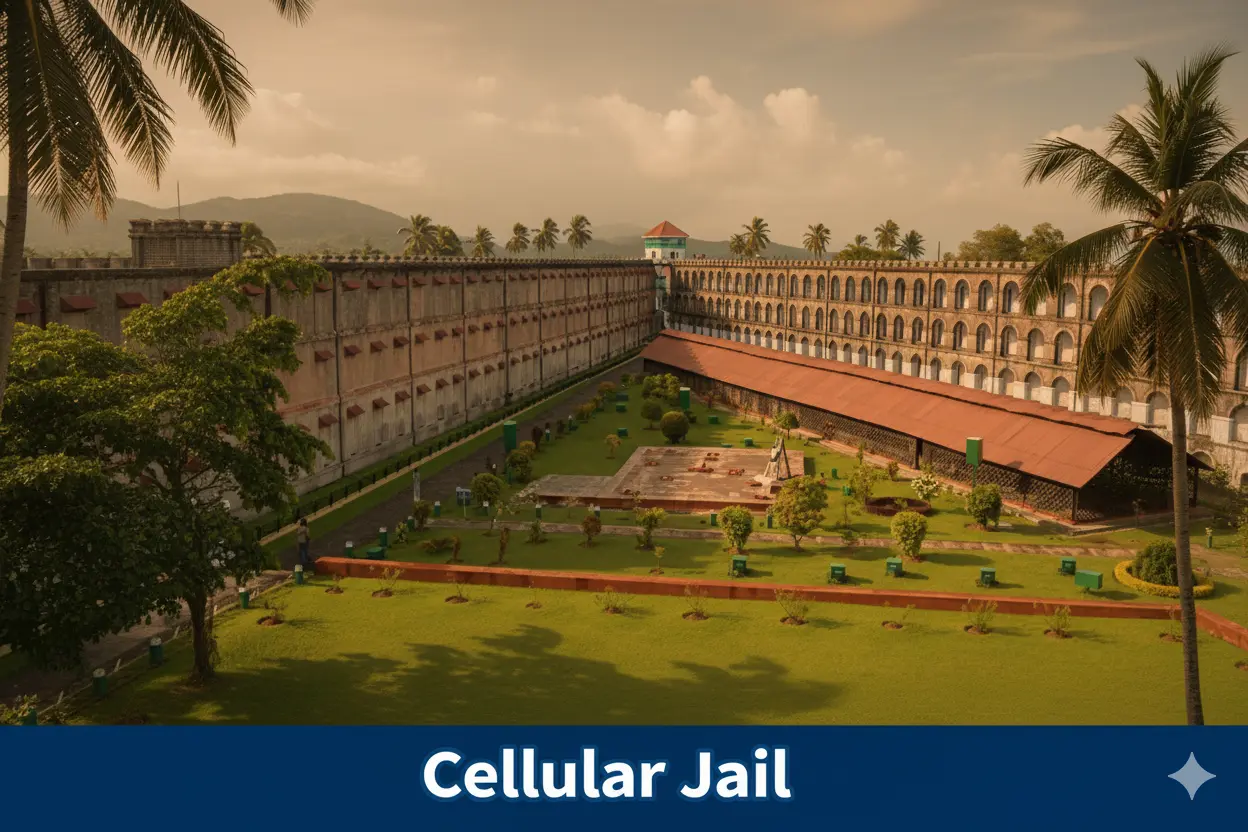
In the heart of Port Blair, the capital of the Andaman and Nicobar Islands, stands one of India’s most powerful symbols of colonial resistance—the Cellular Jail, Andaman. Known historically as Kala Pani, this formidable structure is more than just a prison; it is a deeply moving historical place museum that preserves the legacy of India’s freedom struggle. Built by the British between 1896 and 1906, the Cellular Jail was designed to isolate and punish political prisoners far from the mainland. Its remote location and solitary confinement architecture made it a feared destination for revolutionaries. With seven wings radiating from a central tower, the jail housed over 600 cells, each built to ensure complete isolation. The design was intended to break the spirit of those who dared to challenge British rule. Among the many patriots imprisoned here were Veer Savarkar, Batukeshwar Dutt, and Yogendra Shukla, whose stories of courage and endurance continue to inspire generations. These freedom fighters endured forced labor, torture, and psychological torment, yet their resolve remained unshaken. Today, the Cellular Jail, Andaman stands as a solemn tribute to their sacrifice.
| Aspect | Details |
|---|---|
| Location | Atlanta Point, Port Blair, Andaman and Nicobar Islands, India |
| Description | A historic colonial prison built by the British in 1906, used to exile Indian freedom fighters during the struggle for independence. |
| Significance | Known as Kalapani, it symbolizes the sacrifices of Indian revolutionaries who endured harsh imprisonment and torture. |
| Main Attractions | Light and Sound Show depicting the freedom struggle, museum galleries, cell blocks of notable prisoners like Veer Savarkar. |
| Architecture | Seven-wing structure with solitary confinement cells designed to prevent communication between inmates. |
| Best Time to Visit | October to March for pleasant weather and calm seas. |
| Activities | Explore the museum exhibits, attend the Light and Sound Show, and learn about India’s freedom movement history. |
| Nearby Attractions | Ross Island, Chidiya Tapu, Corbyn’s Cove Beach, and Anthropological Museum. |
| How to Reach | By Air: Veer Savarkar International Airport (2 km from Port Blair city center). By Sea: Ships from Chennai, Kolkata, and Visakhapatnam. |
| Entry Fees | ₹30 (adults), ₹10 (children); Camera fee: ₹200 (video), ₹20 (still). Light & Sound Show: ₹300 per person. |
| Timings | 9:00 AM – 12:30 PM & 1:30 PM – 5:00 PM (closed on Mondays and national holidays). |
| Photography | Allowed with applicable fees. |
| Tips | Book Light and Sound Show tickets in advance; visit in the morning to avoid crowds and explore all wings comfortably. |
The Cellular Jail, located in Port Blair, stands as a grim but ultimately glorious reminder of the cost of India's freedom. Constructed by the British between 1896 and 1906, it was designed specifically to house Indian political prisoners and revolutionary freedom fighters, isolating them completely from the mainland and from each other. Nicknamed Kalapani (Black Waters), simply being exiled here meant enduring a fate often worse than death—complete social and political severance from the world.
This prison became a silent battlefield where the indomitable spirit of revolutionaries like Veer Savarkar, Batukeshwar Dutt, and countless others met the harshest forms of colonial oppression. Visitors today consistently mention that the atmosphere provides a powerful glimpse into the history of India's freedom struggle and highlights the tremendous sacrifices of freedom fighters. It serves as a national memorial, transforming a symbol of colonial brutality into a revered monument of national pride and resilience.
The jail’s architecture is a testament to the British commitment to psychological warfare. Originally built with seven radiating wings (three of which remain today), the design allowed a single guard in the central tower to observe all 698 cells. More importantly, the back-to-back layout of the cells ensured that inmates could not communicate with each other, nor could they see any other cellmate, enforcing absolute solitary confinement.
The former wings of the jail have been converted into a comprehensive museum, which is universally praised by visitors for being educational and inspiring. These well-maintained exhibits utilize photographs, documents, and scale models to narrate the stories of the prisoners, their revolutionary activities, and the inhumane conditions they faced.
Many find the availability of guided tours essential to maximizing the experience. The guides enrich the visit with detailed historical context, personal anecdotes about the martyrs, and clarifications on the architectural purpose of each section. This narrative structure allows visitors to move beyond simple observation and gain a true appreciation for the sacrifices made within those walls.
The evening Light and Sound Show is the emotional climax of the Cellular Jail visit. People describe it as a moving and deeply patriotic experience. Staged in the courtyard under the surviving wings, the show uses stunning illumination and powerful narration to recount the history of the prison, the torment of the freedom fighters, and their unwavering fight for justice. It is not merely an educational performance but a tribute that resonates with deep national sentiment, making it a mandatory part of the itinerary.
| Time | Activity | Details |
|---|---|---|
| 9:00 AM | Guided Tour | Explore the cells, gallows, and exhibits to understand the jail’s history. |
| 11:00 AM | Museum Visit | View freedom fighters’ photographs, letters, and relics. |
| 4:00 PM | Watchtower & Photography | Capture panoramic views of Port Blair and the coastline. |
| 5:30 PM | Light & Sound Show | Experience the gripping narration of India’s freedom struggle. |
| Location | Port Blair, Andaman & Nicobar Islands, India |
| Timings | 9:00 AM – 12:30 PM & 1:30 PM – 5:00 PM (Closed on Mondays & National Holidays) |
| Light & Sound Show | Daily at 6:00 PM & 7:15 PM (tickets required) |
| Entry Fee | Approx. ₹30 (separate fee for Light & Sound Show) |
| Best Time to Visit | October to April for pleasant weather and clear skies. |
| Duration | 2 to 3 hours, including the evening show. |
| A Timeless Symbol | A moving experience, offering deep insight into India’s freedom struggle. |
The term Kalapani literally translates to "Black Waters." It was the vernacular name given to the prison and the Andaman Islands due to the forced transportation of prisoners across the sea, which was considered religiously and socially taboo in India, symbolizing a complete severance from civilization and the mainland. It signified a life sentence of severe isolation.
Absolutely. Most visitors consider the Light and Sound Show the most moving and powerful element of the visit. It provides an emotional context to the history you observe during the day, using narrative and dramatic effects to retell the stories of the freedom fighters' sacrifice. It is highly recommended.
The Cellular Jail originally had seven wings. Unfortunately, four of these wings were demolished by the Japanese occupation forces during World War II and later by the post-independence Indian government. Today, three wings remain intact and form the core of the national memorial and museum that visitors can explore.
The jail housed many prominent Indian revolutionaries. The most famous is Veer Savarkar (Vinayak Damodar Savarkar), whose cell is a key part of the museum. Other notable inmates included Batukeshwar Dutt, Yogendra Shukla, Indu Bhushan Roy, and many leaders involved in the Alipore Bomb Case and the Lahore Conspiracy Case.
Yes, the Cellular Jail is traditionally closed every Monday. It is also closed on certain national holidays, so it's advisable to check the schedule ahead of your visit to Port Blair.
The museum sections are located within the jail wings and feature galleries with historical photographs, artifacts, documents detailing the independence movement, and large murals depicting the life and suffering of the prisoners, including the forced labor at the oil mill.
The Martyrs' Column is a memorial pillar erected near the jail premises. It serves as a solemn tribute to all the known and unknown freedom fighters who were executed, died from torture, or suffered immense hardship while imprisoned at the Cellular Jail, symbolizing their ultimate sacrifice.
Yes, the specific cell occupied by the revolutionary Veer Savarkar is maintained as a historical exhibit and is a key point of interest in the museum section. Visitors can look inside the cell and read about his time and contribution to the freedom struggle.
The Light and Sound Show usually has two daily shows: the first around 6:00 PM and the second around 7:15 PM. Show times and languages (Hindi/English) can vary based on the season and crowd, so it is best to check the official schedule upon arrival.
The Cellular Jail is quite close to the airport (IXZ). It is approximately 4 to 5 kilometers away, taking about 15 to 20 minutes by taxi or auto-rickshaw to reach the location in Port Blair city center.
Yes, there are typically separate charges for cameras. The fee for a still camera is usually around ₹20, while the fee for a video camera (or mobile phones used for video recording) is higher, around ₹200. Photography is prohibited in some specific areas like the gallows.
While there is no strict formal dress code, as it is a national memorial, visitors are encouraged to wear modest attire out of respect for the martyrs. Comfortable walking shoes are highly recommended due to the size of the complex and the need to climb stairs to the watchtower.
While ticket availability can be checked through local tour operators, direct online booking for the Light and Sound Show is often unavailable or unreliable. It is generally advised to purchase tickets physically at the counter on the day of the visit, ideally early in the afternoon.
The Cellular Jail is centrally located in Port Blair. Excellent nearby attractions to visit include Ross Island (accessible via a short boat ride), the Anthropological Museum, and the scenic Corbyn's Cove Beach, which is perfect for an afternoon visit before the evening show.
The **seven-wing radial design** (or 'star' layout) was a deliberate British architectural strategy for a Panopticon-style prison. This design maximized surveillance, allowing a single guard in the central tower to observe all cell doors, while simultaneously ensuring complete solitary confinement and preventing any communication between the political prisoners, thus crushing their revolutionary spirit.
A visit to the Cellular Jail is a vital part of the Andaman experience, offering a moment of quiet reflection amidst the islands' natural beauty. It’s an educational and inspiring journey that honors the profound sacrifices of India's freedom fighters. From the stark reality of the solitary cells to the emotionally charged Light and Sound Show, this monument ensures that the heroes of Kalapani are never forgotten. Ready to continue exploring the historical and natural wonders of Port Blair? Use our guides to plan your full itinerary.
