
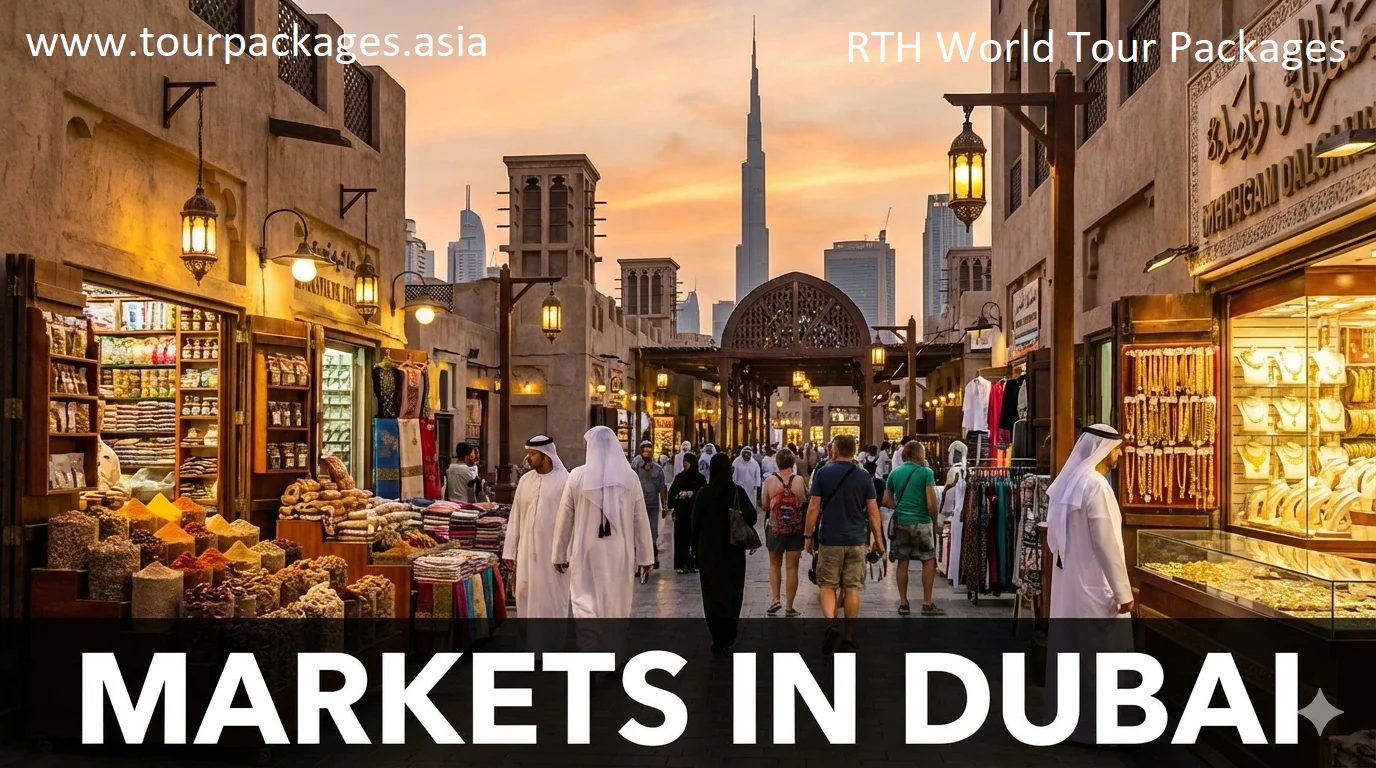
Long before Dubai acquired its reputation for superlative malls and luxury boutiques, it was a city defined by commerce — specifically, by the ancient trading routes of the Arabian Gulf that brought merchants from India, Persia, East Africa, and the Far East to its Creek-side markets to exchange gold, spices, textiles, and pearls. That trading spirit did not disappear when the skyscrapers rose. It evolved, diversified, and multiplied into one of the world's most extraordinary and varied shopping landscapes — a city where a visitor can purchase a kilo of Iranian saffron and a 22-karat gold necklace for the price of a European high street ring, then walk ten minutes to a glass-roofed luxury arcade with canal views of a seven-star hotel.
Dubai's markets range from the ancient and the atmospheric to the modern and the air-conditioned. The Gold Souk in Deira holds an estimated 10 to 15 tonnes of gold at any given moment across over 380 shops — making it the largest gold market on earth. The Spice Souk a few streets away fills the air with saffron, cardamom, oud wood, and frankincense in quantities and at prices that would be unthinkable in Europe or North America. The Textile Souk in Bur Dubai stretches across covered arcades loaded with raw silk, cashmere, embroidered cotton, and pashmina shawls at a fraction of Western prices. And beyond the traditional souks, newer markets bring their own distinct character: the canals and boutiques of Souk Madinat Jumeirah, the global cultural bazaar of Global Village, the Creek-side heritage promenade of Al Seef, and the organic farmers' community of the Ripe Market.
This guide covers every significant market in Dubai — traditional souks, modern luxury destinations, seasonal markets, food markets, and budget shopping hubs — with full detail on what to buy, when to visit, how to bargain, and what to expect at each location. Whether you are arriving on a five-night Dubai holiday or planning a longer itinerary, dedicating at least two full days to Dubai's markets will reward you with experiences, finds, and memories that no mall can replicate.
Dubai Markets at a Glance — 2026
Use this table to choose the right market for your shopping priorities before diving into the detailed descriptions below.
| Market | Speciality | Type | Location | Entry | Best Time |
|---|---|---|---|---|---|
| Dubai Gold Souk | Gold, platinum, diamonds, gems | Traditional Souk | Deira, Al Ras | Free | Evenings, 5–9 PM |
| Spice Souk (Deira) | Saffron, spices, herbs, incense, dried fruits | Traditional Souk | Deira | Free | Morning or evening |
| Perfume Souk (Deira) | Oud, musk, bakhoor, custom blends | Traditional Souk | Deira, Al Soor | Free | Afternoon / evening |
| Textile Souk (Bur Dubai) | Silk, cotton, pashmina, fabrics, ready-to-wear | Traditional Souk | Bur Dubai | Free | Morning |
| Souk Madinat Jumeirah | Souvenirs, jewellery, art, fine dining | Luxury Modern Souk | Jumeirah (by Burj Al Arab) | Free | Evenings |
| Souk Al Bahar | Jewellery, perfume, restaurants, galleries | Luxury Modern Souk | Downtown (by Burj Khalifa) | Free | Evening (fountain show) |
| Al Seef | Emirati crafts, lifestyle, dining | Heritage Promenade | Bur Dubai, Dubai Creek | Free | Evening |
| Global Village | 90+ country pavilions, food, culture, rides | Seasonal Cultural Market | Sheikh Mohammed bin Zayed Rd | Paid entry | Oct–Apr, evenings |
| Ripe Market | Organic produce, artisan food, crafts | Farmers Market | Multiple venues (seasonal) | Free | Oct–May, weekends |
| Dragon Mart | Chinese goods, electronics, homewares | Wholesale / Modern Mall | International City | Free | Weekdays (less crowded) |
| Karama Market | Souvenirs, budget fashion, gifts | Budget Market | Al Karama | Free | Anytime |
| Waterfront Market | Fresh seafood, meat, produce, spices | Fresh Food Market | Deira Islands | Free | Evening; 11 PM–6 AM (fish auction) |
| Naif Souk | Abayas, leather, perfumes, electronics | Traditional / Budget | Deira, Naif | Free | Evening |
| Satwa Souk | Custom tailoring, fabrics, accessories | Tailor District | Al Satwa | Free | Morning |
The Deira Souks — Dubai's Ancient Commercial Heart
The historic Deira district on the north bank of Dubai Creek houses the oldest, largest, and most culturally significant traditional markets in the emirate. Together the Gold, Spice, Perfume, and Fish Souks of Deira form one of the most concentrated traditional market experiences available anywhere in the world.
Dubai Gold Souk — The City of Gold's Defining Market
There is nowhere on earth quite like the Dubai Gold Souk. Contained within a network of covered arcades in the Al Ras district of Deira, this dazzling market houses over 380 jewellery retailers displaying an estimated 10 to 15 tonnes of gold at any given moment — the largest concentration of gold available for purchase in any market in the world. Walking its narrow lanes, the eye is overwhelmed by shop windows stacked floor to ceiling with bracelets, necklaces, bangles, rings, and chains in every conceivable design and weight. The sheer visual scale of it — gold reflecting gold, light multiplying light — is genuinely unlike anything you will encounter in a high-street jeweller or a mall.
Dubai has earned the title City of Gold for sound commercial reasons: the emirate charges zero import tax on gold, meaning prices are pegged to the international gold rate with only making charges added on top. The result is that gold in Dubai is consistently among the cheapest available anywhere in the world — a fact that has attracted buyers from across Asia, Africa, Europe, and the Middle East for decades and that continues to make the Gold Souk a genuine destination for serious purchasing as well as for tourism.
The souk is also home to a Guinness World Record: Najmat Taiba, a 64-kilogram gold ring displayed in the centre of the souk, is certified as the world's largest gold ring. Its centrepiece stone weighs 5.17 kilograms and is itself a remarkable object of craftsmanship.
What to Buy and Gold Purities Explained
- 24K Gold (Pure Gold — 99.9% purity): The highest purity available, typically used for investment bars, coins, and some traditional designs. Very soft and prone to scratching, making it less ideal for everyday jewellery wear. Highest value retention and commands a premium price per gram.
- 22K Gold (91.6% purity): The most popular choice in the Gold Souk, particularly for traditional Middle Eastern and South Asian jewellery styles. Excellent purity combined with enough durability for daily wear. Traditional Indian bridal jewellery, Arabic bangles, and elaborate necklace sets are predominantly 22K.
- 18K Gold (75% purity): The preferred choice for modern, delicate, and intricate contemporary jewellery designs. The alloy metals mixed with the gold provide greater hardness and scratch resistance. Most international design house pieces and contemporary fine jewellery fall into this category.
- Platinum and White Gold: Several shops within the souk also deal in platinum and white gold — both popular choices for engagement rings and modern minimalist designs.
- Diamonds and Coloured Stones: Beyond gold, the souk includes shops specialising in loose diamonds, diamond jewellery, rubies, emeralds, sapphires, and semi-precious stones.
- Gold Coins and Bullion: Investment-grade gold coins and small bullion bars are available from specialist dealers within the souk, popular with buyers looking to purchase gold as an asset rather than wearable jewellery.
Bargaining at the Gold Souk
The gold weight price itself is non-negotiable — it follows the international daily gold rate published each morning. However, the making charges — the premium added to the raw gold weight price to account for the craftsmanship of the piece — are negotiable and represent the primary opportunity for reducing the final price. Experienced buyers typically aim to reduce making charges by 20 to 30 percent through polite but persistent negotiation. Begin by confirming the day's gold rate (readily available online), calculate the weight cost of the piece you are interested in, and then discuss making charges from that baseline.
Dubai Spice Souk — A Sensory Journey Through Arabian Trade
A five-minute walk from the Gold Souk through the narrowing lanes of Deira, the Spice Souk announces itself before you reach it — the air changes, thickening with the warm, resinous scent of oud wood, the bright sharpness of dried lemons, the dusty sweetness of frankincense, and underneath it all the golden, slightly medicinal aroma of saffron. This is one of the great sensory experiences of the Arabian world, and it is entirely free of charge.
The souk occupies a cluster of narrow covered alleyways in Deira, with open-fronted shops on both sides stacking their wares in sacks, baskets, and crates that overflow onto the alleyway itself. Vendors actively invite browsing — offering tastes of dried fruits, inviting you to smell spice blends, and explaining the uses and origins of unfamiliar ingredients with genuine hospitality. The culture of the spice market is deeply interactive; standing still for more than a moment generally results in a friendly conversation about what you are looking for and where you are from.
What to Buy at the Spice Souk
- Saffron: The souk's most celebrated product and the most valuable spice in the world by weight. Iranian and Kashmiri varieties are both available in grades ranging from everyday cooking quality to premium ceremonial grade. Prices are dramatically lower than in Europe or North America. Always check the colour and smell — genuine high-grade saffron is deeply crimson, not orange, and carries a strong, distinctive honey-and-metalwork aroma.
- Oud Wood and Bakhoor: Oud (agarwood) chips and bakhoor (incense blends) are central to Arabian hospitality culture — burned in homes and at gatherings. The souk sells both in a bewildering variety of grades and origins. The smoke of burning bakhoor is one of the defining scents of the Gulf region.
- Frankincense (Luban): Crystalline resin burned as incense — one of the most historically significant trade goods of the ancient Arabian world. Several grades are available, with Omani frankincense considered the finest.
- Baharat Spice Blend: The definitive all-purpose Gulf spice mix — combining black pepper, cumin, cinnamon, coriander, cloves, and cardamom. Each vendor has their own proprietary blend, making comparison shopping a genuine pleasure.
- Za'atar: The classic Levantine blend of dried thyme, sesame seeds, and sumac — extraordinary on fresh bread dipped in olive oil.
- Dried Lemons (Loomi): Whole dried Persian limes with a uniquely bitter, smoky flavour essential to Gulf rice dishes and slow-cooked stews.
- Rose Water and Orange Blossom Water: Culinary-grade floral waters used extensively in Gulf, Levantine, and South Asian sweet cookery.
- Cardamom Pods and Ground Cardamom: Both green and black varieties are available in quantities and at prices that make buying several months' supply entirely practical.
- Dried Fruits and Nuts: Iranian pistachios, dried mulberries, sour cherries, figs, and an extraordinary range of dates from across the Arabian Peninsula — the souk's most popular items for food-focused visitors.
Dubai Perfume Souk — Fragrance of the Arabian World
Adjacent to the Gold and Spice Souks, the Perfume Souk in Deira's Al Soor district is a devoted market quarter for Arabian and international fragrances. Unlike any perfume experience available in a Western department store, this souk is personal, unhurried, and fundamentally interactive. Vendors greet visitors with sprays of rose water, invite them to explore dozens of concentrated oils, and offer the extraordinary service of creating custom fragrance blends — combining oud, musk, rose, jasmine, amber, and other base and top notes into a personal scent created specifically for you, bottled on the spot in a traditional glass attar phial.
The souk specialises in Arabian attars — concentrated perfume oils applied directly to the skin without alcohol, which are both more potent and longer-lasting than their Western equivalents. Traditional Emirati and Gulf perfumery uses oud (agarwood oil) as its most prized and expensive ingredient — a resinous wood oil of extraordinary complexity and depth that is considered the finest natural fragrance material in the world. The contrast between a genuine high-grade oud oil at AED 500 per tola and a mass-market attar at AED 20 demonstrates the extraordinary range available. Bargaining is standard practice throughout the souk.
Bur Dubai Souks — Textiles, Heritage and the Creek
Bur Dubai Textile Souk — Dubai's Fabric Market
Also known as the Old Souk of Bur Dubai, the Textile Souk is located directly on the south bank of Dubai Creek, accessible by the iconic abra water taxi from Deira for just AED 1. The souk stretches along a covered arcade of considerable length, its shops overflowing with bolts of fabric stacked to the ceiling and draped in doorways to create a river of colour along the entire alleyway. Raw silk, chiffon, cotton lawn, embroidered organza, pashmina, cashmere, velvet, and synthetic blends are all available in widths, weights, and print varieties that dwarf what any European fabric retailer would carry. Tailors operating from the shops within the souk can turn fabric into finished garments — sarees, abayas, kaftans, suits, and custom outfits — within 24 to 48 hours at prices a fraction of Western custom tailoring.
- Raw Silk and Silk Blends: The souk's most prestigious textile category. Plain and printed silk in weights suitable for sarees, blouses, scarves, and home furnishings. Prices start from AED 15–30 per metre for quality silk blends.
- Pashmina and Cashmere Shawls: One of the most popular purchases for visitors. Both pure pashmina from Kashmir and pashmina-blend shawls are available in every colour and pattern imaginable at prices from AED 50 upwards. Always verify the fibre content before purchasing premium pieces.
- Indian Embroidered Fabrics: Mirror-work fabric, zari embroidery, chikankari, and block-printed cottons reflect the Bur Dubai district's large South Asian trading community.
- Ready-Made Abayas and Kaftans: Finished garments in traditional Gulf styles — from plain black abayas to elaborately embellished festival garments — are available throughout the souk at competitive prices.
- Home Furnishing Fabrics: Cushion covers, embroidered tablecloths, curtain fabrics, and decorative textiles make up a significant portion of the souk's inventory and represent some of its best-value purchases.
- Custom Tailoring: Dozens of tailors operate within or adjacent to the souk, accepting measurements and fabric selection for custom garments. Lead times range from 24 hours for simple items to one week for complex work.
Al Seef — Heritage Promenade Market on Dubai Creek
Al Seef is a waterfront promenade development along the historic south bank of Dubai Creek, blending heritage-style wind-tower architecture with modern retail and dining. Its shops and market stalls focus on Emirati crafts, traditional clothing, handmade jewellery, Arabic coffee accessories, oud and bakhoor, and locally produced artisanal goods — making it one of the best places in Dubai to purchase authentic, handcrafted souvenirs with genuine local character. Evening visits reward with the sight of traditional dhow boats gliding along the illuminated Creek, the distant minarets of Old Dubai visible across the water, and the gentle sounds of water and traditional Arabic music drifting from the promenade cafes. During the Dubai Shopping Festival and Ramadan, Al Seef's night market comes fully alive with extended hours, live entertainment, and expanded stalls.
Luxury and Modern Souks — Arabian Atmosphere, Contemporary Comfort
Dubai's newer market developments reimagine the traditional souk format with air-conditioning, architectural drama, and curated retail — providing the ambience of the old world with the comfort and convenience of the new.
Souk Madinat Jumeirah — Canals, Boutiques and Burj Al Arab Views
Set within the sprawling Madinat Jumeirah resort complex — itself a meticulously designed recreation of a traditional Arabian coastal settlement — the Souk Madinat Jumeirah is Dubai's most visually spectacular retail environment. Winding arcades with hand-carved wooden ceilings open onto a network of man-made waterways, where traditional abra boats carry guests between the resort's hotels and the souk. Every turn reveals another view of the iconic Burj Al Arab hotel rising above the surrounding palms — a sight that is, from no other shopping location in the world, available as a casual backdrop.
The souk's retail mix leans decisively toward the premium and the artisanal. The more than 100 shops within its arcades include jewellery boutiques, galleries selling original art and limited-edition prints, handcraft shops stocking Bedouin weaving, hand-painted camel bone items, Arabic calligraphy, and traditional textiles. Several shops specialise in high-quality Emirati and Gulf souvenirs — from oud and bakhoor to traditional daggers (khanjar), camel-leather goods, and decorative Arabic coffee pots (dallah). Prices here are significantly higher than in the traditional souks of Deira — this is unambiguously a tourist-oriented luxury experience — but the atmosphere, architecture, and dining options are unmatched in any other souk setting in Dubai.
- Art and Photography Galleries: Several established galleries within the souk display original artwork by Gulf and international artists, with pieces ranging from AED 500 prints to major original works.
- Arabian Jewellery and Silver: Traditional Bedouin silver jewellery, including chunky tribal bangles and kohl containers, alongside contemporary Arabian-inspired fine jewellery.
- High-Quality Souvenirs: Among the best selections of genuinely attractive, high-quality Emirati-themed gifts in any single location in Dubai — significantly above the standard of souvenir shops in other parts of the city.
- Abra Canal Rides: Hop on the resort's complimentary abra service to travel between the souk and the resort hotels by water — a beautiful and distinctive way to experience the Madinat's canal system.
- Dining with Burj Al Arab Views: Multiple restaurants around the souk's waterways offer outdoor terrace seating with unobstructed views of the Burj Al Arab — making evening dining here one of Dubai's most memorable restaurant experiences.
Souk Al Bahar — Burj Khalifa Views and Arabian Arches
Positioned at the water's edge of the Burj Khalifa Lake in Downtown Dubai, with an unobstructed view of both the Burj Khalifa and the Dubai Fountain, Souk Al Bahar is a two-level stone-arched market whose carved detailing and lantern-lit interior create one of the most refined traditional-style shopping environments in the city. The name means Sailor's Market — a nod to the maritime heritage of Arabian commerce — and the souk's shops reflect a higher price bracket than the traditional Deira souks, catering predominantly to hotel guests and international visitors to the Downtown area.
The Dubai Fountain show — the world's largest choreographed fountain — visible from Souk Al Bahar's outdoor terrace at 6 PM and 8 PM daily transforms an evening shopping visit into a complete entertainment experience. Several excellent restaurants with terrace views of the fountain and Burj Khalifa make Souk Al Bahar an ideal evening destination to combine shopping with dinner — particularly for visitors combining a Downtown evening with a beach morning on the Jumeirah coast.
Global Village — The World's Largest Cultural Market
Global Village is the world's largest tourism and cultural festival — an annual outdoor market, entertainment complex, and cultural experience that occupies a vast outdoor site in Dubai from October to April each year. Over 90 country pavilions represent the cultures, handicrafts, food, and retail offerings of their respective nations through a combination of architectural recreations, live performances, traditional demonstrations, and enormous retail stalls.
For shoppers, Global Village is without equal in the breadth of international goods available in a single location. Indian fabrics, Pakistani handicrafts, Moroccan carpets, Turkish ceramics, Thai silk, Chinese lacquerware, African beadwork, Egyptian alabaster, Tunisian leather — the geographic range of what is available reflects the global reach of Dubai's commercial identity. Each country pavilion is staffed by vendors and performers from the respective nation, creating an atmosphere of genuine cultural exchange rather than a generic souvenir market.
- 90+ Country Pavilions: Each presenting the distinctive handicrafts, food, textiles, jewellery, and cultural products of its nation — from Indian block prints and Pakistani truck art to Emirati dates and Moroccan argan oil.
- Live Cultural Performances: Traditional dance, music, street theatre, and acrobatics performed throughout the evening across multiple stages within the complex.
- Street Food from Around the World: An extraordinary selection of international street food — making Global Village one of the most comprehensive food tourism experiences in Dubai during its season.
- Ripley's Believe It or Not: A permanent attraction within the Global Village complex.
- Rides and Entertainment: A funfair with roller coasters, family rides, and children's attractions alongside the market.
For visitors on a Dubai package holiday during the October to April season, a single evening at Global Village — combined with a morning at the heritage souks of Old Dubai — provides one of the most complete and memorable cultural shopping days in the city.
Food Markets, Farmers' Markets and Specialist Destinations
Ripe Market — Dubai's Community Organic Market
The Ripe Market is Dubai's most beloved community weekend market — a seasonal outdoor event running from October to May that brings together local organic farms, small-batch food producers, artisan craftspeople, and independent businesses across multiple scenic venues. Locations have included Academy Park, Kite Beach, The Walk at JBR, and Dubai Festival City — the beach and waterfront locations being particularly popular for combining a morning of fresh-food shopping with a beach afternoon.
The market's mix of freshly harvested fruits and vegetables, homemade breads and pastries, artisan cheeses, cold-pressed juices, handmade soaps, crafted candles, original jewellery, and community activities creates an atmosphere entirely unlike the commercial energy of the traditional souks. Yoga classes, children's craft workshops, fitness sessions, and live music performances often accompany the market stalls during the weekend sessions, making a Ripe Market morning one of the most genuinely family-friendly leisurely experiences in Dubai's non-peak shopping calendar.
Dubai Waterfront Market — The City's Premier Fresh Food Destination
Relocated from its former historic Deira Fish Market site to the new Deira Islands development, the Dubai Waterfront Market is the largest fresh food market in Dubai and one of the most significant wholesale food markets in the region — supplying major hotels, restaurants, and airlines including Emirates with fresh seafood, meat, vegetables, and spices. It serves over 180 nationalities through its retail and food sections, reflecting Dubai's extraordinary multicultural character in the broadest possible marketplace setting.
The market's nightly live fish auction — running from 11 PM to 6 AM — is one of the most spectacular and authentic commercial events in Dubai, drawing wholesale buyers from across the Gulf to bid on freshly landed Gulf seafood including hamour, kingfish, snapper, shrimp, crab, and lobster. Visitors who can manage the hours are welcome to observe the auction, which is a genuinely extraordinary scene of competitive traditional commerce conducted entirely in Arabic with a speed and energy that is unlike anything in Dubai's polished tourist landscape.
Budget Markets, Dragon Mart and Specialist Destinations
Dragon Mart — The World's Largest Chinese Trading Hub Outside China
Opened in 2004, Dragon Mart in International City is a sprawling complex over 1.2 kilometres long — reputedly the largest trading hub for Chinese goods outside the Chinese mainland. The complex houses hundreds of wholesale and retail shops selling virtually every category of Chinese-manufactured product: electronics, lighting, furniture, home decor, tools, toys, automotive accessories, textiles, fashion accessories, sporting goods, and construction materials. Dragon Mart has evolved into a two-phase complex with Dragon Mart 1 and Dragon Mart 2, collectively offering an almost bewildering breadth of product categories under one extended roof. It remains one of the world's most practical and comprehensive destinations for wholesale and budget retail purchasing.
Karama Market — Dubai's Budget Souvenir Hub
Located in the Al Karama district — one of Dubai's most densely populated and culturally diverse residential neighbourhoods — Karama Market is the go-to destination for budget souvenirs, Dubai-themed gifts, and generally inexpensive shopping of every variety. The market is organised around a pedestrianised shopping area surrounded by dozens of small shops selling camel toys, Arabic coffee sets, decorative lamps, shisha pipes, clothing, bags, sunglasses, watches, electronics, and every conceivable category of souvenir item. Prices are among the lowest in Dubai and bargaining is expected throughout. Karama is also well-known for its exceptional range of Indian, Pakistani, Sri Lankan, and Filipino restaurants making it one of the best casual dining precincts for South Asian food in the entire city — a perfect lunch stop to combine with a souvenir shopping trip.
Naif Souk — Authentic Deira Character
One of Deira's oldest and most authentic commercial districts, Naif Souk has evolved from its origins as a primarily abaya and traditional clothing market into a multi-category budget shopping destination. Today it offers abayas, handbags, leather goods, electronics, perfumes, traditional Emirati accessories, and household goods at prices that reflect the local community's practical purchasing habits rather than tourist expectations. It captures the genuine soul of Dubai's traditional trade culture in a way that even the famous Deira souks — increasingly tourist-facing — sometimes do not. For visitors who want to experience how ordinary Dubaiites and long-term residents actually shop, Naif Souk is one of the most rewarding markets in the city.
The Art of Bargaining in Dubai Markets
Bargaining is an essential skill and an expected social ritual in Dubai's traditional souks. Approach it with respect, patience, and a genuine smile — and you will find vendors genuinely enjoy the process.
Connected Experiences — Pair Your Souk Visit
Dubai's market districts connect naturally to beaches, heritage sites, and iconic modern attractions — creating full-day itineraries of extraordinary variety.
Ready to Explore Dubai's Markets?
Our Dubai specialists design itineraries that include the Gold Souk, Spice Souk, Souk Madinat Jumeirah and Global Village alongside all of the city's iconic modern attractions — departing from all major Indian cities.
View Dubai Tour Packages Send an EnquiryCustom itineraries from Mumbai, Delhi, Hyderabad, Chennai, Bangalore and beyond.
Frequently Asked Questions — Markets in Dubai
Everything a first-time or returning visitor needs to know about shopping in Dubai's markets and souks — answered in full detail.
The Dubai Gold Souk in Deira is the world's largest gold market and the definitive destination for buying gold in Dubai. Its more than 380 shops offer every gold purity, style, and design — from traditional 22K Arabic and Indian bridal jewellery to contemporary 18K fine jewellery and 24K investment pieces — at prices that reflect Dubai's zero import duty on gold.
To ensure a competitive price, follow this approach: First, check the daily gold rate on the Dubai Gold and Jewellery Group website or any reliable financial site on the morning of your visit. Gold prices are quoted per gram by purity (18K, 21K, 22K, 24K) and these rates are non-negotiable — they follow the international commodity price. The negotiable element is the making charges — the craftsmanship premium added on top of the raw gold weight. Experienced buyers typically negotiate 20 to 30 percent off stated making charges, particularly if purchasing multiple pieces or heavier items. Always calculate the weight of the piece on the shop's scale in your presence, multiply by the day's gold rate per gram for the relevant purity, and use that figure as your baseline before discussing making charges.
Carry cash in AED dirhams — vendors often provide a small additional discount for cash payments. The peak evening hours of 5 PM to 9 PM provide the most vibrant atmosphere but also the most competition for vendor attention — morning visits from 10 AM to 12 PM are quieter and more conducive to careful, unhurried purchasing. All legitimate gold sold in the Dubai Gold Souk carries Dubai Municipality certification and is fully hallmarked.
The bargaining culture in Dubai markets varies significantly by market type. Understanding where negotiation is expected — and where it is not — saves embarrassment and helps you get the best price.
Markets where bargaining is absolutely expected: The Gold Souk (on making charges), the Spice Souk, the Perfume Souk, the Textile Souk, Naif Souk, Karama Market, and most traditional souk environments in Deira and Bur Dubai. In these markets, the stated price is the starting point of a negotiation, not a final offer. Not bargaining is considered unusual and means you will consistently pay significantly above the fair market price. A starting offer of 40 to 50 percent below the asking price for spices, textiles, and souvenirs is entirely normal and expected.
Markets where prices are fixed or near-fixed: Souk Madinat Jumeirah, Souk Al Bahar, Al Seef boutiques, modern mall retail throughout Dubai, and fixed-price artisan market events like the Ripe Market. Attempting to haggle in these environments will generally be declined politely and is not part of the retail culture.
Hybrid environments: Dragon Mart and the Waterfront Market operate on a partially negotiable basis — regular customers and bulk purchasers typically negotiate, but casual retail visits are usually conducted at stated prices with modest negotiation room available for larger quantities.
The golden rule across all markets: always approach negotiation with warmth, respect, and genuine interest in the product. The best deals in Dubai's souks are made by visitors who engage with vendors as human beings rather than as obstacles to a cheaper price.
Opening hours in Dubai's traditional souks follow a pattern shaped by the Islamic week — with Friday being the day of communal prayer, meaning most souks close or operate reduced hours during the Friday midday period. Here are the standard hours for the major markets:
Dubai Gold Souk: Saturday to Thursday, 9:30 AM to 10:00 PM. Friday, 4:00 PM to 10:00 PM (closed during midday prayer).
Dubai Spice Souk: Saturday to Thursday, approximately 10:00 AM to 10:00 PM. Friday afternoon and evening hours, typically from 4:00 PM. Some stalls may have slightly different individual timings.
Textile Souk (Bur Dubai): Saturday to Thursday, 9:30 AM to 10:00 PM. Friday, 4:00 PM to 10:00 PM.
Souk Madinat Jumeirah: Daily, 10:00 AM to 11:00 PM (restaurants open later).
Souk Al Bahar: Daily, 10:00 AM to midnight. Best visited in the evening when the Dubai Fountain show runs at 6:00 PM and 8:00 PM and the outdoor terrace atmosphere is most appealing.
Global Village: Wednesday to Sunday, 4:00 PM to midnight (seasonal, October to April only). Closed Monday and Tuesday.
Ripe Market: Friday and Saturday, 9:00 AM to 10:00 PM during the October to May season. Check individual venue schedules as the market rotates between Kite Beach, Academy Park, and other locations.
The Waterfront Market fish auction: 11:00 PM to 6:00 AM daily — the market's retail sections operate during daytime hours.
Dubai's markets offer a range of souvenirs spanning genuine cultural artefacts, high-quality produce, and tourist-oriented commemoratives. The following are consistently rated as the best purchases — items that represent genuine value, authentic cultural connection, or both.
Saffron from the Spice Souk: The finest saffron in the world — genuine Iranian and Kashmiri varieties — at prices dramatically below European retail. A few grams of premium saffron makes a remarkable and practical gift. Always buy from a sealed packet or have it weighed in front of you.
Arabian Oud Oil or Custom Perfume Blend from the Perfume Souk: A personal fragrance experience unique to the Dubai Perfume Souk — a custom blend created to your specification in an authentic attar phial is one of the most memorable and truly personal souvenirs available anywhere in Dubai.
Gold Jewellery from the Gold Souk: A piece of gold jewellery purchased from the Gold Souk — properly hallmarked and priced — represents a combination of authentic cultural experience and genuine financial value. Even a modest 22K bangle or pendant connects the buyer to centuries of Arabian Gulf gold trading tradition.
Pashmina Shawl from the Textile Souk: A quality pashmina purchased from the Textile Souk at a fraction of Western prices — soft, genuinely warm, and available in every colour imaginable.
Traditional Arabic Coffee Set (Dallah and Coffee Cups): Available at Al Seef, Souk Madinat Jumeirah, and heritage shops throughout Old Dubai — the traditional Arabic coffee pot (dallah) paired with small handleless cups (finjan) is one of the most iconic and culturally resonant domestic objects of the Gulf region.
Frankincense (Luban): Omani frankincense resin purchased from the Spice Souk — one of the most ancient, historically significant, and genuinely aromatic souvenirs available in any Arabian city. Burns beautifully on a simple charcoal disc and fills a room with a scent that has defined Arabian hospitality for three thousand years.
The Dubai Gold Souk and Spice Souk in Deira are among the most accessible traditional shopping destinations in Dubai by public transport. The Dubai Metro Green Line serves the area directly — the Al Ras Metro Station is the closest stop to the Gold Souk, approximately a five-minute walk through the traditional alleyways of the Al Ras district. The Baniyas Square Metro Station is an alternative entry point slightly further from the souk cluster but closer to the Deira waterfront and the abra stations.
From many central Dubai hotels and tourist areas, the Deira souks are also easily reached by taxi or ride-hailing app (Careem, Uber) — journey times vary by origin but are typically 15 to 30 minutes from most Dubai Marina, Downtown, or Jumeirah hotels.
For visitors staying in Bur Dubai and wishing to reach the Deira souks, the most atmospheric option is to take the abra water taxi from the Bur Dubai abra station opposite the Textile Souk. The AED 1 crossing takes approximately five minutes and deposits you at the Deira abra station, from which the Spice Souk is a two-minute walk and the Gold Souk a further ten minutes. This is strongly recommended over taking a taxi — the abra crossing is itself a heritage experience of considerable value, providing views of the Creek, the dhow wharfage, and the atmospheric skyline of Old Dubai from the water.
The distinction between Souk Madinat Jumeirah and the traditional Deira Gold Souk and Spice Souk is fundamental and worth understanding before deciding how to spend your shopping time in Dubai.
The traditional Deira souks are genuine commercial markets that have operated continuously for over a century, serving both local residents and international buyers. They are atmospheric, vibrant, occasionally chaotic, and entirely undesigned for tourism — they simply exist as they have always existed, and tourists are welcome within them. Prices are negotiable, the product range is determined by actual trading demand, and the experience is one of immersion into authentic commercial culture. The quality of service varies between individual shops, the air conditioning is minimal, and the experience can be overwhelming for first-time visitors.
Souk Madinat Jumeirah, by contrast, is a purpose-built luxury tourism and leisure development that takes the aesthetic vocabulary of the traditional souk — wind towers, carved wooden ceilings, narrow winding arcades — and deploys it in a completely designed, air-conditioned, fully managed environment within the Madinat Jumeirah resort. Prices are fixed and set at a tourist premium. The retail mix is curated for the leisure tourist market. The atmosphere is calm, organised, and beautiful. The food and beverage offering is exceptional. And the views of the Burj Al Arab are unmatched anywhere else in Dubai's retail landscape.
Both are worth visiting. They provide entirely different experiences, and the contrast between the two — experienced in the same day — is one of the most interesting cultural contrasts Dubai can offer any visitor. For value and authentic cultural immersion: the Deira souks. For atmosphere, architecture, dining, and premium souvenir shopping: Souk Madinat Jumeirah.
Global Village is genuinely one of Dubai's most remarkable experiences — not just as a shopping destination but as a cultural event of extraordinary scale and diversity. The annual festival runs from approximately mid-October to late April each year, operating Wednesday to Sunday evenings from 4 PM to midnight. For visitors arriving during this season, a full evening at Global Village is strongly recommended and typically rates among the most memorable activities of a Dubai visit.
The site encompasses over 90 country pavilions — each a small architectural recreation of the respective country's building tradition, staffed by vendors and performers from that nation. Walking from the India Pavilion (with its Bollywood music, street food, and block-print fabric stalls) to the Morocco Pavilion (hand-beaten copper lamps, argan oil, woven rugs) to the Turkey Pavilion (Turkish delight, ceramics, carpets) to the Emirati section (dates, traditional crafts, camel products) within a single evening is an experience of cultural breadth and accessibility that is simply unavailable anywhere else on earth in a single venue.
The practical considerations: arrive after 5 PM when the cooler evening air makes the outdoor setting comfortable. The entry fee (approximately AED 20 to 25) is modest and represents outstanding value given the breadth of the experience. Food spending will add considerably to the total cost — budget AED 100 to 200 per person for a full evening including dinner from the international food stalls. The most crowded days are Friday and Saturday evenings — weekday visits offer a calmer, less pressured atmosphere.
For visitors on a Dubai package holiday during the October to April season, combining a morning in the Deira heritage souks with an evening at Global Village creates one of the most culturally complete single-day Dubai itineraries available. See also the complete Global Village guide for full details.
A full Old Dubai shopping day is best structured as a complete Creek experience — moving between the Bur Dubai and Deira souks by abra, combining the Textile Souk, Gold Souk, Spice Souk, and Perfume Souk within a single itinerary, and finishing with an evening at Al Seef or the Deira waterfront.
Morning (9:30 AM–12 PM): Begin at the Textile Souk in Bur Dubai. The morning is the best time to browse fabrics without the afternoon crowds. Explore the full length of the covered arcade, compare prices across several shops, and consider any tailoring requirements that would need 24–48 hours to complete. Visit the adjacent Al Fahidi Historical Neighbourhood for architectural context — the wind towers, galleries, and the Arabian Tea House for coffee.
Midday Crossing (12 PM): Take the abra from the Bur Dubai station to Deira — AED 1 and five minutes across the Creek. The crossing itself is one of the highlights of any Old Dubai day.
Afternoon (12:30 PM–3:30 PM): The Spice Souk first — browse without buying initially to calibrate prices, then return to the vendor who offered the best combination of quality and price. Lunch in one of the Deira restaurants adjacent to the souk — the area around the Gold Souk offers excellent Indian, Pakistani, and Lebanese casual dining.
Late Afternoon (4 PM–7 PM): The Gold Souk as the afternoon light softens and the evening atmosphere begins to build. Walk the full length of the souk's main arcade before identifying the shops that carry the style and weight of jewellery you are interested in. The Perfume Souk in Al Soor can follow — allow an hour for a thorough exploration and custom blend session.
Evening (7 PM onwards): Return to the Creek waterfront for dinner overlooking the illuminated water and dhow boats, or take a taxi to Al Seef for evening shopping and dining with heritage architecture and Creek views.
The Ripe Market is Dubai's premier community weekend market — a seasonal outdoor event running from October to May that brings together certified organic farms, small-batch artisan food producers, independent craft makers, and community wellness vendors. It operates at multiple venues across the city during different weekends of the season, with the most popular locations being Kite Beach in Umm Suqeim, Academy Park in Dubai, The Walk at JBR, and Dubai Festival City.
The market typically runs on Friday and Saturday from 9:00 AM to 10:00 PM, making the morning session ideal for fresh produce and food shopping in cooler temperatures. The standard Ripe Market format features artisan food stalls selling freshly harvested fruits and vegetables, homemade breads and pastries, cold-pressed juices, flavoured olive oils, artisan cheeses, handmade chocolate, kombucha, and specialty coffee alongside craft stalls selling original jewellery, hand-thrown ceramics, artisan candles and soaps, illustrated prints, and handwoven textiles.
The Kite Beach location is particularly beloved — combining the Ripe Market's fresh and artisan produce with Kite Beach's world-class kitesurfing backdrop, food truck court, and beach access creates a genuinely exceptional morning out. Families with children will find the Ripe Market one of the most relaxed and child-friendly market environments in Dubai, with kids' activities and workshop sessions often running alongside the main market. Check the official Ripe Market social channels each week for the current venue as locations rotate throughout the season.
Dubai's markets are safe shopping environments. Personal safety concerns — theft, harassment, scams — are minimal in comparison to many other global market destinations. The UAE legal system takes commercial fraud and consumer rights seriously, and licensed traders in the Gold Souk and other official souk locations operate under strict regulatory oversight. Gold in the Gold Souk is hallmarked and certified. Disputes between buyers and sellers can be referred to the Dubai Municipality's consumer protection channels.
The counterfeit goods situation requires more nuanced guidance. In markets like Karama Market, the presence of replica branded goods (handbags, watches, sunglasses, and clothing copying luxury brand designs) is significant and widely known. Purchasing counterfeit goods is technically illegal under UAE law — possession of large quantities of counterfeit items can result in fines or confiscation. For personal souvenir purchases of clearly non-authentic replica items, enforcement against individual tourists is extremely rare, but the legal risk is real and buyers should be aware of it.
In the Gold Souk, the risk is not of purchasing fake gold but of overpaying on making charges or of misjudging the purity of a piece. The solution is straightforward: always check the weight and purity hallmark on any piece before purchasing, calculate the weight cost against the day's published gold rate, and ensure you receive a printed receipt stating the weight, purity, and total price. Any reputable Gold Souk trader will provide this without hesitation.
In the Spice Souk, saffron adulteration — mixing genuine saffron strands with cheaper dyed plant fibres — is the primary quality concern. Purchase from sealed commercial packets from established vendors where possible, or apply the basic test: genuine saffron dissolves slowly in warm water, releasing a golden-yellow colour with a distinctive flavour-free aroma. Food colouring dissolves instantly.
Dragon Mart in International City is the world's largest trading hub for Chinese goods outside mainland China — a 1.2-kilometre-long complex housing hundreds of wholesale and retail shops across virtually every product category imaginable. Its two phases (Dragon Mart 1 and 2) together provide one of the most comprehensively stocked and price-competitive wholesale shopping environments in the Gulf region.
Dragon Mart is worth visiting for several specific visitor profiles. Those furnishing or decorating homes or apartments will find unbeatable prices on lighting, furniture, home accessories, and decorative items — the selection and price advantage over Dubai's mainstream furniture retailers is substantial. Electronics enthusiasts seeking budget or specialist items will find a wide range of products, components, and accessories not readily available in mainstream retail. Craft and making enthusiasts will find art supplies, fabric notions, and DIY materials at wholesale prices.
For the typical international tourist on a short Dubai visit, Dragon Mart is primarily of interest as a cultural experience — a genuine insight into Dubai's role as a global trading hub and the scale of Chinese commercial influence in the Gulf region — rather than as a practical shopping destination. The journey from central Dubai to International City takes 30 to 45 minutes each way, making it a worthwhile trip only if the specific product categories it offers are a priority for your visit.
The Dubai Shopping Festival (DSF) is one of the world's largest annual retail events — a government-backed festival that typically runs from late December through January or early February and transforms Dubai's entire retail landscape for several weeks. During the DSF, virtually all of the city's markets, souks, and malls offer significant discounts, promotional deals, prize draws, and special events.
For visitors planning a Dubai trip specifically around shopping, the DSF season offers the best combination of pricing and atmosphere available at any point in the year. The Gold Souk participates with special offers and gold price promotions. The traditional souks extend their hours and introduce additional entertainment. Mall retailers across the city offer discounts ranging from 25 to 70 percent. Special DSF markets appear at venues including Al Seef, the waterfront, and various outdoor locations, bringing additional product categories and entertainment. Live concerts, fireworks, and cultural events run throughout the festival at locations across the city.
The Dubai Shopping Festival coincides with Dubai's best weather season (December to February) — temperatures between 18°C and 28°C make outdoor market exploration genuinely comfortable. If your visit can be planned to coincide with the DSF period, it represents the single best time of year for a shopping-focused Dubai trip.
Photography in Dubai's markets and souks is generally permitted and many vendors actively enjoy being photographed with their wares — it is common to see traders proudly displaying their gold or spice arrangements for visiting photographers. However, there are several cultural guidelines that should be observed.
Photographing the souks themselves — the architecture, the goods on display, the overall market atmosphere — is entirely unproblematic and actively encouraged as it promotes the market's profile. Photographing individual people requires more care: always ask permission before photographing vendors, workers, or other shoppers. In the traditional souks of Deira and Bur Dubai, this courtesy is important and will be genuinely appreciated. In most cases, permission is freely given with a smile — the request itself is received as respectful.
Never photograph women in traditional dress without explicit permission, and be particularly sensitive around any private or residential areas adjacent to the traditional souk districts. Dubai law takes invasion of privacy seriously, and photography of private individuals without consent can result in legal consequences under UAE law.
In luxury venues like Souk Madinat Jumeirah, photography is welcomed throughout — the photographic setting of the canals with the Burj Al Arab backdrop makes it one of the most photographed locations in all of Dubai. In the Waterfront Market's fish auction section (late night hours), photography is generally permitted but the fast-moving commercial environment means discretion and positioning away from active trading lanes is advisable.
Al Seef is a waterfront promenade development along the south bank of Dubai Creek, opened in phases from 2017 onwards as part of Dubai's programme to revitalise and reimagine the Old Dubai waterfront. The development stretches approximately 1.6 kilometres along the Creek, blending two distinct architectural zones: a heritage section that replicates the wind-tower buildings and narrow alleyways of the 19th century Creek-side settlement, and a contemporary section with modern architecture and a broader retail and food and beverage offering.
Al Seef differs from the traditional Deira souks in several important ways. It is a designed, managed, and curated development rather than an organic market. Prices are generally fixed rather than negotiable. The retail mix focuses on lifestyle brands, artisan crafts, Emirati cultural products, and food and beverage experiences rather than the commodity-trading character of the Gold and Spice Souks. The atmosphere is calmer, more spacious, and more oriented toward leisure and dining than intense commercial activity.
What Al Seef offers that the traditional Deira souks cannot match is its Creek waterfront setting — the combination of heritage architecture, gentle evening light over the water, the passing of traditional dhow boats, and the distant skyline of Old Dubai's minarets and wind towers creates one of the most atmospheric evening promenade experiences in Dubai. It is best visited after sunset, when the lanterns and waterfront illuminations give it a genuinely beautiful character. During the Dubai Shopping Festival and Ramadan, Al Seef's night market and cultural programming make it one of the most vibrant evening destinations in the entire city.
Dubai's markets and beaches are more naturally connected than may be immediately obvious, and several itinerary combinations create some of the city's most complete and satisfying day experiences.
The most direct connection is the Ripe Market at Kite Beach — a weekend farmers' and artisan market that operates directly on one of Dubai's most celebrated beaches. A morning spent browsing organic produce, fresh juices, artisan food stalls, and handmade craft vendors transitions immediately into an afternoon on the beach itself — swimming, kitesurfing, beach volleyball, or simply relaxing under the Burj Al Arab backdrop. This is one of the most satisfying half-day combinations available in Dubai and requires no transport at all — the market and the beach occupy the same stretch of Kite Beach waterfront.
The Souk Madinat Jumeirah is located within the Madinat Jumeirah resort complex, which provides access to a private beach section for day visitors. Combining a morning at the Madinat beach with an afternoon of souk shopping, a canal abra ride, and dinner overlooking the Burj Al Arab creates a complete Jumeirah beach-and-market day of exceptional quality. For more on Dubai's beaches and the best beach experiences near each market district, see our comprehensive Dubai beaches guide.
The Bur Dubai Textile Souk is also accessible from Jumeirah's public beaches via a short taxi ride — making it natural to combine a morning beach visit at Jumeirah Open Beach or Sunset Beach with an afternoon in the Textile Souk and Al Fahidi heritage district, before returning to the beach for sunset.
Plan Your Dubai Shopping Holiday
From Mumbai, Hyderabad, Chennai and across India — our Dubai specialists build itineraries that include the Gold Souk, Spice Souk, Souk Madinat Jumeirah and all of the city's iconic modern experiences.
Explore All Dubai Packages Send an Enquiry