

Comparing Poland and Lithuania for your next holiday? Discover the key differences in culture, attractions, costs, and travel experiences to help you decide.
When planning a holiday in Europe, Poland and Lithuania often come up as compelling yet underrated destinations. These two neighboring countries share a deep, intertwined history, but offer travelers very different cultural experiences, landscapes, and vibes. So how do they compare—and which one should you choose for your next vacation? Let’s take a deep dive into what makes each destination unique.
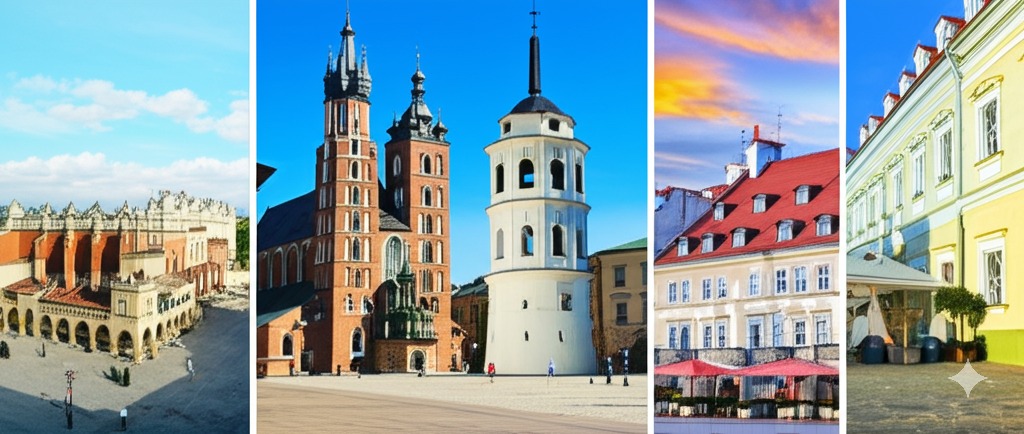
Poland and Lithuania were once united under the powerful Polish-Lithuanian Commonwealth, a major European force in the 16th–18th centuries. Despite their shared past, their modern-day identities and travel appeal are wonderfully diverse.
Both are budget-friendly, safe, and filled with cultural and natural treasures. But the experiences they offer can feel worlds apart.
Europe is a mosaic of cultural narratives, and nowhere is this more evident than in the unique historical paths of Poland and Lithuania. Both countries have seen empires rise and fall, endured occupations, and emerged as proud nations with vibrant identities. Yet, their cultural tapestries are woven from very different threads—Poland’s story is one of resilience and rebirth, while Lithuania’s tale blends mysticism, medieval grandeur, and modern creativity.
Poland has played a central role in European history for centuries. Once part of one of the largest kingdoms in Europe—the Polish-Lithuanian Commonwealth—the country experienced partitions, invasions, and complete erasure from the map in the 18th century, only to be reborn in the 20th century after immense struggle.
Its cultural pride shines through preserved and restored cities like:
Poland's identity is deeply tied to Catholicism, resistance movements, and a rich literary and artistic tradition, boasting figures like Frédéric Chopin, Marie Curie, and Nobel laureates like Wisława Szymborska and Olga Tokarczuk.
Museums such as the Warsaw Uprising Museum, POLIN Museum of the History of Polish Jews, and Auschwitz-Birkenau Memorial offer powerful insights into Poland’s complex past.
Lithuania tells a different story—a quieter, mystical one. As the last pagan nation in Europe to convert to Christianity in 1387, Lithuania retains an undercurrent of ancient spirituality that seeps into its folklore, festivals, and even its art.
Before Christianization, Lithuanians practiced nature-based paganism. Remnants of this belief system survive in:
Post-Christianity, Lithuania embraced Baroque architecture. Its capital, Vilnius, is known for its elegant churches and bohemian districts. Highlights include:
Like Poland, Lithuania endured Soviet occupation and Nazi invasion. But it held on to its national identity through underground literature, church activism, and folk culture. The Hill of Crosses symbolizes this resistance—tens of thousands of crosses were placed in defiance of Soviet rule.
Poland offers dramatic vistas and a greater variety of outdoor activities, while Lithuania feels like a peaceful countryside escape.
Foodies, take note! Both countries have rich culinary traditions, but their flavor profiles differ:
Often hearty and meat-based with Central European flair.
More rustic, with stronger Baltic and Nordic influences.
Both countries also love dairy, rye bread, and rich desserts.
Poland offers large cities with cosmopolitan vibes. Warsaw, Kraków, and Gdańsk have world-class museums, shopping, and nightlife.
Lithuania offers smaller, more relaxed cities. Vilnius and Kaunas are perfect for laid-back exploration with artistic touches.
Both countries are affordable by European standards, especially compared to Western Europe.
Poland may be slightly pricier in cities but has more budget flights and better connectivity.
Lithuania offers exceptional value in accommodation and food, especially in less touristy towns.
It depends on your travel style:
Better yet—why not both? The countries are connected by rail, road, and short flights, making a dual-country trip both easy and rewarding.
Poland and Lithuania each offer a unique slice of European culture and history. Whether you're hiking in the Tatras or wandering through Vilnius’ baroque alleys, you're in for an unforgettable experience.
For the ultimate adventure, consider starting in Poland’s Kraków and ending your journey in Lithuania’s Vilnius—connecting two nations, two histories, and countless travel memories.
Let your European exploration begin!
