

A journey along the Nile River in Egypt is explored, offering insights into the country's rich history and culture beyond its iconic pyramids. This immersive experience is presented, highlighting the unique perspectives gained from exploring ancient sites and local life from the water.
A journey along the Nile River in Egypt is more than a scenic ride — it’s a passage through time. While the pyramids often dominate the spotlight, the Nile offers a living, breathing connection to Egypt’s soul. From ancient temples rising along its banks to bustling villages where daily life unfolds much as it has for centuries, the river reveals layers of history and culture that remain hidden to those who only visit the monuments. Cruising the Nile allows travelers to experience Egypt as the ancients did — from the water — gaining unique perspectives on both its grandeur and its humanity.
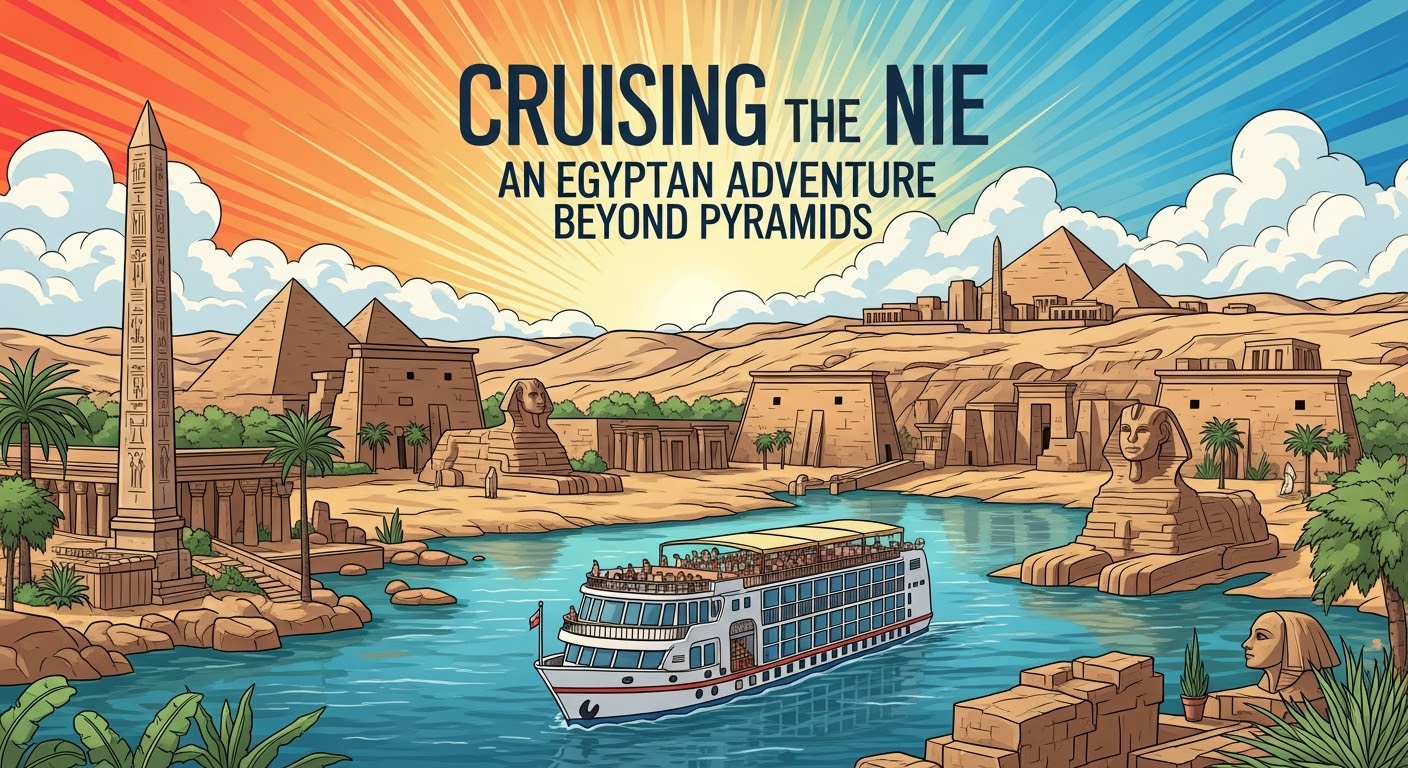
Image: The gentle flow of the Nile at dusk, the true heart of Egypt.
"Most people visit Egypt and completely miss the real story. They see the pyramids, snap a few photos, and think they've seen it all. But I'm about to show you why the most profound Egyptian adventure happens on the water, revealing secrets and cultural connections you simply can't find on land."
Onboard, mornings begin with golden sunrises shimmering across the river, while evenings bring tranquil reflections of palm groves and desert horizons. Each stop along the way uncovers treasures: the temples of Luxor and Karnak, the Valley of the Kings, and smaller, lesser-known shrines that whisper stories of forgotten dynasties. Beyond the ruins, encounters with local communities — fishermen casting nets, children playing along the shore, artisans selling handmade crafts — provide a glimpse into the living culture that continues to thrive beside this timeless river.
"Imagine waking up to the gentle sway of the Nile, with millennia of history unfolding right outside your window. I invite you to step aboard with me for an unforgettable Egyptian odyssey. We'll explore hidden temples, vibrant local life, and uncover what truly makes Egypt magical, all from a perspective you've never considered."
Egypt is often defined by its pyramids, colossal monuments that dominate postcards and travel brochures. Yet beyond these iconic structures lies a deeper, more intimate story waiting to be discovered. The Nile River, the lifeline of ancient and modern Egypt, offers travelers a chance to experience the country in a way that transcends the typical tourist trail. Cruising along its waters is not just a journey through geography, but through time — an invitation to witness temples, villages, and landscapes that reveal Egypt’s living heritage. It’s a reminder that Egypt’s magic isn’t confined to the desert sands, but flows endlessly with the river itself.

Image: The allure of Egypt.
From the moment you step aboard, the Nile greets you with a symphony of sensations. The gentle sway of the boat, the shimmer of sunlight dancing across the water, and the cool breeze carrying whispers of history create an atmosphere unlike any other. As the vessel glides past palm groves and golden horizons, the sounds of daily life drift from the riverbanks — fishermen casting nets, children laughing, and the distant call to prayer echoing across villages. Each moment feels immersive, as if the river itself is guiding you into Egypt’s heart. The cruise becomes more than transportation; it transforms into a sensory gateway to culture, history, and serenity.
The Nile was the cradle of Egyptian civilization, shaping its agriculture, trade, and spiritual life. Traveling by water offers a perspective that land journeys simply cannot provide. Temples like Luxor and Karnak rise majestically from the banks, revealing how the ancients aligned their sacred sites with the river’s flow. Smaller, lesser-known shrines and villages appear unexpectedly, offering glimpses into traditions that have endured for thousands of years. From the deck, you see Egypt as its pharaohs, priests, and merchants once did — a civilization built around the rhythm of the Nile. This vantage point connects travelers not only to history but to the living pulse of Egypt today, where the river continues to sustain and inspire.
There is something profoundly different about seeing Luxor’s temples rise from the horizon as you drift closer by boat. The Karnak and Luxor temples, monumental in scale and steeped in millennia of history, take on a new aura when approached from the Nile. Instead of arriving through crowded streets, you glide silently toward towering columns and statues that seem to emerge naturally from the riverbanks. This perspective echoes how ancient Egyptians themselves would have traveled — priests, traders, and pilgrims arriving by water to worship and celebrate. The temples feel less like tourist attractions and more like timeless guardians of the river, welcoming travelers as they have for thousands of years.
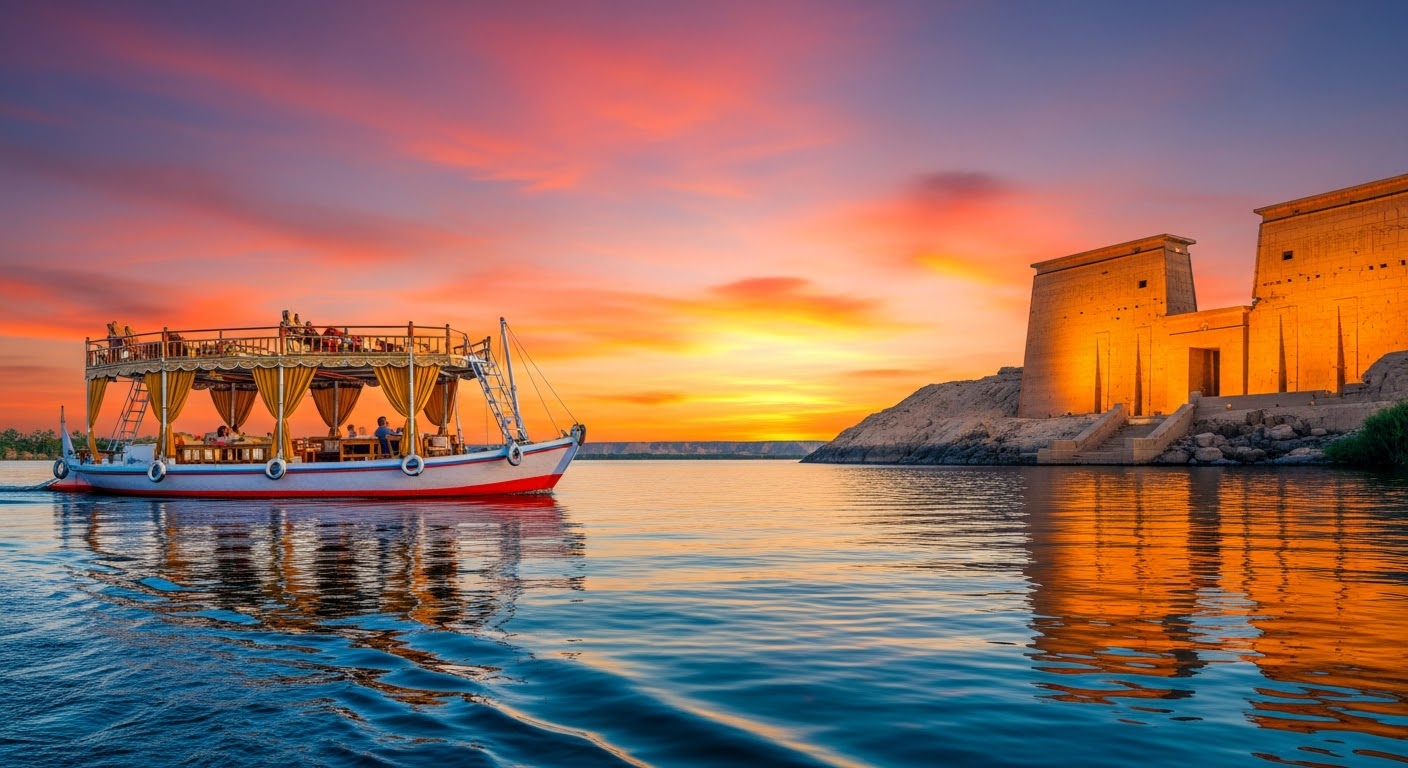
Image: Approaching ancient grandeur from the waters of the Nile.
Beyond the grandeur of temples, the Nile cruise offers intimate glimpses of everyday Egyptian life. Villages dot the shoreline, where farmers tend to lush fields nourished by the river’s fertile soil. Palm groves sway gently in the breeze, and fishermen cast nets with practiced ease, continuing traditions passed down through generations. Children wave excitedly from the banks, their laughter carrying across the water, while women gather at communal wells or wash clothes along the shore. These scenes remind travelers that the Nile is not just a relic of history — it remains the heartbeat of Egypt, sustaining communities and shaping daily rhythms as it has since antiquity.
One of the most enchanting aspects of a Nile journey is the element of surprise. Beyond the famous landmarks, the river reveals hidden gems — modest temples tucked away in quiet bends, tombs carved into cliffs, and shrines that rarely appear in guidebooks. These sites, often accessible only by boat, offer a sense of discovery and intimacy. Without the crowds of larger attractions, travelers can wander through ancient halls in near solitude, feeling the weight of history in silence. Each unexpected stop becomes a personal treasure, a reminder that Egypt’s story is vast and layered, waiting to be uncovered by those willing to journey beyond the obvious.
A Nile cruise is as much a culinary journey as it is a historical one. Onboard, guests are treated to fragrant dishes like koshari, a hearty mix of rice, lentils, and pasta topped with spiced tomato sauce, or freshly baked baladi bread served warm with dips. Shore excursions bring even more delights — street vendors offering falafel wrapped in pita, sweet basbousa cakes soaked in syrup, and cups of strong Egyptian coffee. Each meal becomes a cultural immersion, connecting travelers to centuries-old traditions of hospitality and flavor.
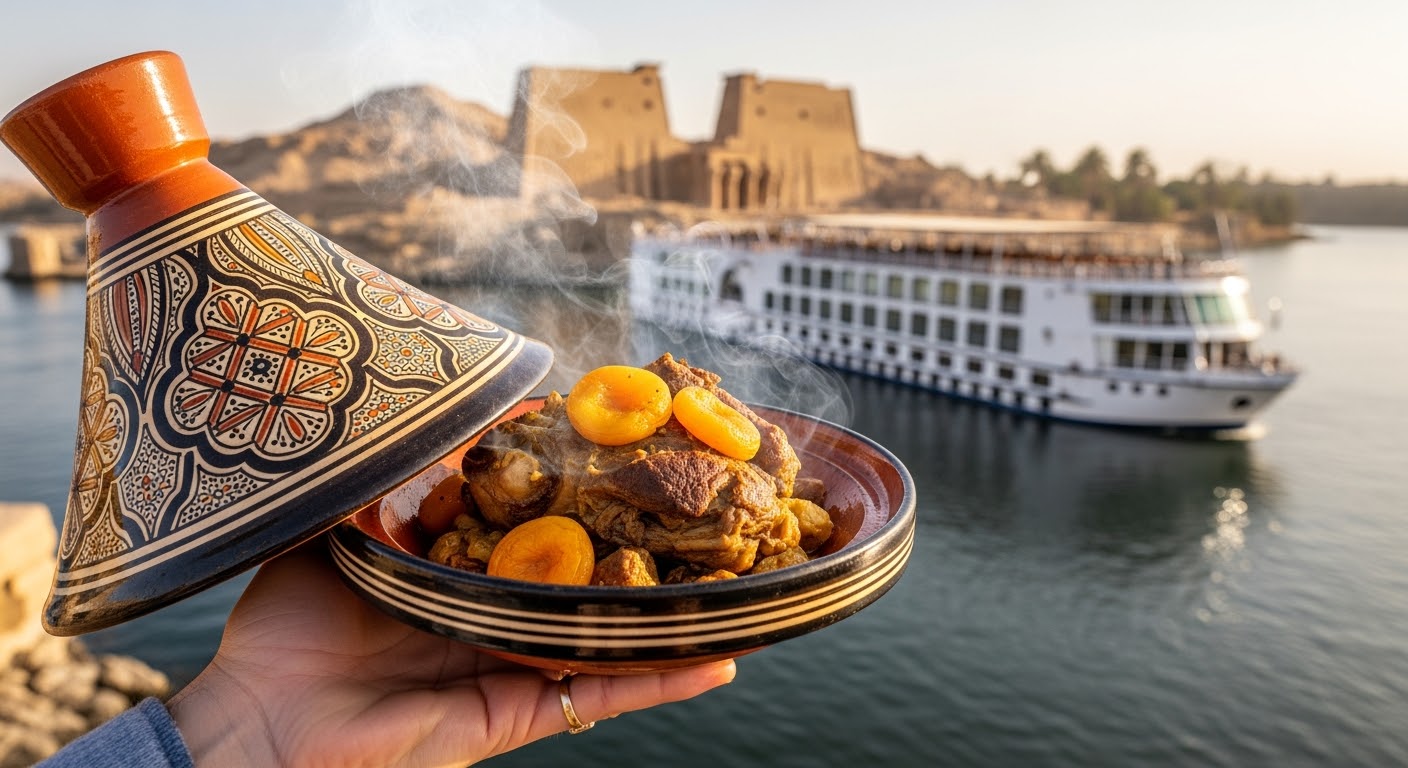
Image: A Nile cruise is as much a culinary journey as it is a historical one.
Beyond monuments and museums, Egypt’s true spirit is found in its people. Guides share stories that weave together myth and history, offering context that brings ancient ruins to life. In bustling markets, vendors invite travelers to sample spices, textiles, and handmade crafts, often accompanied by warm smiles and lively conversation. Along the riverbanks, villagers welcome visitors with curiosity and kindness, sharing glimpses of daily life — from farming practices to family traditions. These encounters transform the journey into a dialogue, where travelers not only observe but participate in Egypt’s living culture.
As the sun sets over the Nile, evenings onboard unfold into vibrant celebrations. Guests don traditional galabeya robes for themed parties, joining in dances and laughter that echo Egypt’s festive spirit. Musicians play oud and tabla, filling the air with rhythms that bridge ancient and modern times. When the music quiets, the deck becomes a sanctuary for stargazing. Under the vast desert sky, constellations shimmer with clarity, reminding travelers of the timeless connection between the heavens and the river below. These evenings blend joy, tradition, and serenity, leaving memories as enduring as the Nile itself.
Approaching Edfu Temple by river feels like stepping into a living textbook of ancient Egyptian religion. Dedicated to Horus, the falcon god, Edfu is one of the best-preserved sanctuaries in Egypt, its towering pylons and intricate hieroglyphs still radiating power. The temple’s walls tell stories of cosmic battles and divine protection, offering travelers a glimpse into the spiritual imagination of the ancients. Kom Ombo, by contrast, is strikingly unique — a double temple dedicated to both Sobek, the crocodile god, and Horus. Its dual design reflects the balance of fear and faith, danger and safety, that shaped life along the Nile. The crocodile mummies displayed nearby remind visitors of the river’s dual role as both giver of life and source of peril. Together, these temples embody the complexity of Egyptian belief and the artistry of its builders.

Image: The illuminated double temple of Kom Ombo, a tribute to two gods.
Aswan offers a softer, more intimate side of Egypt. The Philae Temple, dedicated to Isis, sits gracefully on an island, its columns mirrored in the surrounding waters. Relocated stone by stone during the construction of the Aswan High Dam, it stands as a testament to both ancient devotion and modern preservation. Nearby, the Unfinished Obelisk lies in its quarry, revealing the sheer scale of ambition and the challenges faced by ancient craftsmen. Beyond monuments, Aswan’s Nubian Village brings color and warmth to the journey. Painted houses, lively markets, and the hospitality of the Nubian people showcase a culture distinct yet intertwined with Egypt’s broader heritage. Here, travelers encounter living traditions — music, cuisine, and storytelling — that connect the past to the present in vibrant ways.
Standing among temples and monuments, it becomes clear that Egypt’s legacy is not frozen in stone; it continues to shape identity and daily life. The Nile still sustains communities, just as it did for pharaohs. Temples like Edfu, Kom Ombo, and Philae remind us of the enduring human quest for meaning, protection, and beauty. Modern Egypt, with its bustling cities and diverse cultures, carries forward this heritage, blending ancient wisdom with contemporary resilience. For travelers, these sites are more than relics — they are bridges between eras. They invite reflection on how civilizations rise, adapt, and endure, and how today’s Egypt remains deeply connected to the river and the monuments that line its banks.
By the time the cruise draws to a close, travelers often realize that Egypt is far more than its pyramids and monuments. The Nile reveals the country’s living heartbeat — a place where ancient temples rise alongside bustling villages, and where history and modern life flow together seamlessly. Experiencing Egypt from the water reshapes understanding: it’s not just a land of relics, but a civilization that continues to thrive, sustained by the same river that nurtured pharaohs and farmers alike. The journey leaves you with a deeper appreciation of Egypt’s continuity, resilience, and cultural richness.

Image: The Nile Journey ends with memories.
For those inspired to embark on their own Nile odyssey, timing and planning are key. The best months to cruise are October through April, when the weather is cooler and more comfortable for sightseeing. Cruises typically range from three to seven nights, with itineraries covering Luxor, Aswan, and stops at temples like Edfu and Kom Ombo. Travelers can choose between luxury vessels with modern amenities or traditional dahabiyas for a more intimate, authentic experience. Booking early ensures the best cabins and guides, while adding shore excursions — such as visits to Nubian villages or hot-air balloon rides over Luxor — can elevate the adventure into something truly unforgettable.
Ultimately, a Nile cruise is more than a trip; it’s a transformative journey. It invites you to step into history, connect with culture, and see Egypt from a perspective few ever consider. The memories linger long after the voyage ends — the glow of temple walls at sunset, the laughter of children on the banks, the quiet majesty of the river under starlight. For anyone seeking both wonder and wisdom, the Nile offers an experience that cannot be replicated elsewhere. The call is simple: don’t just visit Egypt, live it — let the river carry you into its timeless story.
Ready to ditch the tour bus and embrace Egypt's timeless river current?
Plan Your Nile Cruise AdventureThe ideal time is between October and April, when the temperatures are mild and pleasant for sightseeing. The summer months (June to August) can be intensely hot, making daytime excursions much more challenging.
The two most common routes are 3 nights (Aswan to Luxor) or 4 nights (Luxor to Aswan). The longer 7-night cruises often combine the main route with a relaxing stay on the river or additional stops, but 3 or 4 nights cover the main temples.
Pack light, breathable clothing for daytime heat and modest outfits (shoulders and knees covered) for temple visits. Don't forget comfortable walking shoes, a hat, high-factor sunscreen, and a light jacket for cool evenings on the deck.
