

The Grand Palace in Bangkok is a dazzling display of Thailand's royal heritage. Its intricate golden spires and ornate rooftops, brilliantly showcased against a clear blue sky, offer a captivating glimpse into the nation's rich cultural history and architectural splendor. A must-see landmark, the Grand Palace embodies the grandeur and majesty of Thailand's royal past.
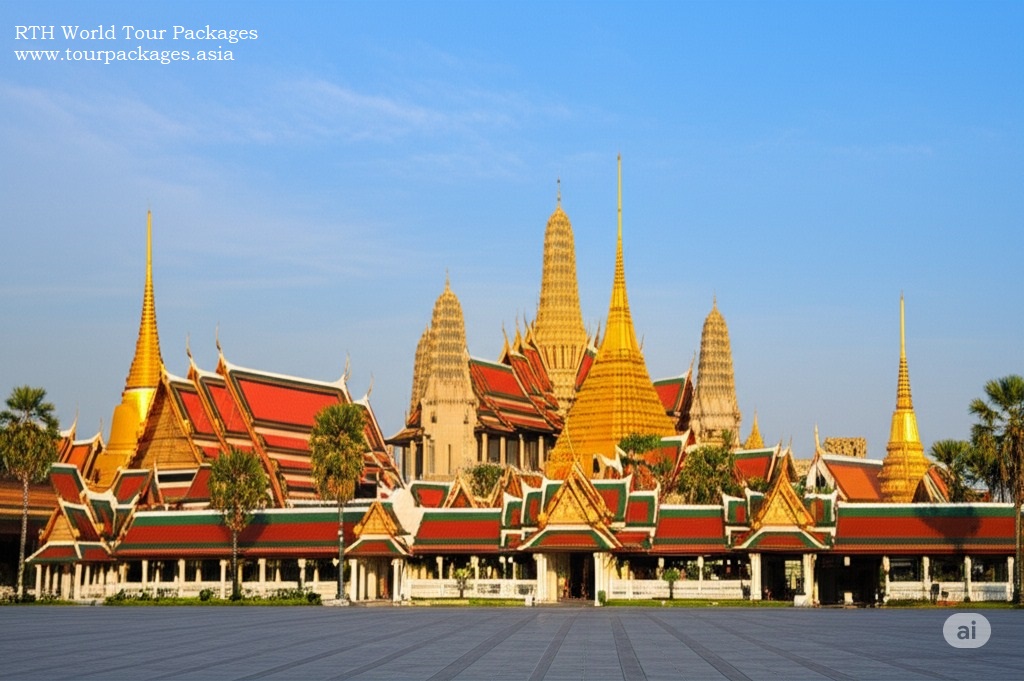
Nestled in the heart of Thailand's vibrant capital, the Grand Palace Bangkok stands as an unparalleled symbol of the Kingdom's rich history, spiritual devotion, and architectural grandeur. This sprawling complex, once the official residence of the Kings of Siam (and later Thailand), is a dazzling collection of magnificent buildings, halls, temples, and courtyards. It has served as the royal residence and the seat of government for centuries, a living testament to the power and artistry of the Chakri Dynasty. Today, while the current monarch resides elsewhere, the Grand Palace remains the spiritual heart of the Thai Kingdom, hosting royal ceremonies, state functions, and welcoming millions of visitors annually. A journey through its gilded spires and intricate murals is a step back in time, offering a profound glimpse into Thailand's royal heritage and deep-seated Buddhist traditions. Prepare to be captivated by the sheer opulence and sacred serenity of this iconic Bangkok attraction.
The history of the Grand Palace Bangkok began in 1782, shortly after King Rama I ascended the throne and founded the Chakri Dynasty. He decided to move the capital from Thonburi to Bangkok, establishing a new royal city on the east bank of the Chao Phraya River. The construction of the Grand Palace was among his first and most ambitious projects, designed to serve as the official residence, the seat of government, and the spiritual center of the Kingdom of Siam. For over 150 years, it remained the primary residence for the Kings of Thailand, until King Rama V (Chulalongkorn) moved his residence to the Dusit Palace in the early 20th century. Despite this, the Grand Palace continues to be used for crucial royal ceremonies, state banquets, and important official functions, maintaining its profound significance to the Thai monarchy and nation.
The Grand Palace Bangkok is not a single building but a vast complex spanning over 218,000 square meters, enclosed by a 1.9-kilometer-long white wall. Its architecture is a fascinating blend of traditional Thai design, characterized by multi-tiered roofs, gilded spires, and vibrant mosaics, with influences from European styles, particularly evident in some of the later additions. The complex is divided into several main zones, each with its own purpose and distinct architectural style.
The most sacred and revered part of the Grand Palace complex is Wat Phra Kaeo, officially known as Wat Phra Si Rattana Satsadaram, or the Temple of the Emerald Buddha. This royal temple houses the Phra Kaeo Morakot, the highly revered Emerald Buddha, a small, dark green Buddha statue carved from a single block of jade or jasper. This statue is considered the palladium of Thailand and is deeply significant to the Thai people. No one is allowed to touch the statue except the King of Thailand, who performs a ritual changing of the Buddha's seasonal robes three times a year (for the hot, rainy, and cool seasons), a ceremony believed to bring good fortune to the country. The temple complex itself is a dazzling display of intricate craftsmanship, adorned with gold leaf, colorful porcelain, and mythical figures, making it a prime example of exquisite Thai architecture.
Dominating the central courtyard, the Chakri Maha Prasat Hall is one of the most recognizable buildings within the Grand Palace. Completed in 1882 during the reign of King Rama V, its architecture is a striking fusion of Thai and European styles. The lower part of the building features a distinct European Renaissance design, while the roof is crowned with three traditional Thai spires (prasat), topped with a gilded chada (royal crown). Originally intended as a royal residence, it is now primarily used for state receptions, banquets, and official ceremonies, showcasing a blend of international influence and traditional Thai aesthetics.
This group of interconnected buildings forms one of the oldest and most historically significant parts of the Grand Palace. The Phra Maha Monthian Group was traditionally used for coronation ceremonies, royal weddings, and other important state functions. It includes:
The Dusit Maha Prasat Hall is one of the oldest and most beautiful buildings in the Grand Palace, built by King Rama I. It is a classic example of traditional Thai architecture, characterized by its cruciform plan and a towering spired roof. Historically, it was used for royal funerals and other significant ceremonies, including the lying-in-state of deceased monarchs. Its elegant design and historical significance make it a poignant part of the complex.
Beyond these main halls, the Grand Palace complex features numerous other pavilions, gardens, and courtyards, each with its own story and architectural charm. These include the Royal Pantheon, the Coronation Hall, and various smaller residences and administrative buildings, all contributing to the sprawling majesty of the palace grounds. The intricate details, vibrant colors, and glittering gold found throughout the complex are a feast for the eyes, reflecting centuries of Thai artistic and cultural evolution.
The spiritual heart of the Grand Palace Bangkok lies unequivocally within Wat Phra Kaeo, the Temple of the Emerald Buddha. This temple is not merely a place of worship but a national shrine, housing the most revered religious icon in Thailand. The Emerald Buddha (Phra Kaeo Morakot) is a small, meditating Buddha figure, approximately 66 cm tall, carved from a single block of jade or jasper. Its origins are shrouded in legend, but it has been a sacred object for centuries, believed to bring prosperity and protection to the kingdom wherever it resides. The King's personal involvement in changing the Buddha's robes according to the seasons underscores the deep connection between the monarchy and the nation's spiritual well-being. This ritual is a powerful symbol of the King's role as the protector of the Buddhist faith in Thailand. The entire Wat Phra Kaeo complex is designed to honor this sacred relic, with its walls adorned with murals depicting the Ramakien (the Thai national epic derived from the Ramayana), making it a living canvas of Buddhist mythology and Thai cultural narratives.
Visiting the Grand Palace Bangkok is an awe-inspiring experience that immerses you in the splendor of Thailand's royal and religious heritage. The sheer scale and intricate beauty of the architecture can be overwhelming, yet every detail, from the dazzling mosaics to the gilded statues, invites admiration. While it can be very crowded, especially during peak season, the atmosphere remains one of reverence and wonder. The spiritual aura within Wat Phra Kaeo is palpable, even amidst the throngs of visitors. It's a place that evokes a sense of history, power, and deep cultural pride. The constant buzz of activity, the vibrant colors, and the scent of incense create a sensory experience that stays with you long after your visit, making it one of the most memorable Bangkok attractions.
To make the most of your visit to the Grand Palace Bangkok, careful planning is essential.
The Grand Palace Bangkok is situated in a historical district rich with other significant landmarks, making it easy to combine your visit:
Exploring these sites alongside the Grand Palace provides a comprehensive and enriching experience of Bangkok's historical and cultural heart.
The Grand Palace Bangkok is more than just a tourist attraction; it is a profound journey into the soul of Thailand. Its magnificent architecture, sacred temples, and historical significance as the former royal residence offer an unparalleled glimpse into the nation's enduring monarchy and deep Buddhist faith. From the dazzling splendor of Wat Phra Kaeo to the regal halls of the Chakri Maha Prasat, every corner of this complex whispers tales of kings, ceremonies, and a rich cultural heritage. A visit here is an essential experience for anyone seeking to understand the true essence of Thailand, leaving you with lasting memories of its timeless royal legacy.
