
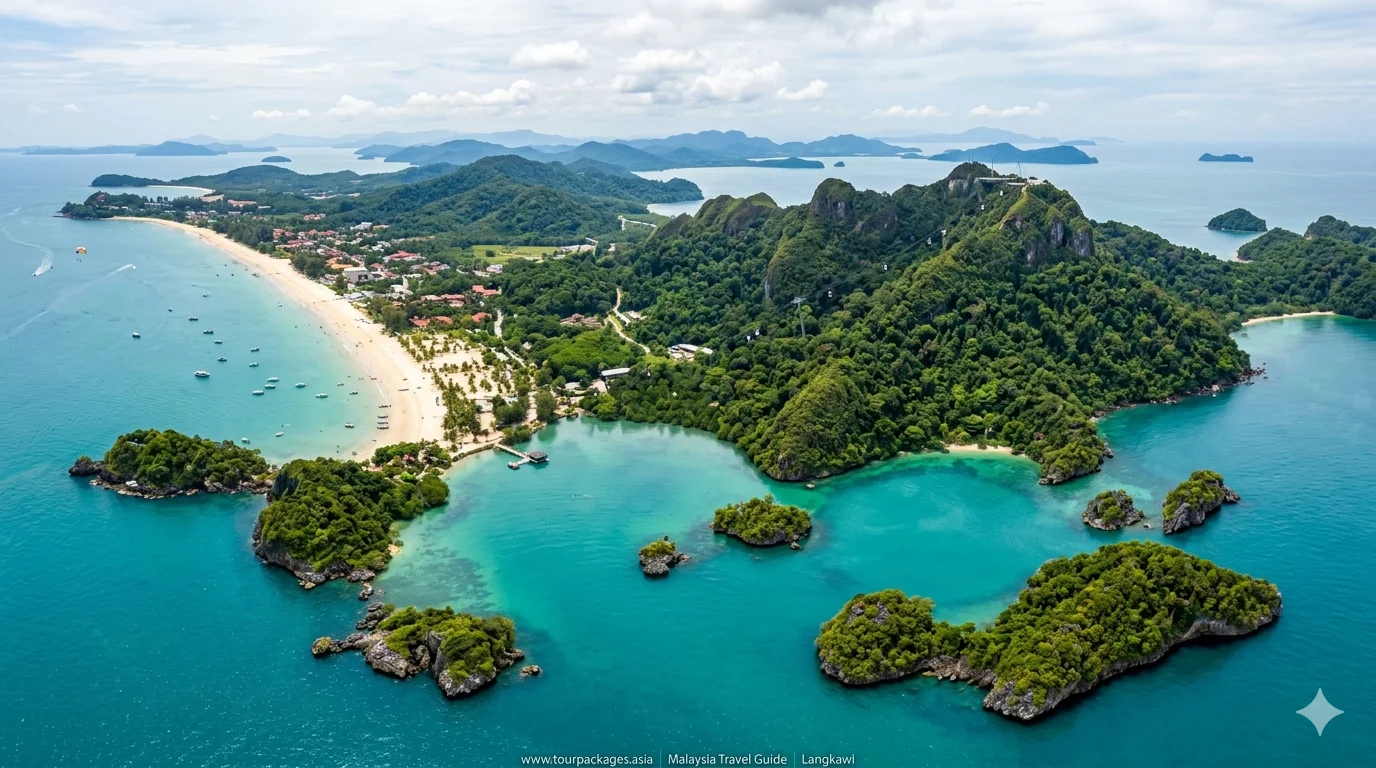
Explore Malaysia in 2026 with this travel guide, blending modern cities, lush rainforests, and pristine islands. Discover Kuala Lumpur’s skyline, Penang’s heritage, and Borneo’s wildlife. Savor diverse cuisine, from street food to fine dining, and immerse yourself in cultural festivals. Whether trekking Cameron Highlands, diving in Sipadan, or shopping in vibrant markets, Malaysia offers unforgettable adventures for every traveler seeking culture, nature, and excitement.
There is a particular type of destination that rarely makes the front page — not because it lacks anything, but because it quietly delivers everything. Malaysia in 2026 is exactly that kind of place. It sits at the intersection of rainforest and skyline, ancient heritage and contemporary energy, spiced food and clean beaches. And for Indian travellers right now, it carries one more advantage that nothing else in Asia can match: the combination of visa-free entry until December 31, 2026, over 240 weekly direct flights from 14 Indian cities, and a government-backed campaign called Visit Malaysia Year 2026 that has loaded the country with festivals, new attractions, and tourism infrastructure upgrades.
The numbers confirm the enthusiasm. According to Tourism Malaysia, Indian arrivals climbed from 1.36 million in 2024 to 1.57 million in 2025 — a 14.6 per cent rise in a single year. The official target for 2026 is 2.1 million Indian visitors, and given the pace of bookings, that figure is entirely realistic. What makes this particularly interesting for travellers from Hyderabad, Mumbai, Chennai, Delhi, or Bengaluru is that the journey to Malaysia has never been cheaper or simpler. A return flight from Hyderabad to Kuala Lumpur can be booked for as little as Rs 12,000, often on direct services. The idea of a "foreign holiday" suddenly stops feeling complicated.
At TourPackages.Asia, we plan Malaysia holidays for families, honeymooners, solo adventurers, and senior travellers. This guide covers every region, every practical question, and every experience that makes this country the most complete short-haul destination from India in 2026.
Recommended by TourPackages.Asia and Revelation Holidays: If you are searching for a well-rounded Asia holiday that covers beaches, rainforests, culture, food, and modern entertainment — all without a visa run — Malaysia in 2026 is the answer. Browse our Malaysia destination guides or speak to our specialists at Revelation Holidays for a custom itinerary.
The single most important update for 2026 is the continuation of visa-free travel for Indian passport holders until December 31, 2026. This policy, introduced in December 2023, removed the traditional obstacle of applying for a Malaysian visa weeks in advance and has directly contributed to the surge in Indian arrivals. However, visa-free does not mean formality-free. Travellers must understand the Malaysia Digital Arrival Card (MDAC) requirement before they fly.
The MDAC is a free, mandatory online form that all visitors to Malaysia — regardless of nationality — must complete before arrival. Think of it as a digital immigration declaration. You fill it in at imigresen.com.my/mdac, receive a QR code or reference number, and present it at the immigration counter in Kuala Lumpur, Penang, or whichever Malaysian entry point you use. The MDAC asks for your passport details, flight number, accommodation address in Malaysia, and basic purpose of visit. It takes approximately five minutes and should be completed within 72 hours before your flight.
Once through immigration, Indian visitors can stay in Malaysia for up to 30 days per entry without paying a single rupee in visa fees. For those who want to extend or combine Malaysia with Singapore or Brunei, exiting and re-entering resets the counter for another 30 days. For short city breaks from Hyderabad or a two-week family holiday, the logistics have never been more friendly.
One practical point worth highlighting: all airlines flying into Malaysia now carry MDAC information in their check-in systems. If you travel with Air India, IndiGo, AirAsia, Malaysia Airlines, or Batik Air, the check-in agent will confirm you have completed your MDAC before boarding. A printed or digital copy on your phone is sufficient.
Malaysia splits into two geographical worlds: Peninsular Malaysia — modern capitals, heritage cities, tea highlands, and beach islands — and East Malaysia (Borneo), home to some of the world's most extraordinary wildlife. Jump to any region below.
Kuala Lumpur is where most Indian travellers land, and the city earns its place as the first stop on any Malaysia itinerary for Indians. The Petronas Twin Towers remain an iconic sight, particularly at night when the towers blaze against the dark skyline. Book the SkyBridge (41st floor) and Observation Deck (86th floor) tickets online in advance — they sell out days ahead during Indian school holidays. Bukit Bintang is the commercial heart where shopping malls, international restaurants, rooftop bars, and street food occupy the same few city blocks.
Kuala Lumpur rewards travellers who push beyond the postcard. Chinatown's Petaling Street, the Indian enclave of Little India on Jalan Masjid India, and the creative district of Bangsar each have a distinct character. The Batu Caves — a 272-step limestone shrine with a towering gold deity at the entrance — resonates especially with Indian visitors. The rainbow staircase painted in 2018 is now one of Malaysia's most photographed images.
No Malaysia trip is complete without Penang. George Town, the island's capital, is a UNESCO World Heritage Site whose streets hold two centuries of Chinese shophouses, colonial buildings, mosques, and Indian temples within a single walkable grid. The famous interactive street art murals — the boy on a bicycle, the children on a swing — have become globally recognised symbols of the city.
Penang's greatest claim is its food, widely considered the finest hawker food in all of Southeast Asia. Assam Laksa — a tart fish-broth noodle soup — appears on multiple global "world's best" food lists. Char Kway Teow, Hokkien Mee, and Cendol are eaten at open-air hawker centres like Gurney Drive and New Lane. For Indian visitors to Penang, the Tamil Muslim Mamak food scene — Mee Goreng, Roti Canai, Teh Tarik — feels simultaneously familiar and distinctly Malaysian.
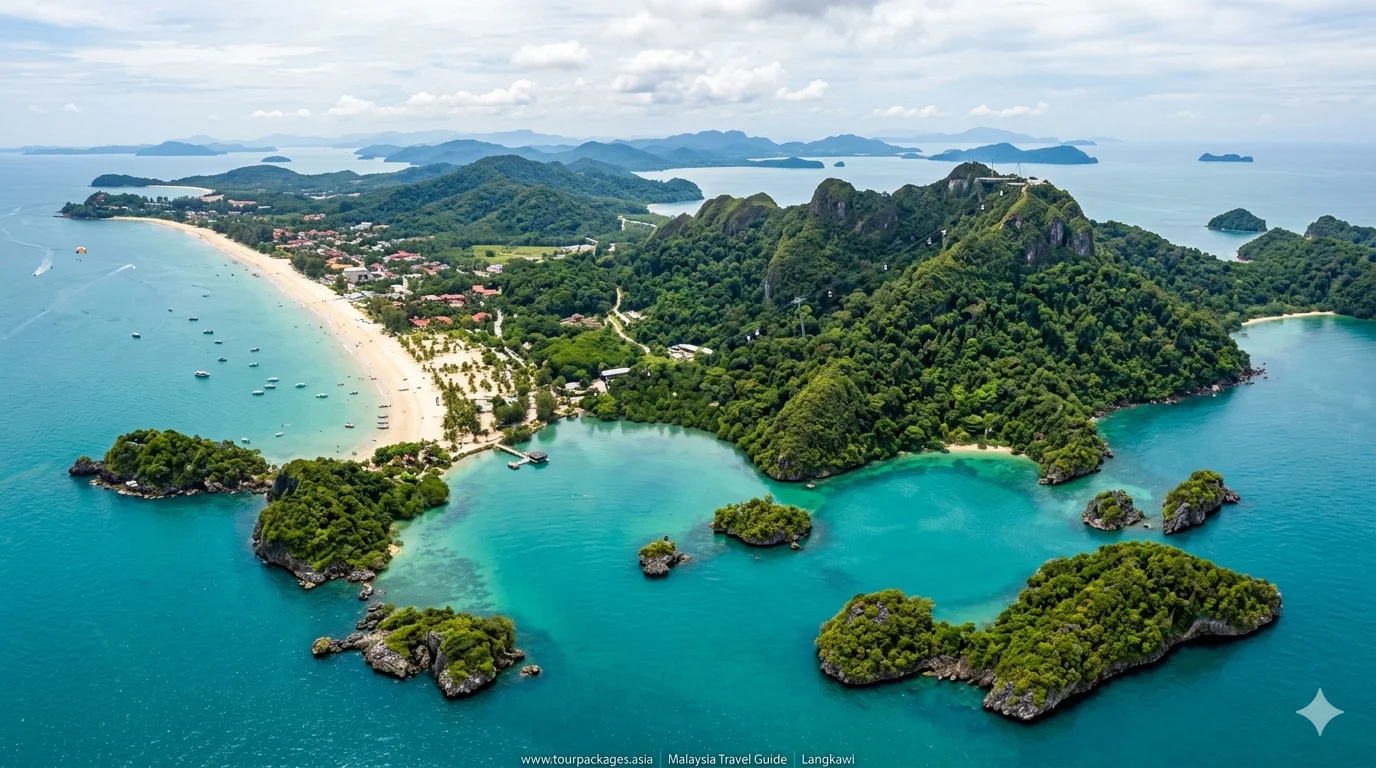
Langkawi is an archipelago of 99 islands off Malaysia's northwest coast. Its duty-free status makes it a shopping destination as much as a beach one — alcohol, chocolate, and electronics are significantly cheaper here than anywhere else in Malaysia. The beaches — Cenang, Tengah, and the quieter Datai Bay — are long, clean, and backed by coconut palms. The Langkawi Sky Bridge, a curved 125-metre suspension bridge perched above the rainforest canopy, is accessible by a cable car from the Oriental Village and offers one of the most dramatic views in Southeast Asia.
Families fill days with the Underwater World aquarium, Eagle Square at the port, and island-hopping boat tours to caves and sandbanks. Honeymooners gravitate to private pool villas at The Datai or The Andaman. The Kilim Karst Geoforest Park — a mangrove system teeming with sea eagles, hornbills, and monitor lizards — is Langkawi's most underrated experience.
At roughly 1,500 metres above sea level, Cameron Highlands feels like an entirely different country from the tropical heat of Kuala Lumpur. The mornings are misty, the hillsides carpeted with the ordered rows of the BOH Tea Estate — Malaysia's largest plantation. The BOH factory offers guided tours and a hillside café where fresh-brewed tea arrives with scones, strawberry jam, and views over rolling green hills that stretch to the horizon.
Cameron Highlands also produces strawberries, cut flowers, and vegetables that supply much of Peninsular Malaysia. Strawberry farms welcome visitors to pick fruit directly. The Mossy Forest boardwalk on Gunung Brinchang — a 20-minute walk through ancient, cloud-wrapped trees covered in moss — is an experience of rare atmospheric beauty. For Indian visitors accustomed to Ooty, Munnar, or Coorg, Cameron Highlands offers familiar hill station pleasures with a distinctly Malaysian character and significantly fewer crowds.
Malacca carries five centuries of layered colonial history in a compact, walkable old town. The Portuguese seized it in 1511, the Dutch in 1641, the British in 1824 — each leaving architecture, food, and cultural traditions that blended with Malay and Chinese customs to produce something entirely distinct. The Baba-Nyonya (Peranakan Chinese) heritage is most visible in the pastel-painted shophouses and the Baba Nyonya Heritage Museum, where a preserved 19th-century mansion offers an extraordinary window into domestic life.
Jonker Street comes alive on Friday and Saturday nights with night markets, antique shops, and street food. The Melaka River Cruise — a 45-minute boat journey through muralled river banks — is best taken at dusk when lights reflect on the water. The Dutch Square area (Stadthuys, Christ Church, Porta de Santiago fort ruins) is visually striking and historically dense. Malacca makes an ideal day trip or overnight add-on from Kuala Lumpur, just two hours by bus or car.
East Malaysia is a different world entirely. Sabah, in Malaysian Borneo, holds the Sepilok Orangutan Rehabilitation Centre — one of only a handful of places globally where you can watch semi-wild orangutans in their natural forest context. The Kinabatangan River, accessed from Sukau or Bilit, is the single best place in Borneo to see proboscis monkeys, pygmy elephants, long-nosed hornbills, and saltwater crocodiles in one morning's boat ride. Mount Kinabalu — at 4,101 metres, Southeast Asia's highest peak and a UNESCO World Heritage site — demands advance permit booking but rewards with extraordinary high-altitude biodiversity.
Kuching, the capital of Sarawak, is a relaxed riverside city with access to the Semenggoh Wildlife Centre and Bako National Park. Bako — just 37 kilometres from Kuching by road and a 20-minute boat ride — packs an astonishing range of forest habitats and wildlife into a small peninsula. For Indian travellers who have done Thailand and Bali, Borneo is the upgrade that genuinely surprises.
Our travel specialists at TourPackages.Asia and Revelation Holidays build custom Malaysia itineraries for Indian travellers — covering all regions, all budgets, and all travel styles.
View Malaysia Tour Packages Plan My TripMalaysia straddles the equator, which means it is warm and humid throughout the year. However, monsoon patterns differ significantly between the West Coast, the East Coast, and Borneo — so choosing when to go depends entirely on which part of Malaysia you plan to visit.
| Region | Best Months | Acceptable | Avoid |
|---|---|---|---|
| Kuala Lumpur | Jan–Mar, Jul–Sep | Apr–Jun, Oct | Nov–Dec |
| Langkawi (West Coast) | Dec–Apr | May–Jun | Sep–Oct |
| Penang (West Coast) | Dec–Mar, Jun–Aug | Apr–May | Sep–Oct |
| East Coast Islands (Perhentian, Tioman) | Mar–Oct | Feb, Nov | Dec–Jan |
| Cameron Highlands | Year-round (cooler Dec–Feb) | All months | — |
| Sabah / Borneo | Mar–Oct | Jan–Feb | Nov–Jan (wet) |
From India, the most popular windows are December to February (winter holidays align with Malaysia's driest season on the West Coast) and May to June (school summer holidays, when Langkawi and Cameron Highlands are excellent). For Indian travellers specifically planning the East Coast islands — Perhentian, Redang, or Tioman — the months between May and September offer the clearest waters for snorkelling and diving. These islands are completely inaccessible between November and February when the northeast monsoon brings heavy swells.
April is the month this guide is published, and it represents a sweet spot: Langkawi's beaches are excellent, Cameron Highlands is misty and green, and Kuala Lumpur's air quality is generally good. Flights from India tend to be slightly cheaper in April compared to December or June peak periods.
This seven-night plan is built specifically for Indian travellers who want the best of Peninsular Malaysia — covering the capital, the highlands, the heritage city, and the beach islands without feeling rushed. It can be extended by adding two nights in Borneo or a day in Malacca.
| Day | Destination | What to Do |
|---|---|---|
| Day 1 | Kuala Lumpur | Arrive KL, check in near Bukit Bintang. Evening at KLCC Park — watch the Symphony Fountain show at 9 PM with the Petronas Towers as your backdrop. Dinner at Jalan Alor street food street. |
| Day 2 | Kuala Lumpur | Morning at Batu Caves (arrive by 8 AM). Afternoon: Petronas Towers SkyBridge (pre-book online). Evening: Little India and Masjid India market for shopping. |
| Day 3 | Cameron Highlands | Morning coach to Cameron Highlands (3 hours). Afternoon: BOH Tea Estate factory tour. Evening: strawberry picking and night market in Brinchang town. Stay overnight in a highland resort. |
| Day 4 | Penang | Morning Mossy Forest walk, then drive to Penang via Butterworth ferry. Afternoon: self-guided heritage walk in George Town — find the street art murals. Evening: Gurney Drive hawker centre for Assam Laksa, Char Kway Teow, and Cendol. |
| Day 5 | Penang | Morning: Penang Hill funicular ride for panoramic views. Afternoon: Kek Lok Si Temple complex (Buddhist landmark, not a detour from tourpackages.asia temple-free note — skip if preferred). Evening: Penang food tour by trishaw. |
| Day 6 | Langkawi | Fly from Penang to Langkawi (35 min). Afternoon: Langkawi cable car and Sky Bridge. Sunset at Cenang Beach. Duty-free liquor and chocolate shopping in Pantai Cenang. |
| Day 7 | Langkawi / Depart | Morning island-hopping tour (Pulau Beras Basah, Dayang Bunting Marble Geoforest Lake). Afternoon mangrove kayaking in Kilim Geoforest. Late evening flight back to India. |
Want this itinerary customised? Our team at TourPackages.Asia builds personalised Malaysia packages from any Indian city — with or without flights, hotels, and guided transfers.
Food is the reason many travellers return to Malaysia a second and third time. The country's multicultural identity — Malay, Chinese, Indian Tamil, and indigenous Bornean — has produced a culinary landscape unlike anywhere else in the world. For Indian visitors, there is the warm familiarity of curries, roti, and rice alongside flavours that are genuinely new: sour tamarind soups, sweet coconut desserts, and charred wok-fried noodles that carry a signature smoky flavour called wok hei.
Nasi Lemak — Malaysia's unofficial national dish. Coconut rice served with sambal, dried anchovies, boiled egg, and roasted peanuts. Available everywhere, for breakfast or dinner. The flavour combination is simultaneously sweet, spicy, salty, and creamy.
Assam Laksa — Penang's most celebrated dish. Thick rice noodles in a tart, intensely flavoured broth made from mackerel, tamarind, and lemongrass. It polarises first-time tasters but converts most of them. The version at Penang Road Famous Laksa is the standard by which all others are judged.
Char Kway Teow — Flat rice noodles stir-fried in a furiously hot wok with prawns, Chinese sausage, bean sprouts, and eggs. The dish is cooked to order, portion by portion. The best versions have a charred edge that delivers an almost smoky depth.
Roti Canai — Indian travellers feel immediately at home with this flaky flatbread, which has its origins in Indian Muslim cuisine. Eaten with dal curry, fish curry, or sugar at any Mamak restaurant at 7 AM or midnight equally — Mamak restaurants (Indian Muslim eateries) never close.
Cendol — A beloved Malaysian dessert of fine green rice-flour noodles in sweetened coconut milk, poured over shaved ice with palm sugar. Eaten from a roadside stall in Penang's Georgetown, it is one of the great pleasures of Southeast Asian food culture.
Satay — Skewered and grilled meat (chicken or beef) served with peanut sauce, rice cakes, and cucumber. The version in Kajang, a town outside Kuala Lumpur famous for its satay, is regarded as the definitive standard.
For Indian vegetarians and those who avoid pork or alcohol, Malaysia is genuinely accommodating. Indian restaurants (South Indian banana leaf, North Indian curry houses, Tamil Muslim Mamak stalls) are found in every city. Vegetarian Chinese food is widely available. Halal certification is taken extremely seriously across the country.
Click each panel to expand tips covering documentation, money, transport, safety, food, and cultural etiquette for Indian visitors to Malaysia.
Malaysia offers exceptional value for Indian travellers — significantly cheaper than Singapore, Japan, or Europe, and roughly comparable to Thailand but with better infrastructure and wider English proficiency. Below is a realistic daily budget breakdown across three travel styles, followed by a sample 7-night total estimate for two travellers.
| Expense Category | Budget Traveller (per day) | Mid-Range (per day) | Comfortable / Luxury (per day) |
|---|---|---|---|
| Accommodation | MYR 80–140 (Rs 1,400–2,500) | MYR 200–380 (Rs 3,500–6,500) | MYR 500–1,500+ (Rs 8,500–25,000+) |
| Food | MYR 30–50 (Rs 520–870) | MYR 60–120 (Rs 1,050–2,100) | MYR 150–400 (Rs 2,600–7,000) |
| Local Transport | MYR 15–30 (Rs 260–520) | MYR 40–80 (Rs 700–1,400) | MYR 100–200 (Rs 1,750–3,500) |
| Attractions | MYR 20–40 (Rs 350–700) | MYR 60–120 (Rs 1,050–2,100) | MYR 150–300 (Rs 2,600–5,200) |
| Daily Total (approx.) | Rs 2,500–4,500 | Rs 6,300–12,000 | Rs 15,500–40,000+ |
For a 7-night trip for two mid-range travellers, the all-inclusive estimate (including return flights from Hyderabad, hotels, food, attractions, and local transport but excluding duty-free shopping) lands between Rs 1.1 lakh to Rs 1.6 lakh per couple. Budget travellers sharing rooms and eating exclusively at hawker centres can do the same trip for around Rs 70,000–80,000 per couple. Luxury resorts in Langkawi alone can push the accommodation cost to Rs 15,000–30,000 per night, which naturally changes the equation.
The single best cost-saving move in Malaysia is eating at hawker centres and Mamak restaurants. A complete meal — rice, two curries, and a drink — costs MYR 8–15 (approximately Rs 140–260) at a roadside Mamak. Switching one restaurant dinner per day to a hawker centre dinner saves around Rs 800–1,500 per couple without any sacrifice in quality or taste.
Travel Agent Advantage: Booking through TourPackages.Asia or Revelation Holidays typically saves 15–25% compared to booking hotels, flights, and transfers separately due to bulk contracting rates and currency advantages. Our Malaysia packages include accommodation, airport transfers, sightseeing, and 24/7 on-ground support.
Tell us your travel dates, group size, and budget. Our specialists respond within 4 hours.
Fifteen detailed answers to the questions Indian travellers ask most often before booking a Malaysia holiday.
Yes, entirely. Indian passport holders can enter Malaysia without any visa for stays of up to 30 days per visit, with this policy confirmed until December 31, 2026. The policy has been in effect since December 2023 and was introduced as a permanent facilitation measure rather than a temporary promotion. There is no visa fee, no appointment required, and no consular visit needed. The only mandatory step is completing the Malaysia Digital Arrival Card (MDAC) online, which is free and takes about five minutes. The MDAC must be completed within 72 hours before your flight and generates a QR code that immigration officers scan on arrival. Passengers who have not completed the MDAC may be turned back at the boarding gate by the airline. Extensions beyond 30 days for tourism purposes can be requested at any Immigration Department office in Malaysia, though they are granted at the officer's discretion. If you plan to re-enter Malaysia after visiting Singapore or Brunei, the 30-day counter resets with each new entry.
The Malaysia Digital Arrival Card is a mandatory online immigration declaration for all visitors entering Malaysia, regardless of nationality or visa status. It replaced the old paper immigration forms that passengers used to fill in on the aircraft. You complete the MDAC at the official Malaysian Immigration Department website (imigresen.com.my/mdac) at any point within 72 hours before your scheduled departure. The form asks for basic information: your full passport name, passport number, nationality, date of birth, flight number, arrival date, and the address of your first accommodation in Malaysia. Once submitted, you receive a confirmation QR code by email. Save this to your phone or print it. At Kuala Lumpur International Airport or any other Malaysian entry point, immigration officers scan this code as part of the arrival process. The MDAC itself does not guarantee entry — immigration officers can still ask questions about your purpose of visit, accommodation, return ticket, and financial means. If you are travelling with a travel agency, they often confirm the MDAC as part of pre-departure documentation checks.
As of 2026, direct flights between India and Malaysia operate from at least 14 Indian cities with a combined weekly frequency of over 240 flights. The primary route is from major metros. From Delhi, Mumbai, Chennai, Bengaluru, Hyderabad, Kochi, Kolkata, and Ahmedabad, you can find direct flights to Kuala Lumpur International Airport (KUL). Airlines operating these routes include Air India, IndiGo, AirAsia, Malaysia Airlines, Batik Air, and GoFirst on seasonal schedules. From South Indian cities — particularly Chennai, Kochi, and Bengaluru — the flight time is under 4.5 hours, making Malaysia closer than many Indian holiday destinations. From Hyderabad, direct flights to Kuala Lumpur run daily on AirAsia and Malaysia Airlines with a flying time of approximately 4 hours 30 minutes. Penang International Airport (PEN) has a smaller number of direct connections from India, primarily from Chennai and Kochi, making it a convenient entry point if Penang is your primary destination. Booking 4–8 weeks in advance typically gives the best fares. Last-minute bookings during peak Indian holiday periods (June, October, December) can be expensive.
Malaysia consistently ranks among the safer destinations in Southeast Asia for solo female travellers, including those from India. Kuala Lumpur, Penang, and Langkawi all have well-lit public spaces, functioning police presence, and efficient public transport that minimises reliance on unmarked taxis or unfamiliar drivers. The Grab app functions as the primary transport solution and is used by the vast majority of solo travellers because it shows the driver's name, vehicle, and real-time location to both the passenger and a shared contact. English is widely spoken in tourist areas, making navigation, help-seeking, and communication straightforward. The cultural familiarity — familiar food, South Indian communities especially in Penang and KL, and a non-aggressive general population — reduces the disorientation that can heighten vulnerability in unfamiliar destinations. That said, standard urban safety awareness applies: avoid walking alone after midnight in less-frequented areas, keep your phone charged and accessible, and share your location with a trusted contact. In smaller towns and rural areas, local customs around dress and public behaviour should be respected. The Indian community in Malaysia — one of the largest Tamil diaspora populations in the world — is welcoming and helpful to Indian visitors who need assistance.
Malaysia is among the most accommodating countries in Southeast Asia for Indian vegetarians, and for a straightforward reason: the Indian Tamil community in Malaysia is substantial (approximately 7 per cent of the population), meaning that South Indian restaurants — banana leaf rice, idli, dosa, sambar, rasam, and vegetable curries — are found in every city. The Malay food culture also has significant vegetable-forward dishes, though Malay cooking typically uses shrimp paste (belacan) as a base ingredient in many dishes including some sambals and vegetables, which strict vegetarians should note. Chinese vegetarian restaurants are common in Kuala Lumpur, Penang, and Malacca, and are easily identifiable by a yellow banner with a Chinese character for "veg" (usually Hokkien). Jain travellers will need to be more selective: most Malaysian vegetarian food uses garlic and onion. It is worth carrying a small card in Malay (Bahasa Malaysia) or asking your hotel to explain your dietary requirements to restaurants. In Penang, Little India near Masjid Kapitan Keling has an entire street of vegetarian-friendly South Indian eateries serving thali meals from midday.
A 5-day Malaysia trip (4 nights) from India is very doable and best structured as Kuala Lumpur plus one other destination. Day 1: Arrive Kuala Lumpur, settle into Bukit Bintang. Evening at KLCC for the fountain show and dinner on Jalan Alor. Day 2: Morning at Batu Caves, afternoon at the Petronas Towers and KL City Centre area. Day 3: Fly or take a bus to Penang. Spend the day on a George Town food and street art walk. Eat at Gurney Drive hawker centre. Day 4: Visit Penang Hill and do a heritage walk. Afternoon fly to Langkawi (35-minute flight). Beach evening at Cenang. Day 5: Morning island-hopping tour. Afternoon duty-free shopping. Fly home from Langkawi or transit through KL. This itinerary works best when booked with pre-arranged transfers and domestic flights confirmed in advance. Alternatively, a 5-day KL-only trip with Malacca day trip on Day 3 or 4 is even simpler and requires no domestic flights. We at TourPackages.Asia can build this into a fully managed package from any Indian city — check our Malaysia travel guides for more structured options.
The Malaysian Ringgit (MYR) is the currency you will need, and the exchange rate in 2026 sits at approximately MYR 1 = Rs 17–18. For a mid-range 7-night trip, carrying the equivalent of MYR 500–800 (approximately Rs 8,500–14,000) in cash per person is a reasonable buffer for hawker food, taxis where Grab is unavailable, small market purchases, and tipping at massage parlours or luggage handling. The best place to exchange Indian Rupees to MYR is at authorised money changers in Kuala Lumpur's Chinatown (Petaling Street area), at KL Sentral, or at Suria KLCC basement — these consistently offer better rates than airport counters or hotel front desks. Credit cards (Visa and Mastercard) are accepted at hotels, shopping malls, most restaurants, and supermarkets. However, hawker stalls, Mamak restaurants, wet markets, and smaller shops remain cash-only. In 2026, UPI-based payments through DuitNow QR code partnerships are available at selected merchants in Kuala Lumpur and Penang — you will see the DuitNow QR code at participating shops. This is expanding but not yet universal. Carry MYR 200–300 as a minimum daily buffer and use cards wherever accepted to stretch your currency further.
Genting Highlands is a compelling add-on to a Kuala Lumpur itinerary, particularly for families with children between the ages of 6 and 16. The highland resort complex — reached by a Skyway cable car from Gohtong Jaya, roughly an hour's drive from Kuala Lumpur — sits at 1,800 metres above sea level and offers a genuinely cool escape from the capital's heat. The headline attraction is Skytropolis Indoor Theme Park, a large indoor amusement space with roller coasters, drop towers, go-karts, carnival games, and a virtual reality zone. All rides require separate ticket purchases above the entry fee. The adjacent SkyAvenue Mall has a Fox in a Box escape room, cinema, bowling, and a good selection of halal and vegetarian restaurants. Adults who enjoy casino-style gaming will find Resorts World Genting's gaming facilities. From an Indian family perspective, the cable car ride, cooler temperatures, and theme park entertainment justify the day trip or overnight stay. Pre-book Skytropolis tickets online to avoid queues, especially during Indian school holiday periods (June, October, December) when Genting becomes considerably more crowded.
Penang and Kuala Lumpur are two entirely different Malaysias in a single country, which is part of the pleasure of visiting both. Kuala Lumpur is a modern capital with gleaming towers, world-class shopping, and a cosmopolitan energy that feels familiar to visitors from Indian metros. Penang, specifically George Town, is a UNESCO World Heritage Site with a preserved 19th-century street grid, pastel-painted shophouses, 200-year-old temples, colonial-era British government buildings, and an unrivalled street food culture. Penang moves slower and feels older. Its identity is rooted in the Straits Chinese (Peranakan or Baba-Nyonya) community, who blended Chinese and Malay traditions to create a hybrid culture found only in this part of the world. The food in Penang is widely considered the finest in Malaysia — Assam Laksa, Char Kway Teow, Prawn Mee, and Apom Balik are all eaten better in Penang than anywhere else. Indian visitors will find a large Tamil community in Penang, particularly in Little India near Masjid Kapitan Keling, making the city feel both exotic and strangely familiar. For those who appreciate heritage, food culture, and pedestrian exploration over shopping and nightlife, Penang is the more rewarding destination. Many experienced travellers consider Penang the highlight of their entire Malaysia trip.
The Malaysia-Singapore combination is one of the most popular multi-destination itineraries for Indian travellers in 2026, and for good reason. Singapore and Malaysia share the narrowest strait on earth — the causeway from Johor Bahru (Malaysia's southernmost city) to Singapore's Woodlands takes 30–45 minutes by bus or car. Alternatively, a short-haul flight between Kuala Lumpur and Singapore takes under an hour. The standard combination itinerary runs 10–12 nights: five to six nights in Malaysia (Kuala Lumpur, Cameron Highlands, Penang) and four to five nights in Singapore. Singapore offers Marina Bay Sands, Gardens by the Bay, Universal Studios, Sentosa Island, hawker centres (Lau Pa Sat, Maxwell Food Centre), and the world's best shopping on Orchard Road. Singapore's visa policy for Indians is equally straightforward — an ICA Electronic Travel Authorisation (eTA) or the standard free 30-day tourist entry is available for Indian nationals. The combination of Malaysia's value-for-money and variety with Singapore's world-class infrastructure and attractions creates an almost unbeatable 10-day package. Our travel team at TourPackages.Asia offers combined Malaysia-Singapore packages from all major Indian cities.
Borneo — specifically Sabah and Sarawak — is best approached as a destination for travellers who have some international travel experience and are comfortable with a slightly more adventurous logistics framework. The infrastructure is not as seamless as Kuala Lumpur or Langkawi, and wildlife experiences in the Kinabatangan River or Sepilok require early-morning departures, boat rides, and muddy jungle trails that may not suit every family setup. That said, Sabah's Kota Kinabalu city is modern, safe, and straightforward to navigate. Sabah's experiences — Sepilok Orangutan Rehabilitation Centre, Kinabatangan River safari, and the beautiful beaches of Tunku Abdul Rahman Marine Park — are genuinely life-changing and represent something you simply cannot experience anywhere on the Peninsular. If you have 10 or more days in Malaysia, adding 3–4 nights in Sabah is absolutely worth it. Most tour operators — including our team at TourPackages.Asia — offer guided Borneo packages that handle all logistics, accommodation, and wildlife permits, making the experience accessible even for first-time international travellers from India.
Visit Malaysia Year 2026 (VMY 2026) is a major national tourism campaign run by Malaysia's Ministry of Tourism, Arts and Culture (MOTAC), targeting a national record of 43 million international visitor arrivals and a tourism revenue of RM147 billion by the end of 2026. The campaign is not merely a marketing label — it has resulted in tangible on-the-ground upgrades for travellers. Over 300 curated events are distributed throughout the year across all 13 states, including cultural festivals, food fairs, adventure races, music performances, and heritage showcases. New luxury eco-resorts have opened in Desaru Coast (Johor) and Janda Baik (Pahang). Infrastructure at major attractions has been upgraded, including improved pedestrian access at Batu Caves and new visitor centres at several national parks. The VMY 2026 mascots — Wira and Manja, two Malayan Sun Bears — appear at key events and promotional materials. For Indian travellers specifically, Tourism Malaysia has run roadshows across 12 Indian cities, signed hotel discount agreements, and worked directly with Indian travel agents to develop competitively priced packages. The practical benefit is a destination that is actively investing in visitor experience and strongly motivated to impress. Checking the official Tourism Malaysia events calendar before finalising your dates can add a festival or event to your trip at no extra cost.
Malaysia is an excellent honeymoon destination for Indian couples, particularly those who want a combination of beach luxury, city romance, and culinary adventure in a single trip — without the long-haul journey time or high costs of Maldives or Europe. Langkawi's beach resorts — The Andaman, The Datai, Vivanta by Taj — offer private pool villas, overwater decks, and sunset dinner setups that match the romantic benchmarks of Bali or Phuket at somewhat more accessible price points. The Pangkor Laut Resort, on a private island off the west coast, is consistently rated among the most romantic resorts in Southeast Asia — it offers both beachfront and hillside sea villas with absolute privacy. For couples who want more than beaches, the combination of George Town Penang (heritage walks, candlelit hawker dinners), Cameron Highlands (misty mornings, tea plantation tea breaks), and Kuala Lumpur (rooftop bars, KLCC views) creates a diverse romantic arc across a single 10-day trip. Malaysian destination weddings are also rising sharply among the Indian diaspora — the country's luxury resort scene, multicultural vendor ecosystem, and cultural familiarity with Indian wedding customs make it a strong alternative to Bali or Thailand for couples planning a wedding-plus-honeymoon event. Our team at Revelation Holidays specialises in honeymoon planning for Indian couples across Malaysia.
Beyond the well-trodden Kuala Lumpur-Penang-Langkawi triangle, Malaysia has a remarkable collection of offbeat destinations that most Indian tourists do not reach but that experienced travellers consider highlights. Ipoh, the capital of Perak state, is a three-hour train ride from Kuala Lumpur and offers the best white coffee in Malaysia (the city's signature drink), exquisite limestone caves converted into gallery spaces, and a resurgent Old Town art and cafe scene that rivals Penang for charm at a fraction of the crowd density. The Perhentian Islands, off the east coast of Terengganu, are widely considered to have the clearest waters and finest snorkelling of any Malaysian island — and because they are seasonal (closed November to February), those who visit during the May-to-October window find relatively uncrowded beaches and thriving coral reefs with green sea turtles, reef sharks, and colourful fish. Taman Negara National Park, one of the world's oldest rainforests at roughly 130 million years old, sits in the interior of Peninsular Malaysia and offers canopy walks, night jungle treks, river rafting, and encounters with wildlife including wild elephants, tigers (rarely seen), tapirs, and hundreds of bird species. The riverside lodges along the Tembeling River are simple but atmospheric. Kuching, Sarawak's capital, is a riverside city with a thriving indigenous art scene, proximity to the Semenggoh Orangutan Centre, and easy access to Bako National Park's unique peat forest ecosystem — all largely undiscovered by Indian tourists despite being among Borneo's best experiences.
Booking a Malaysia tour through TourPackages.Asia or Revelation Holidays is a straightforward process. You can initiate an enquiry through three channels: fill in the lead form on this page (we respond within 4 hours), send a WhatsApp message to +91 91009 84920 with your travel dates, group size, and destination interest, or email us at tourpackages.asia@gmail.com with the subject "Malaysia 2026 Tour Enquiry." Our specialists will confirm your requirements, send a detailed itinerary with multiple accommodation options across budget, mid-range, and luxury tiers, and provide a fixed quote that covers accommodation, airport transfers, domestic flights (if applicable), sightseeing, and guide services. Booking deposit is typically 25 per cent of the package cost, with the balance due 30 days before departure. We also offer flight-inclusive packages (return economy class from your nearest airport to Kuala Lumpur) if you prefer a single booking point. All our Malaysia packages include 24/7 on-ground support, a local tour manager contact in Malaysia, and access to our emergency assistance line. We are registered travel agents and all financial transactions are fully documented. For those who prefer to self-research and self-book, visit our Malaysia destination pages and Malaysia visa guide for detailed reference material.
Visa-free. Easy flights. Incredible food. Rainforests and beaches. Heritage cities. And a government pulling out all the stops for Visit Malaysia Year 2026. There has never been a better time for Indian families, couples, and adventurers to make Malaysia their next international destination.
Plan My Malaysia Holiday Read Malaysia Destination GuidesContinue planning your Southeast Asia travels with these guides from our blog:
Top Sights in Kuala Lumpur | Exploring Langkawi | Enchanting Beauty of Langkawi | Malaysia vs Dubai for Seniors | BOH Tea Factory Guide | Best Time to Visit Malaysia | Top Sights in Langkawi | Top Sights in Penang | Top Sights in Cameron Highlands | KL 3N4D Tour Package | Singapore + Malaysia 7-Night Tour


Share Your Malaysia Travel Experience