
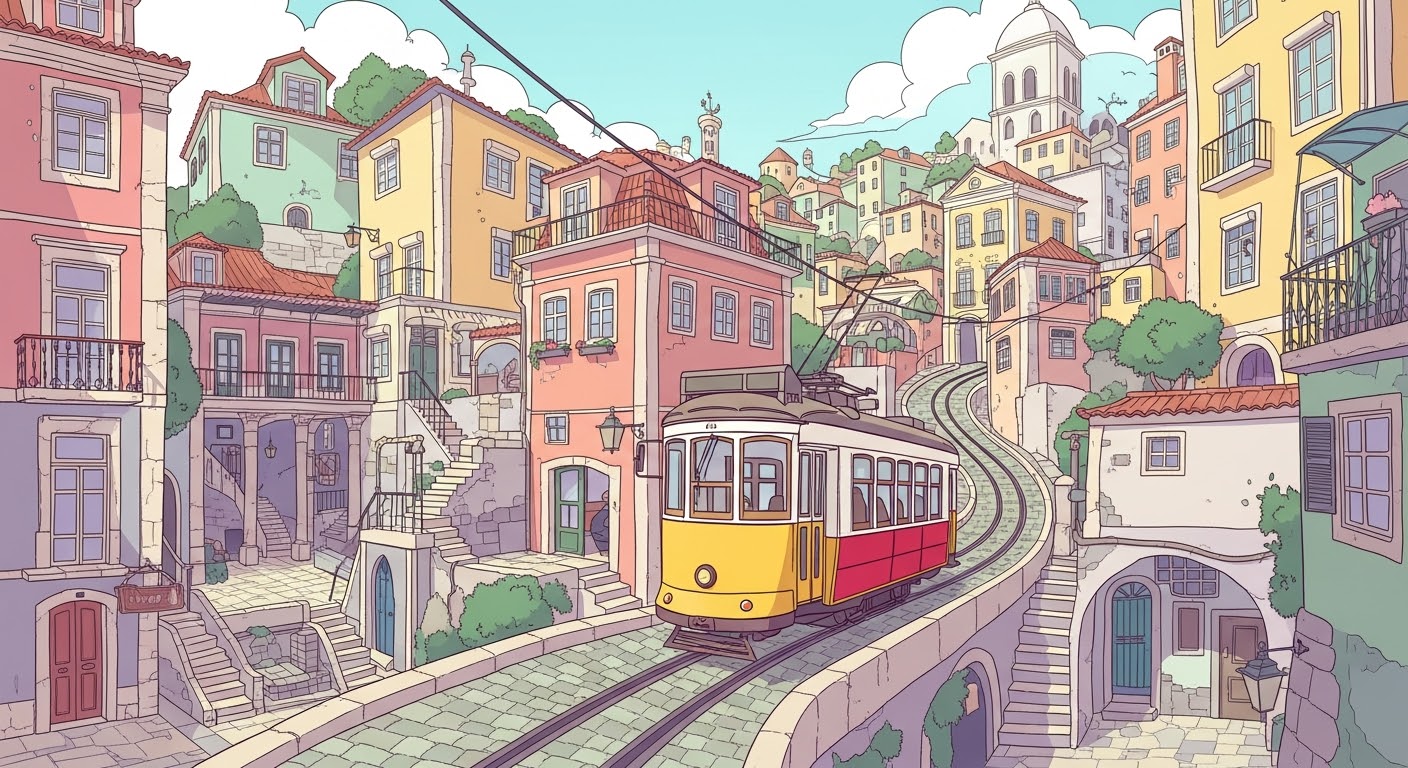
The ancient alleys and historic charm of Alfama, Lisbon are explored in this video, revealing its hidden gems and unique character. A truly immersive experience of one of Europe's most captivating neighborhoods is offered to the viewer.
What if I told you Lisbon has a secret heart, a labyrinth of ancient alleys whispering stories of centuries past? Get ready to step off the beaten path and unlock the true magic of Alfama, where every cobblestone has a tale to tell and hidden gems await around every corner. This isn't just a tour; it's an invitation to an immersive experience you won't forget.
Alfama, meaning "hot fountains" in Arabic, is Lisbon’s oldest district. It is a dense, thrilling tangle of narrow streets that cling precariously to the hill between São Jorge Castle and the Tejo River. This is where the soul of Lisbon resides, preserved, vibrant, and utterly captivating.

| Fact | Detail |
|---|---|
| Name Origin | From the Arabic al-hamma, meaning "hot springs" or "baths." |
| Survival | Only district in Lisbon to largely survive the 1755 Great Earthquake. |
| Iconic Transport | Tram 28 runs through its narrow, winding streets. |
| Culture Hub | Birthplace and heartland of traditional Fado music. |
| Neighborhood Vibe | Medieval, labyrinthine, densely populated, and residential. |
| Landmark | São Jorge Castle sits atop the Alfama hill. |
A visual tour of Alfama’s winding cobblestone streets quickly confirms its seniority. The ancient architecture, with clotheslines strung between wrought-iron balconies, showcases a Lisbon that time forgot. This area, largely built on solid bedrock, miraculously survived the devastating 1755 earthquake that flattened much of the rest of the city, preserving its medieval, unique character.
You'll find yourself intentionally lost, wandering past tiny traditional Fado house exteriors and miniature groceries that have served the same families for generations. The feeling of being completely enveloped by history, where every corner whispers stories of resilience and tradition, sets the stage for a truly deep discovery.
Every alleyway offers a surprise: a hidden courtyard, a glimpse of the Tejo River, or a quiet bench shaded by centuries-old walls. This immersive atmosphere makes Alfama not just a neighborhood, but a living museum of Lisbon’s soul.

While the main routes lead to the castle, the real treasures of Alfama are found when you turn off the beaten track and stumble upon its authentic local life.
The quest for genuine flavor leads you to a hidden tasca (a small, unpretentious local eatery). Here, the menu is often written on a whiteboard, and you'll find authentic, budget-friendly Portuguese dishes like:
These spots are run by families who measure their success not by profit, but by the quality of the meal and the warmth of the welcome.
Equally rewarding is an encounter with a local artisan in their workshop. Many small studios still preserve traditional crafts, from azulejo (painted tin-glazed ceramic tilework) painting to custom ceramics. Watching a craftsman meticulously glaze a tile or shape clay offers a direct, tangible connection to Portugal's artistic heritage.
Look for unexpected viewpoints or a secret garden away from the main crowds—often marked by a quiet bench and a glimpse of the river between two tightly packed buildings. These hidden corners are where Alfama reveals its most authentic self.
Alfama doesn’t just offer views; it assaults the senses in the most beautiful way.
This neighborhood is the birthplace of Fado music. Capturing the melancholic yet beautiful sounds of Fado drifting from open doorways, especially in the early evening, is a core Alfama experience. The singing, known for its expression of saudade (a deep emotional state of nostalgic longing), tells the story of the city and its people.
You haven’t truly visited Lisbon until you’ve tasted Ginjinha (sour cherry liqueur). Find a tiny, historic stand—often just a hole in the wall near the cathedral—and grab a shot, served with or without a cherry in the cup. The sweet, sharp bite is a Lisbon tradition.
Keep your eyes peeled for the explosion of vibrant street art and unique, lesser-known murals. While the buildings themselves are centuries old, the art provides a modern commentary on life in the district, blending history with contemporary street culture.
The maze-like structure of Alfama ensures there are always new secrets to uncover. Search for a quiet, unassuming courtyard (pátio) that serves as the heart of a small community, often featuring a decorative fountain and laundry flapping overhead.
Don't overlook the smaller religious sites. You might find a tucked-away chapel or a small, historically significant landmark often overlooked by the rush to the castle. The true essence of Alfama lies in these unheralded nooks and crannies.
| Time | Activity | Focus |
|---|---|---|
| 9:00 AM | Morning Hill Climb & Views | Start at Sé de Lisboa, ascend to castle, stop at viewpoints. |
| 11:00 AM | Historic Immersion | Explore São Jorge Castle for city views and history. |
| 1:00 PM | Authentic Lunch | Find a tasca and try Arroz de Marisco. |
| 2:30 PM | Art & Craft | Visit Flea Market or azulejo workshops. |
| 4:00 PM | Tram & Taste | Ride Tram 28 or enjoy Ginjinha. |
| 5:30 PM | Sunset Spot | Miradouro da Graça or castle walls. |
| 8:00 PM | Fado Experience | Dinner with live Fado performance. |
To truly absorb the unique atmosphere of Alfama, planning your timing is key. The best time of day to visit the main viewpoints and streets is early morning (before 10:00 AM) or during the late afternoon, as this is when you’ll encounter fewer crowds and catch the best light. The evening is reserved for Fado and dining.
Let us help you craft the perfect itinerary for your dream Alfama trip!
Yes, Alfama is walkable but very hilly. Wear comfortable shoes and expect cobblestones.
Alfama is generally safe, even at night. Just be mindful of pickpockets near tram stops.
Late spring (April–June) and early autumn (September–October) offer pleasant weather and fewer crowds.
Take Tram 28, Metro to Santa Apolónia, or a taxi. Tram 28 is scenic but crowded.
A half-day covers highlights, but a full day including Fado dinner offers deeper immersion.
Its foundations are built on solid bedrock, unlike other districts built on reclaimed land.
Fado is Portugal’s soulful music of longing. Hear it in small Casa de Fados in Alfama.
Azulejos are decorative ceramic tiles. You’ll see them on Alfama’s buildings and in workshops.
The castle dates back to Roman times, later Moorish, then Christian. It offers panoramic views.
Lisbon’s famous flea market, held Tuesdays and Saturdays in Campo de Santa Clara.
A sweet cherry liqueur, served in tiny stands. Try it with or without a cherry in the glass.
On hidden side streets away from tourist squares. Look for handwritten menus and local patrons.
Grilled sardines, Caldo Verde soup, and Bacalhau à Brás are Alfama staples.
Lisbon’s biggest street party in June, honoring St. Anthony with weddings and grilled sardines.
Miradouro das Portas do Sol and Santa Luzia are iconic. For fewer crowds, try Graça viewpoint.
